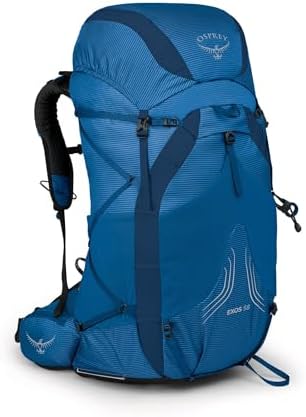
The Osprey Exos is best for hikers who want a lighter backpacking pack without giving up a framed, supportive carry. The clearest buyer pattern is not just low weight. It is the comfort-to-weight balance. Buyers repeatedly describe it as light, supportive, and easier on the back than they expected from a pack in this class.
It is less convincing for buyers who care a lot about pocket usability, clean side-pocket access, or a fully predictable fit. The main trade-off is straightforward: many buyers like how it carries, but a meaningful group complains about hip-belt pocket access, side compression straps that interfere with bottle storage, sizing uncertainty, and scattered quality issues.
Scorecard
| Metric | Value |
|---|---|
| DVSS Score | 80.48 |
| Satisfaction Tier | Excellent |
| Dissatisfaction Score (DS) | 10.53% |
| Critical Dissatisfaction Rate (CDR) | 8.04% |
This score indicates strong buyer satisfaction but not a friction-free product. The positive case is solid, yet the recurring complaints are practical enough that fit, access, and layout should matter more than the average rating alone. Based on buyer feedback patterns, not hands-on testing. See how we score products.
Quick Take
- Best For: hikers who want a lighter pack that still feels supportive on multi-day trips
- Not For: buyers who want easy one-handed pocket use and cleaner bottle access
- Top Strength: strong comfort-to-weight balance
- Main Limitation: pocket and strap layout can be awkward on the trail
Key Practical Stats
- One buyer reported the 48L at 2 lbs 3 oz without the head pocket and straps
- Multiple buyers described comfortable use around 25 to 30 lbs, with separate reports around 37 to 40 lbs
- One buyer said the 38L uses a 24-inch height and felt too tall for carry-on restrictions
- One buyer said the side pocket held a 32-oz stainless steel bottle
Why Osprey Exos Stands Out in Comfort
This is the strongest reason to buy it. Across positive reviews, buyers keep coming back to the same point: the pack feels light, but still carries with real support. That pattern shows up in comments about adjustability, back ventilation, weight distribution, and long-walk comfort. Some buyers even preferred it to lighter alternatives because those lighter packs sacrificed too much comfort as the load increased.
That does not make the Exos a universal fit. It makes it appealing to hikers who want to go lighter without moving all the way to a more stripped-down ultralight setup. The strongest case for it is not minimalism. It is supported by lightweight carry.
Where Osprey Exos Loses Convenience
The most repeated complaint is not about the main carry feel. It is about how certain features work in real-world trail use. Several buyers say the hip-belt pockets are hard to close with one hand, too small for their needs, or simply annoying to use while wearing the pack. That shows up in both mildly critical and clearly negative reviews, which makes it a real pattern rather than a one-off reaction.
The side compression straps are the other recurring friction point. Some buyers say they interfere with bottle access or cross over the side mesh in a way that makes the pockets less useful. A few buyers worked around it or did not mind it much, but this is still one of the clearest design compromises in the feedback. If fast bottle access matters to you, this issue deserves real weight in the decision.
Size and Fit Need More Care Than the Rating Suggests
The Exos family covers 38L, 48L, and 58L, but the feedback does not support one broad verdict for every trip type. The 48L looks like the safest middle-ground choice in the review set. It gets the most natural fit with the product’s core appeal: lighter multi-day carry with support. The 58L appears more suited to buyers who need extra room, while the 38L gets more size-specific comments, including one report that it was right for the user’s needs and another that it was too tall for carry-on use.
Torso fit also needs caution. Many buyers praise the adjustments and custom fit, but others report sizing confusion or discomfort related to the adjustment system. That means the Exos can feel excellent when the fit is correct, but less forgiving when it is not.
Build Quality Looks Good Overall, but Not Clean Enough to Ignore
The overall build signal is still positive. Many buyers call it high-quality, well-made, or durable enough for repeated hiking and backpacking. That supports a restrained conclusion that quality is a strength for most buyers, not a guaranteed weakness.
Still, the negative feedback is too specific to wave away. There are reports of broken drawstrings, ripped mesh, misaligned adjustment hardware, and shoulder blade discomfort associated with the back adjustment area. These do not define the whole product, but they are serious enough that quality control and fit sensitivity remain part of the buying risk.
Available Sizes
- 38L — better suited to lighter trips and shorter use cases, though one buyer said the height made it a poor carry-on choice
- 48L — the clearest match for the pack’s main appeal: lighter multi-day hiking with more support than many minimalist options
- 58L — better for buyers who need more room, but it may feel like extra pack for shorter trips or tighter gear kits
The main caution across all three is the same: capacity does not fix torso fit or access-related annoyances.
Buyer Comparisons
- Some buyers preferred it to lighter ultralight packs because the Exos felt more comfortable once load carrying mattered.
- Some buyers compared it with heavier comfort-first packs and felt the added weight of those alternatives was not worth it for their use.
Most Likely Disappointment
The buyer most likely to feel let down is the hiker who wants a lightweight pack with clean, frustration-free trail access. If easy hip-pocket use, unobstructed bottle access, and a low tolerance for fit or quality surprises are high on your list, this pack can feel fiddlier than its overall score suggests.
Buy or Skip
Buy the Osprey Exos if your priority is simple: you want a lighter backpacking pack that still feels supportive, ventilated, and capable under a real trail load. The buyer signal is strongest for people who want a comfort-first lightweight backpack, not an ultra-minimal one.
Skip it if your buying decision depends on easy pocket access, a cleaner side-pocket design, or a more confidence-inspiring fit right out of the gate. This pack earns its place on comfort and carry feel, but the tradeoff is practical irritation, not just a minor feature omission.
Check Price:
See More Options: Compare More Hiking Backpacks →
