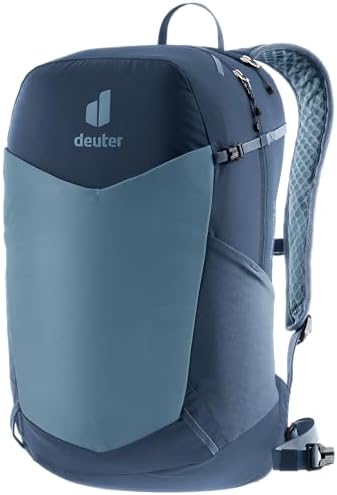
The Deuter Speed Lite line makes the strongest case for itself when the goal is simple: carry less, move easily, and avoid the bulk of a more built-up hiking pack. Across the reviewed sizes, the clearest positive signal is not storage or features. It is how often buyers describe the pack as light, easy to wear, and more capable than it first looks.
That strength comes with a visible compromise. The same minimalist design that keeps weight down also leads to repeated complaints about sparse organization, selective strap fit, and reduced support, especially when buyers expect a more substantial hiking backpack.
Scorecard
| Metric | Value |
|---|---|
| DVSS Score | 86.11 |
| Satisfaction Tier | Excellent |
| Dissatisfaction Score (DS) | 7.18% |
| Critical Dissatisfaction Rate (CDR) | 4.83% |
The overall buyer signal is strong, but not without a meaningful caution around fit, organization, and lighter structure.
Based on buyer feedback patterns, not hands-on testing. See how we score products.
Quick Take
- Best For: Buyers who want a light hiking daypack that can also cross into travel, commuting, or short outings
- Not For: Buyers who want rich internal organization, stronger load support, or a more universally forgiving harness shape
- Top Strength: Low weight with consistently positive comfort feedback for day use
- Main Limitation: Minimal structure and pocketing make it a narrower fit than the ratings alone suggest
Key Practical Stats
- Buyers explicitly mention compatibility with 2L, 2.5L, and 3L hydration bladders in some versions.
- The 21L is most commonly a crossover size for day hiking, travel, commuting, and under-seat or light airline use.
- The 30L draws praise for extra capacity, but it also brings more comments about torso length, feature omissions, and lighter support.
Why Deuter Speed Lite Gets So Much Buyer Approval
The dominant buyer signal is straightforward. Many owners say the Speed Lite feels very light on the back, carries comfortably for hours, and holds more than expected for a pack that looks this stripped down. That pattern shows up across the family, from compact 13L and 17L use to broader day-hike and travel use in 20L, 21L, 25L, and 30L sizes.
That matters because lightweight packs do not always earn strong comfort feedback. Here, they often do. Buyers repeatedly describe the pack as comfortable for day hikes, travel days, biking, sightseeing, and general daily use, which is the clearest reason this line scores as well as it does.
There is also a broad quality signal in the positive reviews. Buyers often describe the materials, zippers, and overall build as solid for the category, though that conclusion warrants some restraint, as a smaller group reports stitching, zipper, coating, or strap issues.
Where the Speed Lite Starts to Feel Too Minimal
This is not a feature-rich pack disguised as a simple one. It is actually simple. Buyers who like that often see the layout as clean and efficient, but buyers who want more compartments, more internal separation, or more secure exterior storage are much less satisfied.
The same complaints recur often enough to matter. Some say there are too few zippered pockets. Others call the external stash pocket weak, awkward, or insecure. Several reviews also mention side bottle pockets that are either too tight for some bottles or too loose to feel reliable in use.
That makes the Speed Lite a better match for a simple packing style than a gear-heavy one. If the plan is jacket, water, snacks, and a few essentials, the layout often works well. If the plan involves lots of small items or a strong preference for built-in organization, this line looks less compelling.
Deuter Speed Lite Fit Is a Strength, but Not a Universal One
Comfort is a real reason buyers choose this pack, yet the fit story is not equally positive for everyone. Many reviews praise the straps, adjustability, and overall carry feel, but a noticeable minority report that the shoulder straps sit too close to the neck, feel too thin, or sit awkwardly across the chest.
That concern appears in several forms. Some larger buyers suggest sizing up. Some reviews say the fit favors slimmer frames. A few women-specific complaints point to chest-strap placement and strap geometry that do not work well for every body type.
This is why the Speed Lite reads best as a lightweight day-use family with selective fit, rather than as a universal comfort. The high rating is real, but so is the pattern that some buyers fall out of the fit window faster than they would with a more structured pack.
What the Lightweight Build Leaves Out
The feature cuts are not random. They mostly serve the weight-saving goal. Reviews across several sizes mention missing rain covers, limited weather protection, simpler hip belts, and reduced padding compared with more supportive hiking packs.
That tradeoff is easy to understand in use. Buyers who stay within light daypack duty usually sound happy with the result. Buyers who expect better rain readiness, greater back separation, or stronger weight transfer to the hips are more likely to feel that the pack sacrifices too much in exchange for its low weight.
Available Sizes
- 13L — Best supported for short hikes, theme-park days, city use, and very light carry. It looks best for minimal essentials rather than heavier or more demanding day use.
- 17L — Supported as a small daypack for short hikes, commuting, cycling, and light daily carry. It follows the same minimalist logic with a bit more breathing room than 13L.
- 20L — One of the clearest all-around sizes for day hiking, sightseeing, commuting, and travel, though the limited organization remains part of the tradeoff.
- 21L — The most convincing crossover option in the family based on the feedback provided, especially for buyers mixing hiking, travel, and everyday use.
- 25L — Strongest support comes from buyers who value low weight plus extra day-hike utility, including quick-access pockets and trail-focused features.
- 30L — The best fit in this family for buyers who want more room for long day hikes or light travel, but it also seems more sensitive to torso fit and expectations around support.
Because the evidence spans several sizes and some older and newer versions, the safest verdict is about the family’s overall design logic, not a claim that every size behaves the same way.
Most Likely Disappointment
The buyer most likely to feel let down is the one who wants a lightweight pack but still expects the support, fit forgiveness, and organization of a more structured hiking model. That gap between “light and simple” and “fully supportive and versatile” is where most of the disappointment lives in this line.
Buy or Skip
The strongest reason to choose the Deuter Speed Lite is not that it does everything. It is that many buyers find it easier and more comfortable to live with than bulkier daypacks when the load stays light, and the packing style stays simple. That makes it a strong fit for day hikers, travelers, and crossover users who value low weight more than extra structure.
The case gets weaker when the buyer wants more built-in organization, more rain preparedness, or a harness shape that is less body-sensitive. In that role, the Speed Lite starts to look more selective than its excellent score first suggests.
Check Price
- Deuter Speed Lite 13L
- Deuter Speed Lite 17L
- Deuter Speed Lite 20L
- Deuter Speed Lite 21L
- Deuter Speed Lite 25L
- Deuter Speed Lite 30L
See More Options
