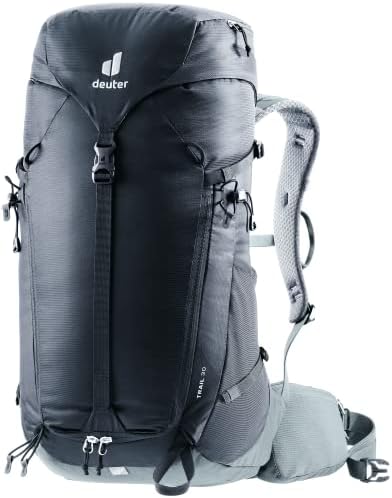
The Deuter Trail is the hiking daypack you buy when access to buried gear matters more than back airflow — but that trade-off only works if you choose the right size and can live with a closer, sweatier carry.
Do not choose the Deuter Trail by liters alone, because each size affects the decision differently. The 18L keeps your kit lean, the 25L can feel full once a jacket and fleece go in, and the 30L gives you the clearest room for longer day hikes without turning into a true backpacking pack.
The access design is enough to make the pack worth a closer check. The score can support that interest, but it cannot decide your size, your heat tolerance, or the exact features on the listing you order.
Deuter Trail Scorecard
DVSS reflects satisfaction with the Deuter Trail family across the 18L, 24L, 25L, and 30L sizes. It is based on buyer feedback patterns, not hands-on testing. See how this scoring works.
The score can reflect more than product function, including price/value perception, brand expectations, and use-case match; it does not prove that the close back panel will stay cool, that the right size will fit your layers, that the pack will hold up long term, that hydration setup will be easy, or that rain protection will match your exact listing.
| Metric | Value |
|---|---|
| DVSS Score | 83.72 |
| Satisfaction Tier | Excellent |
| Dissatisfaction Score (DS) | 8.26% |
| Critical Dissatisfaction Rate (CDR) | 6.09% |
The Excellent tier helps you take the Deuter Trail seriously, but price/value perception and use-case match can sit inside that score; the table cannot settle whether the back panel feels too warm, whether the 25L has enough room for your layers, whether the 30L is enough for a light overnight kit, or whether your listing includes the rain-cover setup you expect.
Quick Take: Deuter Trail
- Best For: Choose the Deuter Trail if quick access to buried hiking gear matters more than maximum back airflow, and only if the size you pick matches your real load.
- Not For: Skip it if you need a cool suspended-mesh back, big hip-belt pockets, or true multiday capacity, because these 18L–30L versions do not solve those problems cleanly.
- Top Strength: Front and lower access give the Deuter Trail its clearest advantage when your size and version include the opening you expect.
- Main Limitation: The same close-trail carry can turn warm, fiddly, or tight when the pack is full, the day is humid, or your small-item storage needs are specific.
If quick access still matters more than airflow, pocket depth, and setup fuss, the next question is simple: how much does the Deuter Trail actually make packed gear easier to reach?
Why the Deuter Trail Makes Buried Gear Easier to Reach
The Deuter Trail matters most when you hate digging from the top of a packed hiking bag, but the access advantage only holds when your exact size and version give you the opening you expect. On the 30L, front access can help you reach the bottom and middle gear without unloading the pack, but that detail should stay tied to the 30L layout you are actually buying.
The 24L can make sense for compact camera-style hiking when you need fast access to a camera body, a 400mm telephoto lens, extra lenses, layers, a bottle, batteries, and small gear, but that use still points to a tight-access hiking pack — not a padded camera backpack.
Front and lower access are the Deuter Trail’s clearest practical advantage when your packed gear would otherwise sit buried. But that advantage can lose polish if low-light zipper pulls, zipper catching, or closure setup slows you down on the exact version you buy.
That access layout keeps the Deuter Trail on your list only if it still works after your real load goes in. The 18L, 25L, and 30L answer that question in very different ways.
Which Deuter Trail Size Fits Your Hiking Load?
The Deuter Trail size choice starts with what you actually carry, not with the biggest number you can justify. Start with the 18L if you want packing restraint; look at the 24L if compact movement matters; choose the 25L only when disciplined day hiking overlaps with some crossover use; and move to the 30L when you want the most room in this family without stepping into true backpacking.
Deuter Trail 18L: Buy It for Restraint, Not Room
The 18L helps when you want a pack that keeps you from bringing more than you need, but that same restraint can be a limitation if your phone needs side-pocket space or your hips need a more substantial belt.
Two-zip front access, pole attachment, and ice-axe attachment give the 18L real trail usefulness for a small pack, but those details should not make you load it like a technical overnight bag.
If your exact 18L matches the reported layout, one large internal back pocket and two lid pockets can work when your kit is lean; small side pockets and same-color zipper pulls can slow you down if you depend on quick phone access or low-light visibility.
Small details matter more on an 18L pack because there is less room to work around them. If dangling lumbar strap ends or the lack of a sternum-buckle whistle would bother you, check the exact 18L setup before treating the small size as an easy buy.
Deuter Trail 24L: Pick It When Compact Movement Beats Pocket Depth
The 24L makes the most sense when compact movement matters more than pocket depth, because the streamlined shape can help reduce snagging on ferrata-style passages when your route rewards fewer exposed extras — not because it makes the pack snag-proof.
Stowable hip belts make the 24L easier to live with off-trail, but that convenience has a support limit if you expect the stiffness of a more dedicated hiking hip belt.
Bottom and side access can give the 24L more practical reach than a simple top-loader when your exact version includes those openings, but that advantage only matters if the gear you carry is compact enough for the smaller body to stay manageable.
Check the top-pocket closure and front-zipper relationship on the exact 24L listing if small setup fixes bother you, because a strap pulling against the front opening can turn a clean access idea into a cord-and-fiddle problem.
If you remember the older ACT Trail 24, verify that the current model is compatible before buying the Trail 24. Material feel, zipper protection, volume adjusters, and the vertical pocket matter most if you expect the current pack to behave like the older one.
Deuter Trail 25L: Pick It Only If Your Layers Stay Lean
Choose the Deuter Trail 25L when you want one pack for disciplined day hikes and some non-hiking carry, but move toward 30L if a jacket, fleece, and extra trail items are normal parts of your load.
A 25L load has been used for a 40 km day with a water bladder, sweater, food, blister care, a power bank, and small extras, but that number should work as a packing example only — not as a promise that the pack will feel right for your own long day.
The stowable waist belt helps if you want the 25L to move between hiking and non-hiking days, but that mixed-use strength is also why the size can feel like a compromise when your trail load grows.
Non-Deuter hydration systems can fit the 25L when the hose works through the pass-through, but a narrow opening can make setup annoying if you swap reservoirs often.
The 25L works best when your hiking kit stays tidy, and you can make use of its robust construction cues, multiple pockets, and stable back area. But one roomy use report does not turn the size into a weeklong hiking answer.
Check the 25L listing if you are counting on included weather backup, because a rain-cover compartment without the cover would change what you need to pack separately.
Deuter Trail 30L: Choose It for Margin, Not True Backpacking
Choose the Deuter Trail 30L if you want the most packing margin in this family, but keep it in daypack-plus territory unless your light overnight kit stays disciplined and you are not asking it to replace a true backpacking pack.
The 30L can carry a fuller day kit — layers, rain jacket, food, water, bladder, first-aid items, map, compass, lights, gloves, and small accessories — but that list works as a planning check only when your gear stays compact, and your trip does not require bulky shared equipment.
Choose the 30L for access if your main frustration is reaching packed gear without unloading the bag. When your exact 30L has the reported front and lower access layout, those openings can help you reach the bottom or middle gear without digging from the top.
The side mesh pocket can work for a 0.75L bottle and even a 1L metal bottle when the pack is not overstuffed; once the body is packed hard, the side pocket’s usefulness can drop fast.
Hip-belt storage is useful but not unlimited. Keys, a small power bank, tissues, a bar, or a neck warmer can make sense there, but a phone may push the pocket past what you want from trail-side access.
An internal ring can help the 30L keep its shape when your exact version includes that structure, but that detail is not proof of a rigid frame or backpacking-level load support.
The 30L can adjust across different bodies when the harness lines up well, with one fit cue involving a 30 cm height difference, but shoulder placement can still fail if the strap geometry is wrong for you.
If the Osprey Manta 34 is also on your list, compare the Deuter Trail 30 for simpler carry and lower-weight appeal only if the current price gap still makes sense; choose the Manta direction when suspended-mesh airflow and adjustable shoulder fit matter more.
Check whether your exact 30L listing includes the rain cover before relying on it, because one wet-weather success does not erase the risks of missing cover and version differences.
The 30L gives you the most Deuter Trail room. Before you buy it, airflow tolerance, strap length, pocket needs, and exact listing details still need a closer look.
Where the Deuter Trail Can Turn Hot, Fiddly, or Too Tight
Ventilation is the Deuter Trail problem to take seriously if you hike in hot, humid, or sweaty conditions, because a close-fitting back panel can feel fine in milder use and still become the thing that ruins a harder day.
Strap and closure friction matter most when you adjust often, climb steeply, or want a clean setup. Long waist straps, stiff hip-belt adjustment, a two-hand drawstring, or a closure strap that will not stay put can feel minor at home and annoying on the trail.
Small items are easier to manage when you keep the pack lightly organized. Once your phone needs hip-belt space, a stuffed pack blocks your side pocket, or your 25L load already has bulky layers inside, quick storage becomes harder to count on.
Verify the rain cover and closure details before buying, as these features can vary by listing or version. Treat the plastic-closure failure, hip-fin seam failure, and bottom-abrasion concern as reasons to inspect your pack early — not as proof that every Deuter Trail will fail.
If heat, strap fuss, pocket limits, or feature uncertainty describe your normal hike, do not talk yourself past the mismatch. Compare before you commit.
Who Should Think Twice About Deuter Trail?
If back airflow is your main comfort need, compare a suspended-mesh pack before buying the Deuter Trail, because front access will not matter much once the back panel feels too warm.
If you need big hip-belt pockets, clean strap control, and quick one-hand setup, the Deuter Trail may ask for too many small compromises when the pack is full or the trail gets steep.
If your trip needs true multiday capacity or technical attachment certainty, the 30L’s light overnight edge is not enough on its own, especially when bulky shared gear or an ice-axe setup matters.
If those warnings do not describe your hike, one question remains: should you buy the Deuter Trail now, skip it for a better match, or verify the exact listing first?
Buy or Skip Deuter Trail?
Buy the Deuter Trail if quick access and trail carry matter more than maximum airflow, and only after the size you choose matches your actual hiking load.
Skip the Deuter Trail if airflow, pocket-heavy organization, or true overnight support sits above access on your list, because easy gear access will not fix a warm back, limited pocket reach, or a pack that lacks the support your trip needs.
Verify the exact size, pocket layout, closure setup, hydration opening, and rain-cover details before buying, as these details are not consistent across all Deuter Trail variants.
Check Price:
If the Deuter Trail tradeoff is wrong for your hike:
See More Options:
