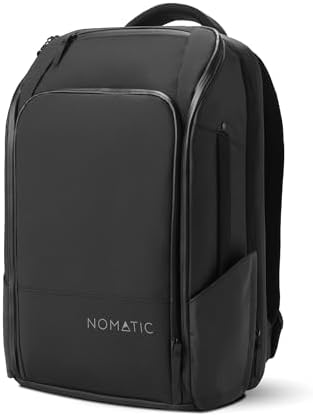
A traveler who wants every charger, laptop, document, and small item to have a clear place will quickly understand the appeal of the Nomatic Travel Pack. This is a structured, pocket-heavy travel backpack first. It is not the softest, lightest, or most forgiving personal-item bag.
The 20L has the clearer travel-pack case because it offers more room for laptop gear and limited clothes, while the 14L is better suited as the compact, light-packing version. The main risk is expecting the premium layout to solve everything. Weight, straps, zippers, laptop fit, and underseat assumptions still decide whether this pack makes sense.
Scorecard
| Metric | Result |
|---|---|
| DVSS Score | 87.49 |
| Satisfaction Tier | Excellent |
| Dissatisfaction Score (DS) | 8.37% |
| Critical Dissatisfaction Rate (CDR) | 6.62% |
Based on buyer feedback patterns, not hands-on testing. See how this scoring works.
The scorecard points to a strong satisfaction signal for the Nomatic Travel Pack, especially in organization and flexibility for travel use. It does not prove comfort, waterproofing, laptop compatibility, durability, airline compliance, or a safe underseat fit for every packing setup.
Quick Take
- Best For: Tech-heavy travelers who want organized carry for laptop gear and light travel.
- Not For: Buyers who need a lightweight, soft-sided, waterproof, or guaranteed-underseat backpack.
- Top Strength: Strong compartment layout with expandable packing flexibility.
- Main Limitation: Weight, straps, zippers, and fit assumptions can create disappointment.
Why the Nomatic Travel Pack Works Best for Organized Tech Travel
The strongest reason to consider the Nomatic Travel Pack is not raw capacity. It is control. The pocket layout, laptop access, and wide-opening design help travelers manage laptop gear, documents, small accessories, and limited clothing in a single backpack.
That matters if your backpack usually carries a laptop, chargers, small accessories, documents, and limited clothing. A simpler bag may feel lighter, but it may not separate travel and tech items as cleanly.
The tradeoff is structure. More organization can bring more bulk, more zipper interaction, and less soft-sided flexibility. If you mainly want a light personal item that compresses easily, the Nomatic Travel Pack may feel overbuilt.
The 14L and 20L Should Not Be Treated the Same
The 14L and 20L versions point to different buying decisions. The 14L fits the compact light-packing buyer better. It keeps the organized Nomatic idea, but with a smaller travel role.
The 20L is the stronger pick for buyers who want laptop gear plus a limited amount of clothes in one backpack. It is also where the expansion feature plays a bigger role in the decision.
The 14L expands to 21L, which gives the smaller version some useful flexibility. The 20L expands to 30L, which makes more sense for short-trip packing. Those numbers help set expectations, but they do not guarantee an airline fit for either size.
The 20L-to-30L Expansion Helps Packing, Not Airline Certainty
The 20L-to-30L expansion is the clearest practical reason to look at the larger version. It gives buyers more room for clothes or travel extras without moving to a separate bag.
That benefit comes with a boundary. Underseat fit is more realistic when the pack is not expanded. Once expanded, the 20L becomes harder to treat as a strict underseat personal item.
This matters most if you are buying a backpack to avoid carry-on fees. Do not assume the expanded 30L mode will fit under the seat. Airline rules, seat layout, and how full the bag is all change the answer.
Where Nomatic’s Structured Layout Starts to Work Against Light Travel
The value case gets weaker if you need a light backpack that stays easy to carry when fully packed. At 4.16 lb, this pack may feel heavy to buyers who want a light personal item.
Strap comfort is also mixed. Some buyers describe a comfortable carry, while others note thin straps or discomfort when the pack is loaded. That makes this pack easier to justify for organized travel carry than for buyers who expect forgiving comfort when packing heavier.
Zippers deserve the same cautious read. Zipper experience appears mixed, with smooth operation for some buyers and complaints of stiffness or failure for others. That does not make zipper trouble universal, but zipper feel should be part of the decision.
Laptop fit can also disappoint if you rely only on screen-size labels. Laptop fit is not just about screen-size labels; dimensions and thickness still matter. Water resistance is another limit. Do not treat this as a waterproof backpack.
Available Sizes
The two sizes point to different travel decisions:
- Nomatic Travel Pack 14L: Better for compact light travel and smaller organized carry.
- Nomatic Travel Pack 20L: Better for buyers who want a clearer travel-pack role, more room, and the 20L-to-30L expansion.
Use the expanded capacity as a packing context, not as an airline-fit promise.
Most Likely Disappointment
The buyer most likely to be let down is someone who pays for the premium organization and expects every other part of the experience to feel equally premium. The disappointment is more likely if that buyer also expects a lightweight feel, smooth zippers, waterproof protection, large-laptop certainty, and strict underseat fit from the same backpack.
Buy or Skip
Choose the Nomatic Travel Pack if your travel problem is organization. It makes the most sense when laptop gear, small accessories, and light packing need to stay separate in a single structured backpack. The 14L is the cleaner fit for compact light packing. The 20L is the better match if you want laptop gear plus limited clothes and care about the 20L-to-30L expansion.
Skip it if your top priorities are low empty weight, soft compression, waterproof protection, or a strict underseat fit. The expansion is helpful for packing room, but it is the wrong feature to rely on if your main goal is avoiding airline-size surprises.
Check Price:
See More Options:
