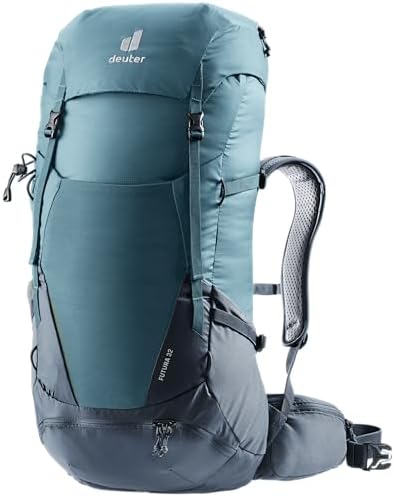
Not every hiking pack asks the same question. The Deuter Futura asks a very specific question: how much usable space and packing efficiency are you willing to trade for a cooler, more structured carry?
That tradeoff sits at the center of the feedback across the 23L, 26L, 27L, and 32L sizes. Buyers repeatedly praise the suspended back system for reducing sweat and improving comfort on warm hikes. Just as often, the same curved structure is described as taking space away from the main compartment, pushing the load farther from the body, or making the pack feel bulkier than its listed liters suggest.
For the right hiker, that compromise clearly works. For the wrong one, it becomes the main reason to return the pack.
Scorecard
| Metric | Value |
|---|---|
| DVSS Score | 89.85 |
| Satisfaction Tier | Excellent |
| Dissatisfaction Score (DS) | 5.12% |
| Critical Dissatisfaction Rate (CDR) | 3.53% |
The overall satisfaction signal is strong, and the buyer comments broadly support it. At the same time, the criticism is focused rather than random, which makes the main tradeoff easier to identify.
Based on buyer feedback patterns, not hands-on testing. See how we score products.
Quick Take
- Best For: Hikers who care most about back ventilation and stable carry on day hikes or long day outings
- Not For: Buyers who want the most efficient interior space for the listed liters or a closer-to-body carry under heavier loads
- Top Strength: Airy, comfortable carry that stays cooler than many close-contact packs
- Main Limitation: The curved suspended back can reduce packing efficiency and feel awkward for some body types or load styles
Why Buyers Pick the Deuter Futura in the First Place
The clearest reason buyers choose this pack is not capacity, weight, or value. It is airflow.
Across all four sizes in the review set, the most repeated praise is that the back panel genuinely helps with heat and sweat. Buyers describe a drier back, better ventilation in hot weather, and a more comfortable feel on hikes where ordinary packs tend to sit hot and damp against the body. That is the strongest repeated satisfaction area in the entire review profile, and it shows up often enough to feel like the line’s defining strength rather than a nice extra.
That airflow advantage is usually paired with positive comments about comfort. Many buyers say the pack carries well, feels stable, and transfers weight effectively through the hip belt.
Several comments also praise the shoulder straps, adjustability, and the pack’s composure, which keeps it from shifting around on the move. That is especially important here because the frame shape is more technical than average. Buyers do not just say it feels ventilated. They also say it often feels supportive.
This is also where the Futura separates itself from more casual daypacks. People are not buying it because it is simple. They are buying it because it feels purpose-built for hiking comfort in warm conditions.
Where the Deuter Futura Gives Something Up
The most useful criticism in the feedback is also the most consistent: the back curvature can cost usable space.
This comes up in different ways depending on size and buyer expectations. Some say the main compartment feels smaller than the liters imply. Others say the shape makes packing awkward, especially for rigid items or when the bag is full.
A few describe the pack as narrow, bulky on the back, or less efficient than older Futura versions or competing packs with flatter storage shapes. That pattern appears too often to be dismissed as an isolated preference.
The important nuance is that this is not a universal complaint. Some buyers, especially in the 26L and 27L sizes, say the pack still holds enough for their needs and remains well organized.
A few even feel the space is better than expected once it’s carefully packed. So the safer reading is not that the listed capacity is false. It is that the Futura tends to reward buyers who pack around its shape rather than buyers who expect every liter to feel easy and boxy.
That makes the main tradeoff very specific. The Futura is not mainly for people chasing the most usable interior volume in a given size class. It is for people willing to accept some packing inefficiency in exchange for comfort and ventilation.
Fit Matters More Here Than the Score Suggests
The positive comfort feedback is strong, but the fit feedback is not universal enough to support a broad “works for everyone” conclusion.
Some buyers say the pack fits tall users well. Others say it feels short in the back, sits too close to the neck, or does not match their torso shape. There are also a few complaints about hip-belt position, shoulder strap shape, and the way the pack carries when the load sits farther from the body than expected. Those complaints matter because they are tied directly to the design that many other buyers love.
This is one of those hiking packs where the right fit feels excellent, while the wrong fit becomes obvious fairly quickly. That does not weaken the overall verdict, but it does narrow it. The Futura looks strongest for hikers who already know they get along with suspended-mesh, structured hiking packs, and who value ventilation enough to tolerate a more opinionated shape.
Buyers who are sensitive to neck clearance, torso length, hip-belt placement, or load balance should be more cautious than the headline score alone might suggest.
Deuter Futura Sizes That Add Real Decision Value
Deuter Futura 23
The 23L has the deepest feedback and reads most clearly as a true day-hike pack. Buyers repeatedly describe it as ideal for day hikes and warm-weather outings, with frequent praise for airflow, comfort, and practical pocket layout. The main caution is that several buyers also find it smaller in real packing terms than the number suggests, especially because of the curved frame.
Deuter Futura 26 and 27
These two sizes seem to be the most flexible part of the line. Buyers use them for full-day hikes, travel crossover, and, in some cases, light overnight or hut-trip use. The carry comfort and ventilation remain strong, and access features get more attention here. But so do concerns about usable interior space, everyday practicality, and fit across body sizes.
Deuter Futura 32
The 32L shifts the discussion more toward bigger day hikes and light overnight use. Buyers still praise comfort, support, and organization, but criticism gets sharper as the load increases. A few reviews point to pressure points, poor balance, or reduced effective capacity under more demanding use. That does not make the 32L a weak product. It just means the ventilation-versus-load-balance tradeoff becomes harder to ignore at this end of the line.
Most Likely Disappointment
The buyer most likely to be let down is someone who shops by liters first and assumes the interior will pack like a flatter, more conventional hiking pack. That buyer may end up annoyed by the curved shape, the reduced packing efficiency, or the way the load can sit farther from the back than expected. The risk rises again for buyers who carry denser loads or need a pack that fits a wide range of torso shapes without fuss.
Buy or Skip
The Deuter Futura is easiest to justify when airflow is not a bonus but the whole reason you are shopping. That is the clearest through-line in the feedback. Buyers who run hot, get annoyed by a soaked back, or want a more structured hiking pack for day use are the ones most likely to feel they got what they paid for. In that narrower lane, the Futura keeps earning the same praise: cooler carry, good support, and a layout that feels made for the trail rather than for generic everyday use.
It makes less sense for the buyer who treats liter capacity as the main buying shortcut. The Futura’s shape is simply too opinionated for that. If you tend to pack bulky items, care a lot about usable interior depth, or prefer a pack that hugs the body more closely under load, this line asks for more compromise than some buyers will want to make. The strongest case for it is not broad versatility. It is a very specific kind of hiking comfort, and the pack is best judged on that basis.
Check Price:
See More Options: Compare More Hiking Backpacks →
