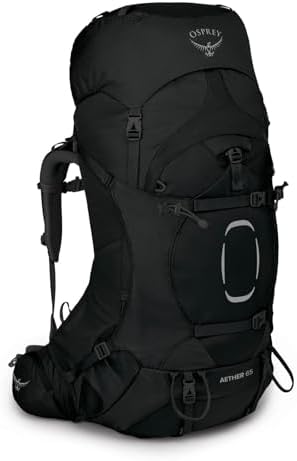
Not every large hiking pack earns praise for how it carries once the weight goes up. The Osprey Aether stands out because buyers keep coming back to the same point: it feels supportive, adjustable, and comfortable when the load would make lesser packs annoying.
That does not make it a universal pick. The same feedback also shows a clear tradeoff. This is a heavier, more feature-rich backpack that makes more sense for multi-day backpacking than for minimalists, day hikers, or anyone trying to cut bulk wherever possible.
The evidence here is strongest for the 55L and 65L versions. Some comments are clearly size-specific, so the verdict should stay narrow. Within that scope, the pack looks best for hikers who want load support, fit tuning, and easier access to their gear, and who do not mind carrying a bag that is not especially light.
Scorecard
| Metric | Value |
|---|---|
| DVSS Score | 87.61 |
| Satisfaction Tier | Excellent |
| Dissatisfaction Score (DS) | 7.41% |
| Critical Dissatisfaction Rate (CDR) | 5.55% |
The score suggests strong buyer satisfaction, and the written feedback supports that. The weak spots are real, but they are concentrated rather than broad-based.
Based on buyer feedback patterns, not hands-on testing. See how we score products.
Quick Take
- Best For: multi-day hikers and backpackers who care most about support, adjustability, and practical access
- Not For: ultralight hikers, simple-pack buyers, or short-trip users who do not need this much structure
- Top Strength: comfort and stability under moderate to heavy loads
- Main Limitation: heavier and more complicated than some buyers want
Key Practical Stats
- Buyers mentioned loads around 12 kg, 13 kg, 16 kg, 17 kg, 18 kg, 20 kg, 22 kg, 24 kg, 30 lb, and 40 lb
- One buyer described the large pack as about 5 lb
- Reported use cases ranged from 1–2 nights to week-long trips, with some buyers using it for 5 days, 6 nights, 8 days, and longer travel
- Several buyers described 55L as enough for shorter multi-day trips, while others pointed to 65L for longer outings or bulkier gear
Why the Aether Works Best Under Load
The clearest buyer signal is not storage or weather protection. It is a carry comfort once the pack is actually loaded.
Across both U.S. and international reviews, buyers repeatedly describe the Aether as comfortable, stable, and supportive, with meaningful weight when loaded. That includes comments from people carrying roughly 12 to 24 kilograms, or around 30 to 40 pounds, on multi-day hikes and backpacking trips.
A big part of that praise comes from how the weight is said to transfer to the hips. Buyers often mention the waist belt, shoulder straps, and torso adjustment together rather than as separate features. That matters because it suggests the comfort is not coming from padding alone, but from the whole carry system working as intended.
This also helps explain why some buyers call the pack worth the price, even though they admit it is not light. For this group, the extra structure is easier to accept because the bag remains manageable even when fully packed. If your trips involve more gear, food, or awkward loads, that is the strongest case for the Aether.
Osprey Aether Fit Is a Selling Point, but It Takes Work
The second major pattern is fit range. Buyers who are tall, broad-shouldered, long-torsoed, or harder to fit than average often sound especially positive about this pack.
Some specifically say smaller or one-size packs did not sit right on their shoulders or hips, while the Aether did. Others mention standard and extended-fit versions, or say the pack adjusted well for larger waists and longer torsos. That makes the Aether look more compelling for buyers who have struggled with generic fit systems.
The tradeoff is that adjustment can take patience. A few buyers said there are a lot of straps, a lot of tuning points, or a learning curve before the pack feels right. One reviewer flatly called it complicated. Another said the many adjustments are a strength once dialed in, but require trial and error.
That does not cancel the comfort story. It simply narrows it. This is a better match for buyers willing to spend time setting up the pack properly than for those who want something intuitive in five minutes.
Access and Layout Make It More Livable on Longer Trips
The Aether does not read like a stripped-down tube. Buyers repeatedly praise the access points, compartments, and general organization.
The front-panel opening comes up often, especially from people who dislike digging through a top-loader just to reach something buried in the middle. Buyers also mention the lower compartment, hip-belt pockets, outside pockets, and the general sense that the layout is practical for real trips rather than just showroom appeal.
That said, not every detail lands perfectly. A few buyers complained about zipper stiffness or difficulty closing some zippers while wearing the pack. Others wanted a more convenient pocket layout or thought the drawstring closure felt overdesigned. These are not dominant complaints, but they keep the organization’s story from being spotless.
Still, the overall pattern is favorable. This pack seems to work best for hikers who want more access and more usable structure, not fewer features.
Where Buyers Tend to Push Back
The biggest recurring limitation is weight. Even satisfied buyers sometimes describe the pack as heavy, on the heavier side, or bulkier than they ideally wanted.
That matters most when the trip does not justify the bag. Some buyers liked it for week-long use but admitted it felt like overkill for shorter outings. Others said it was too bulky for day hiking or not the right choice if you are chasing a lighter setup.
There is also a smaller but real cluster of complaints around zippers, side-pocket durability, missing parts, wrong size shipped, and listing-description confusion. The strongest pattern in that group is not total product failure. It is disappointing when expectations around specific details do not match what arrived.
Available Sizes
- 55L: The more convincing choice for shorter multi-day trips, weekend outings, and buyers who do not need maximum space
- 65L: Better suited to longer trips, bulkier kits, or hikers who prioritize room and structure over weight savings
- Caution: Feedback suggests capacity can feel different depending on packing style, trip type, and what kind of gear you carry
Most Likely Disappointment
The buyer most likely to be let down is the one shopping by liter count and expecting a lighter, simpler pack than this actually is. That person may see the Aether as too heavy, too bulky, or too involved to set up, especially if most trips are short or lightly packed.
Buy or Skip
The Aether makes the strongest case for hikers who expect to carry real weight for several days and want the suspension, hip support, and adjustability to matter once the pack is full. It is also a more convincing option for buyers who have had trouble getting other packs to fit properly.
It becomes harder to justify when the goal is lighter travel, faster movement, or shorter outings that do not need this much structure. In that lane, the Aether’s main strengths can start to feel like extra mass and extra complexity instead of useful advantages.
Check Price:
See More Options: Compare More Hiking Backpacks →
