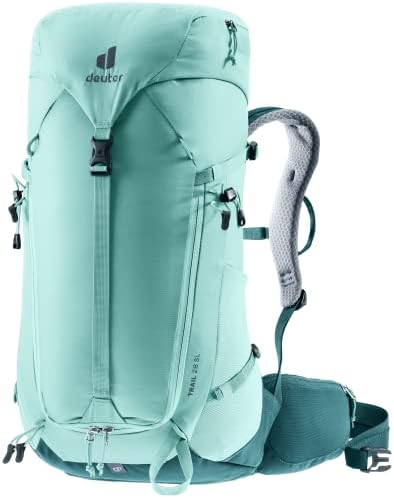
The Deuter Trail SL makes the most sense for hikers who want a women-specific pack and care a lot about how easily they can reach packed gear. The standout pattern is not just comfort. It is the combination of supportive carry and the wraparound or front-access zipper that keeps this from feeling like another basic top-loader.
That said, this is still a fit-dependent pack. Many buyers say it sits very well on a woman’s frame or narrower shoulders, but the weaker reviews point in one direction: when the shape is wrong for the wearer, the rest of the design matters much less.
Scorecard
| Metric | Value |
|---|---|
| DVSS Score | 80.29 |
| Satisfaction Tier | Excellent |
| Dissatisfaction Score (DS) | 9.94% |
| Critical Dissatisfaction Rate (CDR) | 7.04% |
The score suggests a strong satisfaction signal with some real friction around buyer fit and expectation gaps. Based on buyer feedback patterns, not hands-on testing. See how we score products.
Quick Take
- Best For: hikers who want a women-specific daypack with faster access to the main compartment
- Not For: buyers who already struggle with torso fit, lower-back contact, or harness sizing
- Top Strength: easy access without giving up carry comfort
- Main Limitation: fit still seems body-dependent despite the SL design
Analysis
Deuter Trail SL is most convincing when the fit works
The strongest buying case here starts with fit, not storage. Many owners say the pack feels especially good on a woman’s body, with comments about narrower shoulders, a more stable ride, and greater comfort than unisex models. Some also say it stays comfortable when loaded and spreads weight well through the shoulder straps, hip belt, and back padding.
That positive pattern shows up across multiple sizes, especially 22L and 28L. Several buyers describe it as comfortable for day hikes, weekend use, or longer days on the trail, and some say the women-focused shape is exactly why they chose it.
But the negative feedback is also fit-led, which matters more than a minor feature complaint. One 22L buyer said the harness felt small. Another 28L buyer said the pack pressed against the body badly enough to rub, while an older critical review said the shape did not work for a smaller climber because of how the upper edge met the head position.
So the safest conclusion is narrow. This looks like a very good fit for many buyers who match the SL shape, but not a pack to assume will work just because it is marketed toward women.
The access design is the clearest reason to prefer it over simpler rivals
A lot of positive reviews call out the zipper access, and that feels specific enough to matter. Buyers repeatedly mention the side or front opening because it lets them reach gear lower in the pack without unloading everything from the top.
That detail shows up as a real use benefit, not decoration. Owners mention easier packing, quicker access during hikes, and more practical use of the available space, which makes the Trail SL feel more purposeful than a standard top-loader with a similar volume.
This also ties into the storage praise. Buyers mention useful pockets, side storage, hip-belt storage, hydration compatibility, and an included rain cover in their feedback on larger sizes, but the access zipper is the feature that most clearly gives this pack its own identity.
The best evidence supports it as a day-hiking pack first
The safest use case here is day hiking. That is the clearest recurring theme in the 16L, 22L, and 28L feedback, even though some owners say the larger sizes also work for short hut trips, weekends, or travel.
I would keep that distinction tight because capacity is size-sensitive. The 16L and 22L read most clearly as daypack options, while the 28L gets broader use-case praise from buyers who want more room without moving into a much larger overnight pack.
Available Sizes
- 16L: best-supported as a day-outing size
- 22L: strongest evidence for day hiking, with some short-trip flexibility
- 24L: listed in the family, but the feedback here is thinner
- 28L: strongest support for day hiking plus short weekends, hut trips, or mixed hiking-travel use
The detailed buyer evidence is strongest for 22L and 28L, so those are the safest sizes to discuss with confidence.
Most Likely Disappointment
The buyer most likely to be let down is the one who treats “SL” as automatic proof of a good fit. The recurring downside is neither poor organization nor general discomfort. It is that the pack shape can still sit wrong on some bodies, and once that happens, the pack quickly stops feeling like a good match.
Buy or Skip
The best case for the Deuter Trail SL is a hiker who wants a women-specific pack and is tired of digging through a narrow top opening to reach gear near the bottom. That buyer gets the strongest value here: supportive carry, a more body-specific shape, and a zipper layout that buyers repeatedly say is genuinely useful.
The weaker case is someone hard to fit or already knows that torso shape and harness geometry decide the whole backpack experience. This pack has enough positive feedback to warrant a closer look, but the small cluster of fit complaints is too significant to ignore, especially for a fit-specific model.
Check Price:
See More Options: Compare More Hiking Backpacks →
