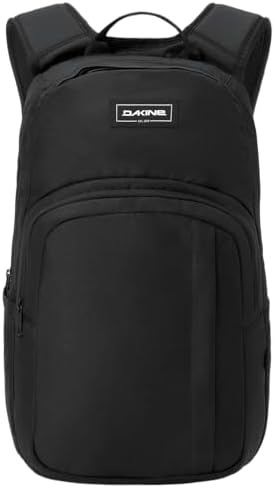
The Dakine Campus looks like a simple choice for school or work backpacks. It is not.
The real choice is size and loadout. The 25L handles a moderate day better, while the 33L makes room for books, devices, lunch, and travel extras — but it can feel like too much of a bag when the load is light, or the frame is small.
That makes the Campus worth buying for organized school or work carry only after three checks: what you pack, what laptop you carry, and what size your body can manage.
Scorecard
Dakine Campus scores 93.20 with an Exceptional tier, which puts it in serious consideration as a school/work laptop backpack — but that number cannot settle whether the 25L clears a cased 15-inch laptop, whether the 33L handles a MacBook Pro 16 or 17.3-inch gaming laptop without fit pressure, or whether zippers, stitching, lining, straps, and bottle pockets hold up under packed daily use.
| Metric | Value |
|---|---|
| DVSS Score | 93.20 |
| Satisfaction Tier | Exceptional |
| Dissatisfaction Score | 4.11% |
| Critical Dissatisfaction Rate | 2.56% |
Based on buyer feedback patterns, not hands-on testing. See how this scoring works.
The 2.56% line traces to zipper defects, stitching defects, lining problems, strap defects, bottle-pocket wear, 33L fabric ripping, sticky residue after laptop-and-binder packing, and a top zipper that can catch on a seam — use the size, laptop-fit, and stress-point checks below before keeping the bag.
Quick Take
- Best For: School or work carry with a laptop, charger, lunch, bottle, and small daily items, as long as the size matches the load.
- Not For: Guaranteed large-laptop fit, waterproof protection, heavy textbook loads in the 25L, or smaller users who may find the 33L too bulky.
- Top Strength: The Campus separates a daily kit with a laptop sleeve, organizer pockets, small-item pockets, an insulated food pocket, and side bottle pockets.
- Main Limitation: The size tradeoff matters: the 25L can tighten fast, while the 33L can feel like more backpack than the day needs.
The Campus Decision Starts With Size, Not Pockets
The Campus looks pocket-rich first. Before those pockets help, the size choice has to be right.
When 25L Runs Out of Room
Dakine Campus changes meaning by size: the 25L keeps a school or work kit more manageable, but it can run tight with books, wide binders, a jacket, or packed pockets — while the 33L adds 33 liters of capacity that can turn into bulk on lighter loads or on an 11-year-old slim frame.
For a lighter daily kit, the 25L is the safer starting point, but the moment books, a PE kit, and a lunch box are added to the same day, the bag can stop feeling like a roomy campus pack and start acting like a narrow organizer.
Older Dakine 25L comparisons should not decide the current purchase — check the current layout before assuming an older single-compartment version carried the same way, because that shortcut can make the current 25L feel smaller than expected.

When 33L Becomes the Load
The 33L earns its place when the day gets heavier: headphones, a small jacket, a drink, a snack, devices, chargers, books, clothing, lunch, bottles, and a PE kit all point to a larger school/work loadout — but that same breadth is why the 33L needs a body-frame check before buying.
A deeper body and roomier compartments solve the space problem; they also create the opposite problem when the load is light or the user’s frame is small.
Treat the Campus as a structured daily laptop backpack, not an ultra-slim pack or packable travel bag. When low-bulk carry matters more than pockets and lunch storage, compare smaller laptop backpacks before choosing the 33L.
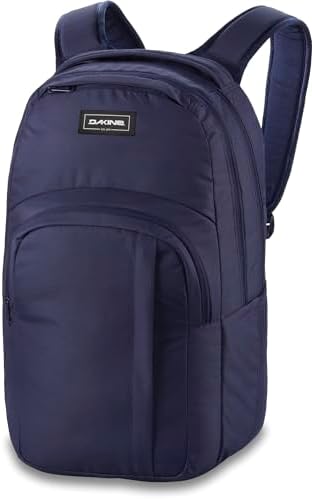
The Pocket System Works Until the Compartments Compete
The strongest reason to consider the Campus is also the reason to pack it carefully — its pockets separate the day, but they still pull from the same body volume.
Small Items Make the Layout Useful
Dakine Campus is strongest when the job is separation: laptop, chargers, pen holders, small-item pockets, a front zip pocket, a sunglasses pocket, an insulated food pocket, and two side bottle pockets keep a school/work kit from becoming one pile — but the 25L can lose usable main-compartment space when those pockets are packed hard.
The organization’s story goes beyond the laptop sleeve. Pencil cases, headphones or earbuds, keys, glasses, phone, wallet, documents, folders, and textbooks turn the pockets into a school/work sorting system, but the 25L still needs a packed-load check when bulky paper items share space with lunch and tech.
For quick-grab items — keys, wallet, mobile phone, passport, purse, glasses — the top and small pockets do the most work. Check the lining before trusting fragile eyewear there, because the 25L sunglasses pocket also carries a small/thin-pocket caution.
The Lunch Pocket Has a Clock
Use the insulated pocket for school or work food carry, not cooler duty: the 25L has a 4-hour work-lunch cue, while long outdoor days fall outside the safe claim.
The 33L adds a stronger food-and-drink case — its insulated pocket can handle a thermos flask and lunch — but that does not turn the Campus into a long-duration cooler.
Bottle Fit Starts After the Bag Is Packed
The side pockets are used only for the daily setup, after the bottle passes a real fit check. A 25-ounce bottle is supported in the 25L, 32 oz Hydro Flask fit, and 33L pockets can tighten when the bag is fully packed.
Check the bottle diameter after loading the main compartments, because a bottle that fits an empty pocket can press against books, lunch, or a laptop kit once the bag is full.
A Laptop Sleeve Is Not the Same as Laptop Fit
The Campus earns its laptop-backpack role, but the fit check does not stop at screen size. The size, case thickness, and zipper clearance decide whether the sleeve helps or frustrates.
The 15.25-Inch Check
Dakine Campus has a laptop sleeve, but fit turns on measurements: the 25L has a 15.25-inch sleeve cue and a 15-inch case conflict, while the 33L has MacBook Pro 16- and 17.3-inch examples and a gaming laptop that still needs width, thickness, and zipper-clearance checks.
Smaller-device setups — a 13-inch laptop, 14-inch MacBook Air, and a large iPad — work better in the 25L, but the 15-inch case conflict makes case thickness as important as the laptop name.
Big Laptops Need More Than Hope
The 33L makes more room for larger devices, but the 15-inch Lenovo, 14.25″ x 9.5″ example, MacBook Pro 16, and 17.3-inch gaming laptop references should be treated as measurement prompts, not as blanket compatibility.
Measure the laptop’s widest point and thickness before buying — a larger chassis or protective case can turn a sleeve that looks right on paper into a zipper-clearance problem once the bag is packed.
Two Laptops Change the Carry
The two-laptop carry belongs to the 33L check, and it adds two tests at once: sleeve pressure and shoulder pressure after the rest of the work kit is packed.
That matters because the laptop question does not end at the sleeve. A second device changes how the bag carries, how the straps feel, and how much space remains for chargers, books, or lunch.
Comfort Depends on the Load You Actually Carry
Padding matters, but the Campus does not feel the same on every frame. The 33L can carry more, and that extra room can become extra bulk.
The Slim-Frame Problem
Dakine Campus comfort depends on the size/load match: the 25L has smaller-user and school-age fit cues, while the 33L can carry more with padded straps and a sternum strap, but can overwhelm a slim 11-year-old or add shoulder load with two laptops.
For a heavier school or work day, the 33L can be the right call — match it to body frame before buying, because extra capacity becomes extra backpack when the bag is wider or longer than the person carrying it.
The Sternum Strap Does Not Cancel Bulk
Test the Campus with the exact school or work kit before keeping it. Padded straps matter less if the bag’s footprint, sternum strap, or two-laptop weight sits wrong on your body.
Prior-model strap and handle complaints should not be treated as current-model fact, but they still make one check useful: load the bag and feel the shoulder pressure and top handle before the return window closes.
Travel Use Is Real, but Airline Fit Is a Check
The Campus can carry travel extras, but it remains a laptop backpack. Treat travel use as a pack-size decision, not a luggage promise.
The 25L Travel Kit Is Specific.
Dakine Campus can handle light travel loadouts when packed carefully: the 25L travel kit includes 2 TSA clear-approved toiletry bags, a medication/supplement bag, a packing cube, a paperback book, an extra-large scarf, and a 25-ounce bottle — while the 33L has under-seat, personal-item, overnight, and weekender use that still needs a packed-dimension check against airline rules.
Keep that travel list in the light-tech-carry lane: toiletries, a packing cube, clothing layers, a paperback book, a scarf, a medication/supplement bag, and a 25-ounce bottle can fit into the packing story, but none of those items turns the Campus into an airline-approved bag.
Under-Seat Still Means Packed Dimensions
Check the packed bag against airline rules before flying — under-seat and personal-item allowances can be exceeded once the same backpack is stuffed with clothing, chargers, books, and a bottle.
If travel is the main reason to buy, keep the question narrow: the Campus can work as a laptop backpack with travel extras, not as a substitute for luggage.
Check the Stress Points Before You Commit
The Campus has enough long-use context to stay in the conversation. It also has enough named stress points that the return window should do real work.
Zippers, Seams, and the Packed Test
Dakine Campus has enough long-term, sturdy-built support to stay in the running, but the return-window check should target named stress points: zippers, stitching, lining, straps, bottle pockets, 33L fabric ripping, sticky residue after packing a laptop and binder, and a top zipper that can catch on a seam.
Smooth zipper movement on the 33L does not end the check — load the main compartments and top pocket, then see whether the zipper path catches at the seam.
Minor finish issues belong below that check: a Dakine tag falling off matters less than zipper, stitching, lining, strap, bottle-pocket, and fabric tests, but it still belongs in the return-window inspection if cosmetics matter to you.
Rain Is Not the Reason to Buy
Water-resistant and waterproof wording conflict with heavy-rain limits, so rain should not be the reason you choose this backpack — laptop exposure needs a sleeve, cover, or different carry plan.
Do not treat the Campus as waterproof. When the laptop will be exposed to rain during a walk, commute, or school drop-off, add protection before relying on the bag alone.
Padding Needs a Second Look
The built-in sleeve and glasses pocket help with separation, but the 25L sleeve has sturdier padding concerns, and the fleece-lined pocket can be thin — check corner coverage and lining before trusting fragile gear to the bag alone.
When laptop protection is the main reason for buying, the Campus may need help from a separate sleeve. The backpack layout organizes the kit, but it does not prove impact protection at the laptop’s lower corners.
Who Should Think Twice
The caution list is specific. The Campus gets weaker when fit, protection, rain, or size expectations become the sole basis for the purchase.
Large Is Not a Fit Guarantee
Think twice when the purchase depends on edge cases: 25L space for bulky books and binders; 33L fit on a smaller frame; 15-inch laptop clearance with a case; MacBook Pro 16- or 17.3-inch fit; or rain protection beyond light exposure.
The 33L has larger-laptop references, but the upper fit limit is contested — measure width and thickness before treating the size-up as the fix.
Waterproofing Is Not There
Waterproofing is not a reason to buy the Campus. When the laptop or documents will face heavy rain, use extra protection or consider another carry plan before committing.
Measure Before You Trust the Sleeve
Measure the width before buying — screen size alone may not account for case thickness or a chassis shape that prevents the laptop from clearing the sleeve or zipper.
That check matters most for 15-inch and larger devices, where the 25L case conflict and 33L upper-fit uncertainty both make measurement more useful than the model name.
Protection Needs More Than a Built-In Pocket
When laptop protection is the main reason for buying, the Campus may not be the whole answer — the 25L sleeve has sturdier padding concerns, and the glasses pocket can be thin.
A separate sleeve makes more sense when the laptop protection question matters more than backpack organization.
Buy or Skip the Dakine Campus?
Buy the Dakine Campus when your main need is organized school or work carry for a laptop, charger, lunch, bottle, and small items — skip or compare another size if the 25L must swallow bulky books and a jacket, or if the 33L turns into more bag than your frame or daily kit needs.
Before the CTA, check three points: laptop width and case thickness, packed loadout by size, and early stress points around zippers, seams, straps, lining, and bottle pockets. When the problem is protection, cable/charger order, or size-class mismatch rather than the Campus layout, the better next step is a sleeve, tech pouch, or a different laptop-backpack size class.
Check the Price
See More Options
