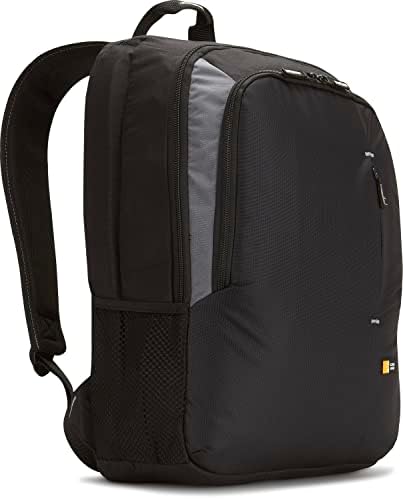
The Case Logic VNB-217 looks like a simple answer if you want a slim backpack for a large laptop. The catch is physical: screen size matters less than chassis width, zipper path, bottom-edge padding, and daily load size.
A 17-inch label can get your attention. It should not make the decision for you.
Scorecard
The Case Logic VNB-217’s 89.79 score places it in the Excellent tier, so use it as a satisfaction benchmark for a value-focused laptop backpack. That number cannot tell you whether a gaming-width 15.6-inch chassis clears the zipper, whether the bottom padding protects the lower laptop corner during a hard set-down, or whether the handle and zipper survive packed daily carry over the long term.
| Metric | Value |
|---|---|
| DVSS Score | 89.79 |
| Satisfaction Tier | Excellent |
| Dissatisfaction Score | 5.76% |
| Critical Dissatisfaction Rate | 4.17% |
Based on buyer feedback patterns, not hands-on testing. See how this scoring works.
The small group of seriously unhappy buyers concentrated on three physical problems: zipper and load stress, handle attachment, and bottom-edge padding. Start with the fit section if your laptop is wide, then read the weak-spots section before keeping the bag.
Quick Take
- Best For: Slim school or work carry with a large laptop and a moderate daily kit.
- Not For: Heavy textbooks, oversized 17.3-inch laptops without measurement, waterproof carry, or rugged laptop protection.
- Top Strength: Large-laptop carry inside a slim backpack when the chassis clears the zipper.
- Main Limitation: Bottom padding, zipper stress from packing, and heavy-load capacity need checking before you keep it.
When the VNB-217 Makes Sense
The VNB-217 is strongest when the load stays ordinary, but the laptop does not — a narrower job than the 17-inch wording may imply.
The slim bag for a not-so-small laptop
The Case Logic VNB-217 makes the most sense when you want a slim school or work backpack for a large laptop and a controlled daily kit — not a rugged case, a travel-heavy pack, or a bag built around several textbooks.
The slim body and low-profile look help it stay in a work or school role, but that role depends on a moderate load rather than a heavy student stack. If your daily carry is a laptop, documents, a charger, and a few books, the shape works in your favor; if your backpack usually turns into a moving bookshelf, the slimness stops helping.
A school bag before it is a gear hauler
This is still a laptop backpack first. The large-laptop job does not turn into a bulky-bag job — and keeping that distinction is the point.
The value-oriented build narrows the purchase question to whether the fit, bottom padding, and zipper checks pass for your normal kit. Once those checks fail, a larger or more protective backpack makes more sense.
Why Screen Size Fails at the Zipper
Before anything else, see whether the zipper closes around your packed laptop. The screen class gets you close, but the chassis decides the final fit.
Screen size is the wrong shortcut
The Case Logic VNB-217 can be a strong, large-laptop backpack only after the chassis passes the zipper test. Seventeen-inch and 17.3-inch examples help frame the range, but the useful comparison points are actual dimensions: 16.38 x 10.8 x 1.21 inches, 16.25 x 11.75 inches, over 1 inch thick, and the 16.4 x 12.2 x 1.8-inch compartment answer that still needs current-listing verification.
Treat screen size as a starting point, not the answer — a thick or gaming-width chassis can turn a listed large-laptop fit into a corner-and-zipper problem. Measure width, depth, and thickness before buying; skipping that step can leave you with a laptop that matches the screen class but has a zipper that gets caught at the corners.
The numbers that matter more than 17.3 inches
The HP Envy 17 reference point is 16.38 x 10.8 x 1.21 inches and 6.1 lbs. The Dell Inspiron 17 5000 measures 16.25 x 11.75 inches and is over 1 inch thick.
Both examples are useful as comparisons, not as clearances. Your laptop can have the same screen size and still have a wider chassis, a thicker rear edge, or a corner shape that changes the fit. Close the zipper around the laptop with your normal work or school kit inside — a fit that works empty can fail once the charger, books, and tablet add pressure.
Two laptops create a different problem
Two-laptop carry should stay an edge case, not a reason to buy, unless both devices fit with the zipper closed, and the padding still sits where the laptop corners need it. A second laptop changes more than capacity; it shifts pressure inside the compartment and can push the first device away from the protected zone.
A sleeve can improve the protection setup, but its thickness also eats into the zipper space that determines whether a large laptop fits at all. Test the sleeve inside the laptop compartment before keeping the bag — added padding can solve the bottom-edge problem, but may create a closure problem.
The School and Work Load That Still Fits the Slim Role
The VNB-217 has enough structure for a daily kit, but the load has to stay disciplined. Once books take over, the slim shape no longer helps.
Five folders fit the story better than five textbooks
At 1575 cubic inches (~26L), the Case Logic VNB-217 works best as a disciplined school or work carry. A laptop, five folders, one 5-subject notebook, an adapter, a calculator, an umbrella, snacks, lunch, and a 24-ounce bottle fit the moderate daily load; more than two large textbooks push the bag toward a larger backpack.
That threshold matters because the bag sits in the medium 18–28L range. A school backpack, yes — a maximum-capacity student pack, no. Plan the real day before buying; if several heavy textbooks are normal, a larger laptop backpack is the cleaner choice.
The front pocket is useful, not deep
The main compartments make sense for the laptop, books, files, and small accessories, but treat the front area as light organization rather than a deep admin panel. A charger, mouse, cables, and USB drives fit the daily-tech idea, but if quick charger-and-cable separation matters, a dedicated tech pouch does that job better while the backpack handles the laptop and documents.
Verify the current pocket layout if exact small-item placement matters — relying on photo-level pocket assumptions can leave you without the slot depth or arrangement your daily kit needs.
The bottle pocket stays a side note
The side mesh pocket can hold a water bottle, an umbrella, or a glasses case, but it should be a small convenience. The stronger case for the VNB-217 still comes from laptop fit, moderate load control, and slim carry — not from what fits on the outside.
Choose it only if the laptop and main kit pass the checks first.
The Bottom Edge and Packed Zipper Are the Weak Spots
The VNB-217’s limits show up at physical stress points, not in the product category name. Those points matter most after the bag is packed.
The corner your laptop lands on
The Case Logic VNB-217’s weak spots are physical and load-specific: bottom padding at the laptop corner, zipper pressure with a full kit, handle attachment, seams, stitching, and material tension all need checking before the slim build can be considered safe enough for daily use.
The laptop compartment can separate the device for normal carry, but the bottom edge is the point to inspect if hard set-downs or corner impacts are part of your routine — that corner is where the laptop meets the floor first when the bag is set down. Check it before relying on the padding.
Pack it before you trust the zipper
Close the zipper around your full kit before keeping the bag, because zipper stress only becomes useful information after the laptop, charger, books, and accessories are inside. An empty fit does not prove a packed fit.
The same logic applies to the 16.4 x 12.2 x 1.8-inch compartment dimensions. Treat it as a reference, then test the actual packed zipper — a number alone cannot tell you how the corners behave under load.
The handle and seams need a loaded check
Lift the packed bag by the handle during the return window, because handle attachment, seam tension, stitching, and material matter most after the load is real. The concern is not that every bag fails; the concern is that these stress points only reveal themselves when the bag carries a full laptop kit.
If long-term rugged quality matters more than slim value, a more protective backpack becomes easier to justify at this point.
Waterproof is not the promise
Light rain or snow can be treated only as a guarded condition — if your electronics must stay dry, treat waterproofing as absent and protect them separately. The VNB-217 should not be bought as a waterproof laptop backpack.
That weather limit also keeps the travel story small. Use the bag for light travel-adjacent carry only after comparing the packed size with airline rules; under-seat or overhead fit can change once the bag is full.
Comfort Changes With Load and Heat
Comfort supports the VNB-217’s case, but it does not erase the weight. The same padded build that helps the carry can feel different after a long walk.
A 6.1 lb laptop changes the carry
The Case Logic VNB-217 carries better than a shoulder-style setup because the straps and back are padded, but comfort still has to be judged with your real load — a 6.1 lb HP Envy 17, books, and hot-weather walking change the result.
Pack the normal laptop, books, and charger before judging comfort, because strap padding does not remove the weight of a heavy device. A comfortable empty backpack can feel very different once the laptop, charger, and class or office materials are inside.
Heat matters on longer walks
The padded back helps with carrying comfort, but it can run warm during longer or hotter walks — treat comfort as a load-and-weather check rather than a fixed trait.
If you walk far in warm weather, test the packed bag early. The comfort case is strongest for moderate school or work carry, not for heavy-load walking in heat.
Who Should Think Twice
The VNB-217 has a clear role, and the wrong setup falls outside it for measurable reasons. These checks are more useful than a broad warning.
Oversized 17.3-inch is not a promise
Think twice about the Case Logic VNB-217 if your setup depends on an oversized 17.3-inch chassis, more than two large textbooks, two laptops, waterproofing, or long hot walks — each condition pushes against the bag’s slim fit, moderate capacity, zipper margin, or padded-back comfort.
Oversized gaming and workstation laptops need to be measured before purchase, because the large-laptop role still depends on zipper clearance at the corners. Skip the measurement, and the failure point is concrete: the zipper may not close cleanly around the packed kit.
Heavy textbooks change the answer
Heavy textbook carry changes the route; the ~26L size works better for controlled school and work kits than for several large books alongside a laptop.
If more than two large textbooks are normal, compare larger laptop backpacks before buying. The VNB-217 can fit a disciplined daily kit, but it should not be treated as a heavy-load student pack.
Discreet is not the same as secure
The low-profile look can help the bag appear less flashy, but it should not be treated as lockable or anti-theft storage — no lockability mechanism is established here.
The same scope rule applies to camera odds and ends. A small camera accessory can ride with other tech items, but that does not make the VNB-217 a camera backpack.
The black listing cue stays in the background
If you see VNB-217BLACK, treat BLACK as a listing or color identifier only. It should not affect the fit, padding, comfort, or durability decision.
Case Logic V7 Professional can remain as an adjacent large-laptop option, but the evidence here is too thin for a full side-by-side comparison.
Buy or Skip the Case Logic VNB-217?
Buy the Case Logic VNB-217 if you want a slim ~26L school or work backpack for a large laptop and a moderate kit. Skip it if your decision depends on a guaranteed oversized 17.3-inch fit, more than two large textbooks, rugged bottom-edge protection, or heavy-duty zipper and handle confidence.
Buy when your laptop clears the zipper, your kit stays below heavy-textbook territory, and the bottom edge passes your protection check. Skip when the laptop is oversized, the load is heavy, or the protection expectation is closer to a hard case than a slim backpack.
Compare larger laptop backpacks when the load or device size compromises the slim role; add a laptop sleeve or tech pouch only if the bag still closes cleanly with the contents inside.
Check the Price
See More Options
