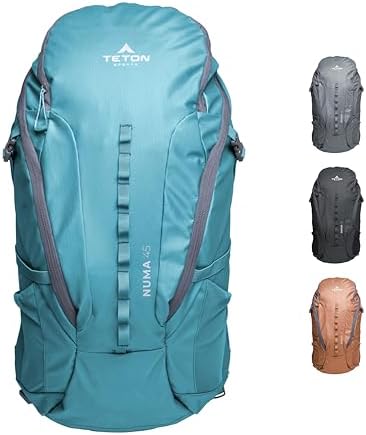
The Teton Numa makes the most sense for hikers who want a feature-rich pack without paying premium-brand money. Its strongest buyer pattern is comfort for the price. Its biggest risk is that fit and durability are not equally convincing across the family.
That distinction matters here because the evidence appears pooled across multiple sizes and closely related variants. So the broad verdict fits the family, but trip length, load comfort, and body fit clearly shift by size and user build. The safest read is not “great for everyone.” It is “good value when the fit works, less convincing when the fit does not.”
Scorecard
| Metric | Value |
|---|---|
| DVSS Score | 88.97 |
| Satisfaction Tier | Excellent |
| Dissatisfaction Score (DS) | 6.16% |
| Critical Dissatisfaction Rate (CDR) | 4.20% |
This is a strong score, but the caution is real because the negative feedback clusters around fit, straps, zippers, and stitching rather than random one-off complaints.
Based on buyer feedback patterns, not hands-on testing. See how we score products.
Quick Take
- Best For: Budget hikers who want a comfortable pack with good access and lots of external attachment options
- Not For: Buyers who need a precise torso fit, cleaner organization, or stronger long-term durability confidence
- Top Strength: Comfort and feature value stand out for the money
- Main Limitation: Fit consistency and durability look too mixed for demanding use
Teton Numa Key Practical Stats
- Buyer feedback notes that the 30L weighs a little over 2 lbs, while the larger family variants are repeatedly described as light for their class but not truly ultralight.
- Several favorable reports describe comfortable carry in the 25–45 lb range, while some negative reviews say comfort falls off earlier, depending on fit and torso length.
- Repeated buyer notes mention compatibility with a 3L hydration bladder.
Where It Works Best
The strongest reason to consider this pack is simple: many buyers feel it carries better than its price suggests. Across the family, people repeatedly praise the padding, back support, hip support, and overall comfort once adjusted correctly. That is especially important in a budget hiking pack, where poor carry is often the first compromise.
Access is another real advantage. Buyers like the large openings, side or panel access on some versions, roomy main compartment, and the number of loops and straps for adding gear outside the bag. This makes the pack feel more flexible than a basic top-loader, especially for people who hate digging to the bottom for one small item.
The value argument is also credible. Many positive reviews come from buyers who knew they were not buying a premium pack, yet still felt they received greater comfort and more usable features than expected. That is the clearest lane for this product family.
Fit Is the Main Filter
The problem is not that the pack lacks adjustment. In fact, many buyers praise the number of adjustment points. The problem is that adjustability does not always translate into a better fit. Taller users, long-torso users, some broader-shouldered users, and some larger-waist users repeatedly describe difficulty getting the load to sit correctly.
That pattern shows up in different ways. Some say the load lifters do not work well at their torso length. Some say the bag rides too short or transfers too much weight to the shoulders. Others say the waist belt or strap geometry never quite settles into a comfortable carry. Those are not minor annoyances on a hiking pack. They are the difference between a good trail day and shoulder fatigue.
The 30L version has its own separate caution. Buyers like its comfort, low weight, and general day-hike usefulness, but recurring complaints center on the shoulder-strap pocket rubbing the arm and the sternum-strap design coming loose or failing. That makes the smallest version less appealing for buyers who care a lot about chest-strap stability or long-mile comfort.
Strong Features, Uneven Refinement
This pack family aims to cover many use cases. That helps explain why some buyers use it for day hikes, weekends, travel, photography, and even light backpacking. The family offers plenty of straps, loops, pockets, access points, and gear-attachment options. When that matches the buyer’s style, it feels versatile.
But the same design also creates friction. Some buyers find the strap layout too busy, the organization awkward, or the access design less intuitive than expected. A repeated example is the included poncho-style rain piece. Some buyers love the extra versatility. Others see it as heavier, less practical, and harder to manage than a normal fitted rain cover.
So this is not a clean minimalist pack. It is better for buyers who like extra loops, multiple access points, and adaptable storage. It is less convincing for buyers who want a simpler, more refined layout.
Durability Is the Real Question
The headline rating is strong, but the durability signal is mixed enough that I would not gloss over it. Plenty of buyers say the bag held up well. Some even report years of use. But the recurring complaints are serious and too consistent to ignore. They include shoulder-strap stitching issues, sternum-strap failures, zipper issues, mesh-pocket damage, and frame-related wear.
That does not mean every pack fails. It means the downside is concentrated in the exact areas that matter most on trail. If you buy this mainly because it looks like a bargain versus pricier hiking packs, that trade-off may be fine. If you buy it expecting dependable hard-use performance, the evidence is not strong enough to support that expectation.
This is why the best case for the pack is still “starter-friendly value,” not “buy once for years of demanding backpacking.” The more the load, terrain, or trip importance increases, the more the durability risk matters.
Available Sizes
- 30 Liters
- 44 Liters
- 45 Liters
- 65 Liters
The safest interpretation is that smaller and mid-size versions fit day hikes, longer day use, and lighter overnight use more naturally, while the larger-capacity versions draw more disagreement because fit and support matter more as loads rise.
Most Likely Disappointment
The buyer most likely to regret this pack is someone who wants a precise fit, regularly carries heavier loads, or expects premium-level durability because the scorecard looks strong. That buyer is more exposed to the exact complaints that repeat most often here: awkward fit, strap discomfort, zipper trouble, and stitching failures.
Works Well With
- 3L hydration bladder, since buyers repeatedly mention hydration compatibility and reservoir-ready storage.
- Trekking poles, which come up more than once through external attachment use.
- Compact camera gear or photography extras, especially on the 30L and 44L use cases, where buyers mention carrying camera equipment on hikes.
Buy or Skip
Buy it if you want a hiking pack that offers a lot of comfort, access, and trail-friendly features for the money, and your use is closer to day hikes, weekend use, or beginner backpacking than to repeated heavy-haul trips. This is where the buyer feedback is most supportive.
Skip it if you know fit is tricky for you, especially if you are tall, broad, carry heavy, or care more about long-term reliability than upfront value. The core issue is not a lack of features. It is that the experience seems too dependent on body shape, pack size, and luck with build quality.
- Check Price: Teton Numa on Amazon →
- See More Options: Compare More Hiking Backpacks →
