
The hard part is not choosing a rugged Carhartt backpack. It is knowing whether the 21L or 25L version matches your laptop, bottle, books, and daily load.
The Carhartt Classic Laptop Backpack works best when you treat the two sizes as separate buying decisions. The 21L is safer for light laptop-first carry, while the 25L gives more room without becoming a large-load backpack.
Scorecard
The Carhartt Classic Laptop Backpack has a strong scorecard profile, with a DVSS Score of 91.76. It lands in the Exceptional tier — strong enough to take seriously, but still tied to the 21L and 25L fit limits below.
| Scorecard metric | Result |
|---|---|
| DVSS Score | 91.76 |
| Satisfaction Tier | Exceptional |
| Dissatisfaction Score | 5.30% |
| Critical Dissatisfaction Rate | 4.23% |
Based on buyer feedback patterns, not hands-on testing. See how this scoring works.
At 4.23%, serious warnings are uncommon, but the strap, seam, clasp, zipper, and fit limits still matter before buying.
The scorecard is not proof of laptop fit, padding, waterproofing, comfort, zipper behavior, or strap durability.
Quick take
- Best For: Light laptop-first carry in the 21L, or moderate daily work and campus carry in the 25L.
- Not For: Heavy books, 30L-style packing, large handled bottles, or laptop protection without added cushioning.
- Top Strength: Rugged everyday shell feel with simple carry and clean daily-use appeal.
- Main Limitation: The 21L and 25L labels do not settle load, laptop padding, bottle fit, zipper access, or strap/seam confidence.
Decision matrix
| Your Carhartt setup | What to know before buying |
|---|---|
| Light laptop-first carry | Start with the 21L |
| Moderate daily work or campus carry | The 25L is the broader choice |
| Heavy books or bulky gear | Compare a roomier backpack |
| Protection-first laptop carry | Add a sleeve or compare elsewhere |
| Large handled bottle or fast travel access | Check another option before committing |
The 21L stays light-duty. The 25L still stops short of large-pack loads.
The size label decides the first cutoff.
21L top opening and school items
The 21L works best before the school load gets bulky.
The 21L main compartment can handle compact daily carry, but the loading area gets less forgiving when larger school items enter. Books and binders take up usable space after the laptop is already inside, and the opening shape can make the bag feel tighter than the liter number suggests.
A 6th-grade school load reached the cramming point and pushed the switch to a larger backpack.
- 6th-grade school load: The bag reached the cramming point instead of staying easy to pack.
- Larger-backpack outcome: The mismatch pushed this size out of the running.
- Binder-heavy carry: Multiple binders turn the 21L into a tighter student setup.
Use this table to separate light 21L carry from loads that push past the size.
| Your 21L load | Where the 21L starts to crowd |
|---|---|
| Laptop, papers, and light daily items | Safer fit for compact work or school carry |
| Laptop plus several textbooks | Main space can tighten quickly |
| Multiple binders | Better treated as a larger-bag need |
| Full middle-school or high-school load | Compare a roomier backpack first |
The 21L is the light-carry choice, not the safest school-book choice.
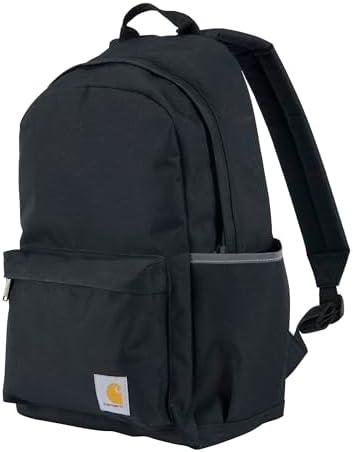
25L body volume and 30L expectations
The 25L is broader daily carry, not a big-pack jump.
The 25L main compartment gives more daily room than the 21L, but the body still stays compact. The compact body squeezes bulky items sooner than a larger pack would, and a full main compartment can also press into nearby storage space.
The 25L label does not make this a 30L-style backpack.
- 30L comparison: The 25L body can feel smaller than a true large daily pack.
- Size 11US work boots: Bulky footwear sits outside the safe use case.
- Light travel packing: The 25L can work when the travel load stays moderate.
Use this table to decide whether the 25L matches your actual load.
| Your 25L expectation | Where the 25L stops short |
|---|---|
| Laptop, charger, notebook, bottle | Good fit for moderate daily carry |
| Light travel with compact packing | Works when the load stays restrained |
| Bulky footwear or work gear | Not the right storage shape |
| A 30L-style backpack feel | Compare a larger backpack first |
Choose the 25L for broader daily carry, not for bulky or large-pack storage.

Laptop fit and laptop protection split by variant.
The sleeve question is really two questions.
21L 17-inch conflict and front padding
Laptop fit is not settled by the outside size cue.
The 21L sleeve should not be read as one universal laptop answer. Usable sleeve space can differ from the outer size cue, and padding coverage is a separate question from whether the device slides in.
A 17-inch laptop is not settled by the outer-size cue because the 21L fit result splits by device body.
- Large 17-inch case: One larger laptop setup slid in cleanly.
- Second 17-inch case: Another 17-inch setup hit the opposite result.
- Front-side cushioning: The sleeve concern shifts from fit to protection.
Use this table to keep laptop fit separate from laptop cushioning.
| Laptop setup | What the 21L size can mean |
|---|---|
| 15-inch-class laptop | Stronger fit range than 17-inch carry |
| 17-inch laptop | Check fit before relying on this size |
| Laptop protection matters most | Add a separate sleeve or compare |
| Outer-size cue is the only reason | Treat the fit as uncertain |
The 21L is safer as a known-fit laptop bag than as a blind 17-inch choice.
25L MacBook Air 15 fit and bottom padding
The 25L has better fit range than cushioning range.
The 25L sleeve has stronger laptop-fit support than the 21L, but the sleeve bottom leaves the lower edge as the protection question. A laptop can fit the compartment while the lower edge still needs extra attention when the bag is set down.
The laptop sleeve can hold common laptop sizes while still leaving the bottom edge as the protection question.
- MacBook Air 15: This is the cleanest specific laptop fit case.
- 15.6-inch laptop: The fit pattern extends beyond smaller laptops.
- Some 16-inch cases: The 25L has a broader laptop range than the 21L.
- Rolled-towel workaround: One setup added bottom cushioning instead of trusting the sleeve alone.
Use this table to separate laptop size from laptop protection.
| Laptop protection concern | What the 25L size can mean |
|---|---|
| Common 13–16-inch laptop fit | Stronger fit range than the 21L |
| Bottom-edge cushioning matters | Add a sleeve or extra protection |
| Laptop fit is the main question | The 25L has the better record |
| Laptop protection is the main question | Fit alone should not decide it |
The 25L is the better laptop-fit bet, but not the clean protection answer.
Bottle pockets change by bottle shape and packed load.
Bottle fit depends on more than ounces.
21L one-bottle pocket
Smaller bottle carry is the safer use.
The 21L side pocket is best treated as a smaller-bottle pocket. The pocket’s limited give and one-pocket setup block large-bottle planning from being a safe assumption.
The side-pocket setup should not be treated as a two-bottle setup without confirming the delivered layout.
- Yeti bottle: One secure-fit setup supports smaller-bottle carry.
- About 16 ounces: This is the clearest comfort point.
- Bottle plus umbrella: A one-pocket setup can force another item elsewhere.
Use this table if the side pocket is part of your daily setup.
| Your 21L bottle setup | What the pocket can handle |
|---|---|
| One smaller daily bottle | Most supported setup |
| Larger bottle | Check fit before relying on it |
| Two bottles | Too uncertain here |
| Bottle plus umbrella | Plan another carry spot |
The 21L side pocket is best treated as a one-small-bottle pocket.
25L 40-ounce handle and shoes inside the bag
Bottle fit changes once shape and packing load enter the decision.
The 25L side pocket changes with opening shape, bottle handle clearance, and pressure from inside the bag. A handled or wider bottle can stop at the pocket opening, and bulky contents in the main compartment can reduce the side space from the inside.
The side pockets look useful, but large-bottle fit changes with handle shape and packing load.
- 24-ounce Owala with boot: This is the cleanest smaller-bottle setup for the 25L pocket.
- 40-ounce handled Owala: The handle is the strongest mismatch detail.
- Nalgene answers: The 32-ounce and Nalgene fit answers do not settle one clear outcome.
- Shoes inside the bag: Internal packing can change the pocket result.
Use this table to separate bottle size from bottle shape and packed-bag pressure.
| Bottle or packed setup | What the side pocket can change |
|---|---|
| Smaller handle-free bottle | Safest bottle plan |
| 24-ounce Owala with boot | Clearest smaller-bottle fit |
| 40-ounce handled bottle | Handle can stop the fit |
| 32-ounce or Nalgene bottle | Check before relying on the pocket |
| Bottle with bulky items inside | Fit can change when packed |
Treat the 25L bottle pocket as shape- and load-dependent.
The zipper setup favors toughness over fast access.
Zipper friction matters during repeated access.
21L rain flap and pull-tab access
Pocket organization does not guarantee quick opening.
The front pocket gives useful separation, but the flap sits over the zipper area. That covered setup can slow pocket access, and the pull-tab zipper can feel harder to control when the pocket is used often.
The front pocket looks useful for small items, but the flap can make frequent access feel slower than the layout suggests.
- Pen slots: Small-item separation is present.
- Wallet-sized mesh pocket: The front pocket can still sort essentials.
- Key lanyard: Keys have a defined place.
- Frequent access: The zipper feel can become the daily annoyance.
In some setups, zipper and pocket friction can still matter when frequent access is part of the daily routine.
Use this table if the front pocket is part of your daily rhythm.
| Zipper situation | What slows access |
|---|---|
| Occasional pocket opening | Usually easier to tolerate |
| Frequent small-item access | Slower handling becomes more noticeable |
| Pull-tab sensitivity | Compare before relying on this setup |
| Organization is the main need | Useful, but not fast-access focused |
The 21L works better for basic organization than for fast pocket use.
25L zipper flap, folded body, and packed tech load
Sturdy zipper hardware can still feel slow.
The 25L zipper area can run into more than one access issue. The flap can cover the pulls, nearby fabric can catch, the body can fold into the closure area, and a packed main compartment can make closing require more force.
Sturdy zipper hardware does not guarantee smooth access; the flap and folded body can still slow the pull.
- One-hand travel access: Fast opening is the clearest failure case.
- Zip-tie workaround: One setup added extra pull help.
- Gaming laptop, iPad, notebooks: A packed tech load raised zipper effort.
- Folded body shape: Closure became annoying even after the bag stayed shut.
Use this table if fast access matters more than rugged zipper feel.
| Zipper situation | What slows access |
|---|---|
| Occasional opening | More likely to feel acceptable |
| Fast one-hand use | Stronger reason to compare |
| Packed tech load | Closure can need more effort |
| Hard-to-find pulls | Extra pull help may be needed |
The 25L is not the best choice when fast access is the reason to buy.
Durability is strongest in the shell, not every attachment point.
The fabric story needs a stress-point check.
21L fabric strength and clasp guard
The shell earns more confidence than the small hardware.
The 21L outer material gets the stronger durability read, but the shell should be kept separate from small hardware and weather protection. Light water or spill exposure does not prove full waterproof laptop protection, and one clasp failure keeps hardware confidence narrower than fabric confidence.
One clasp failure appears after about three weeks, so the stronger fabric story should not be stretched to every small hardware part.
- Cement dragging: The outer fabric held up through rough child use.
- Spills and washing: Daily messes did not erase the shell’s stronger durability case.
- Three-week clasp failure: Small hardware gets a separate caution.
It can happen: the strongest durability warnings are about clasps, seams, and strap attachments, not the outer fabric.
Use this table to separate the durable shell from the parts that need more caution.
| Durable part | What it supports |
|---|---|
| Outer fabric | Strongest daily durability case |
| Light wet exposure | Cautious water-resistance support only |
| Small hardware | Keep separate from shell confidence |
| Full rain protection | Not established by this record |
Trust the 21L shell more than a full durability promise for every part.
25L strap and seam failure cases
The toughest caution sits where the load connects.
The 25L outer shell and padded straps do not settle attachment-point strength. Strap and seam connections carry load differently from fabric panels, and repeated carry can concentrate stress where those parts join the bag.
The Carhartt fabric signal should not be stretched into a promise about strap and seam attachments.
- Before the school year ended: One school-load setup ended with a broken strap.
- Not long after purchase: Another strap started disconnecting early.
- One-month light carry: Strap ripping appeared after short daily use with an estimated 10-pound load.
- Seam separation: Falling-apart seams keep the caution broader than one strap case.
Use this table when durability matters more than fabric feel.
| Attachment or load case | What can fail |
|---|---|
| Moderate daily carry | Better-supported use case |
| Heavy books and binders | Stronger reason to compare |
| Reliability-first school use | Not the safest read |
| Strap or seam sensitivity | Choose a stronger load-carry bag |
| Durable shell confidence | Does not settle attachment points |
The 25L is not the safest pick when strap and seam reliability drives the purchase.
Organization stays simple instead of highly segmented.
Small-item carry depends on how much separation you expect.
25L two-compartment setup and pouches
This layout works best when the small-item load stays simple.
The 25L front organizer can separate basic daily items, but the overall layout stays simple. With fewer separated spaces, accessory-heavy carry can push mixed items into shared compartments.
The 25L organization should not be treated as a high-pocket admin setup.
- Daily essentials: Keys, chargers, snacks, and phone have support.
- Fuller campus load: HP laptop, iPad, planner, pencil case, books, and hoodie push the layout harder.
- Pocket-light preference: Some people may prefer not having too many compartments.
Use this table to decide whether the pocket layout matches your small-item load.
| Your small-item setup | What the pocket layout supports |
|---|---|
| A few daily essentials | Good match for simple organization |
| Many small accessories | Add a pouch or compare |
| High-segmentation preference | Not the strongest setup |
| Pocket-light preference | Better match for this layout |
The 25L is better for simple sorting than for accessory-heavy organization.
Who should skip
| Skip this if your setup needs | Why this bag may disappoint |
|---|---|
| Full school-book carry in the 21L | The size can crowd once books and binders join the laptop |
| 30L-style storage in the 25L | The body stays closer to moderate daily carry |
| Blind 17-inch laptop fit in the 21L | Fit results split, so the size cue is not enough |
| Laptop protection without added cushioning | Sleeve fit does not settle front or bottom padding |
| A 40-ounce handled bottle | The handle can stop side-pocket fit |
| Fast one-hand travel access | The covered zipper setup can slow opening |
| Strap/seam reliability for heavy school loads | The 25L has attachment-point caution cases |
| High-segmentation small-item carry | The pocket layout stays simple, so pouches may help |
Buy or skip?
Buy the Carhartt Classic Laptop Backpack if you want rugged daily fabric and simple carry, and your load matches the size: 21L for light laptop-first carry or 25L for moderate daily work and campus use. Skip or compare if the purchase depends on heavy books, bulky gear, large handled bottles, fast access, or strap/seam reliability.
A laptop sleeve, smaller bottle, or tech pouch can solve some accessory-level gaps. Those add-ons do not turn the 21L into a school-load bag or the 25L into a large-load backpack.
Check the Price
See More Options
- For other medium-size backpack choices, compare bags that handle medium daily loads without the 21L/25L size surprise.
- For protection-first laptop carry, compare sleeve-only protection when the backpack sleeve fits but padding still worries you.
- For small-item organization, compare pouches for chargers and small items when the pockets stay simple.
