
Choosing between 40L, 55L, and 70L sounds like a simple size decision. With the Osprey Fairview, the bigger labels can move space into a detachable daypack instead of one larger main compartment. That changes laptop carry, packing room, airline planning, and whether the daypack actually helps your trip.
Scorecard
The Osprey Fairview lands in the Exceptional tier — a strong satisfaction result, but not a promise that every size works for every laptop traveler. The right size still comes down to capacity split, laptop location, packed shape, and rain planning.
| Field | Value |
|---|---|
| DVSS Score | 90.46 |
| Satisfaction Tier | Exceptional |
| Dissatisfaction Score | 6.01% |
| Critical Dissatisfaction Rate | 4.38% |
Based on buyer feedback patterns, not hands-on testing. See how this scoring works.
At 4.38%, serious warnings are uncommon, but the ones that do appear are worth reading before choosing a Fairview size.
The main lesson is simple: the Fairview can be a strong travel backpack, but the size label should not be treated as proof of one bigger laptop-ready main pack.
Quick Take
- Best For: Travelers who want a comfortable clamshell backpack and understand the 55L and 70L split-capacity setup.
- Not For: Travelers who need one large main compartment, full under-seat certainty, or rainproof confidence for unprotected tech.
- Top Strength: Comfortable travel carry with suitcase-style packing access.
- Main Limitation: The bigger labels can hide tradeoffs in laptop location, daypack carry, and airline fit.
Decision Matrix
| Fairview setup | What to decide first |
|---|---|
| 40L | Whether simple single-pack travel matters more than extra room |
| 55L | Whether a main pack plus daypack fits your laptop setup |
| 70L | Whether total split capacity matters more than one large cavity |
| Fully packed airline use | Whether overhead or checked-bag risk is acceptable |
| Rain or small-tech carry | Whether you will add a cover, pouch, or safer storage |
The size labels do not work like a simple ladder
The Fairview sizes should be read by structure, not just by liters. The 40L, 55L, and 70L do not behave like three versions of the same single compartment.
55L splits the main pack from the daypack
The 55L is a two-bag setup before it is a bigger bag.
The detachable daypack pulls part of the capacity outside the main cavity. That separation gives the 55L a different packing shape from one larger main compartment.
- Easy size-up expectation: Travelers who wanted more main-pack room may find the 55L less direct than the number suggests.
- Main-space disappointment: The added room can sit in a second carry piece.
- Return-to-40L case: One regret pattern favored a simpler 40L-style setup instead.
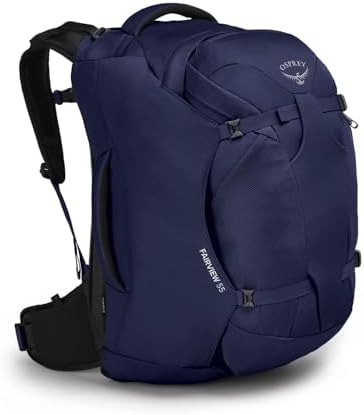
The 55L label can sound like one bigger main compartment, but the bag is built around a main-pack-and-daypack setup.
This table separates the size label from the actual carry setup.
| Fairview size label | What that size really changes |
|---|---|
| 40L | Simpler travel with one main packing area |
| 55L | Main pack plus a detachable daypack |
| 70L | Larger total capacity across two pieces |
Choose the 55L for split carry, not for one larger main compartment.
70L is total capacity, not one large main compartment
The largest number is not the safest capacity shortcut.
The 70L setup spreads total capacity across the larger pack and daypack. That split keeps the liter number from proving one continuous 70L main compartment.
- Cotopaxi 50 Allpa comparison: One Europe setup found more usable room in a smaller named competitor.
- Heavy-packer penalty: A large label may not solve a maximum-room packing style.
- Largest-size regret: Choosing only by liters can still leave the traveler short on usable space.
The 70L label should be read as total system capacity, not as a 70L main compartment plus another daypack.
This table keeps the 70L choice tied to usable packing style.
| Fairview setup | What to decide before choosing it |
|---|---|
| 70L total system | Accept packing space split across two bags |
| One large main cavity needed | Compare another layout before buying |
| Heavy packing style | Judge usable room, not only listed liters |
The 70L works best when total split capacity matters more than one open cavity.

40L stays simpler, but not unlimited
The 40L is simpler, not bottomless.
The 40L keeps the setup cleaner because it does not rely on the same daypack split. Its main compartment still fills up when longer trips ask for more clothing and extras.
- Italy clothing loadout: A 10+ day list fit, but it required selective packing.
- Laundry pressure: Longer travel may push clothing reuse instead of more storage.
- School-to-home carry: Laptop, iPad, books, and clothes worked for recurring city travel.
This table separates simple 40L travel from overpacking expectations.
| 40L travel setup | What the 40L asks from you |
|---|---|
| Short or selective travel | Keep clothing and extras planned |
| Laptop plus school items | Keep the load organized and realistic |
| Long trip with no laundry | Compare more capacity or another setup |
The 40L is the cleanest Fairview choice when packing discipline is part of the plan.
Laptop storage changes when the daypack takes over
Laptop carry is not the same across Fairview sizes. The important question is not just whether a laptop can go somewhere, but where it has to live while you travel.
The 40L sleeve can become buried under clothes
Laptop carry is not the same as fast laptop access.
The 40L laptop area sits inside the same packing system as clothing. Once clothing fills the main compartment, the sleeve can become slower to reach, and the laptop section can take space from travel items.
- Thin laptop signal: Slim laptop carry appears, but the sleeve should not be treated as a universal laptop fit.
- Packed clothing penalty: Laptop access can slow once clothes fill the main compartment.
- Laptop-first travel: A separate laptop day bag may become the cleaner setup.
This table separates laptop storage from laptop access.
| Laptop setup | How the 40L handles it |
|---|---|
| Laptop packed before clothing | Works better with planned packing order |
| Laptop needed often in transit | Compare a laptop-first carry option |
| Laptop plus maximum clothes | Expect a space and access tradeoff |
The 40L is safer for laptop travel when access is occasional, not constant.
The 55L daypack carries the laptop instead of the main pack
The 55L makes laptop carry a daypack choice.
The daypack moves tech storage away from the main pack. That helps when the laptop belongs with the personal-item part of the setup, but it weakens the fit for travelers who want the laptop inside the main bag.
- 55L laptop traveler: Laptop access stays tied to the detachable daypack.
- 40L comparison: The 40L sleeve setup should not be assumed here.
- Airport split: The daypack can work as the personal-item side of the system.
The 55L should not be treated as the 40L plus the same main-pack laptop setup.
This table separates where the laptop has to live.
| Laptop setup | What the 55L supports better |
|---|---|
| Laptop in detachable daypack | Stronger fit for split airport carry |
| Laptop inside main pack | Not established for the 55L setup |
| Laptop always with you under seat | Works only if daypack use fits |
Choose the 55L when daypack laptop carry is a benefit, not a compromise.
Airline fit depends on packed shape, not only liters
Airline fit depends on how the Fairview is packed. A soft, underfilled load behaves differently from a full framed bag.
A full 40L loses under-seat certainty
A full 40L belongs in overhead planning.
The 40L body compresses more easily when the load is soft and underfilled. Once the bag is full, the packed shape pushes against under-seat expectations.
- Soft-load signal: Around 30L of soft items is the safer under-seat setup.
- Airline conflict: Different flight setups point to packed-state uncertainty.
- Emergency fallback: Removing items can become the pressure-release option.
The 40L can look like a personal-item shortcut, but full packing pushes it toward overhead planning.
This table separates underfilled travel from full-pack airport planning.
| Packed Fairview setup | What to plan for at the airport |
|---|---|
| Soft, underfilled 40L | Possible under-seat fit, still not guaranteed |
| Fully packed 40L | Plan for overhead space instead |
| Strict personal-item trip | Compare a smaller carry setup |
Use the 40L as carry-on-first when it is full; the frame adds another airport-fit limit when the bag is packed hard.
The frame keeps a full bag from compressing freely
The frame helps carry structure but hurts full-load flexibility.
The side and back frame holds the bag’s shape. When packed contents press against that structure, the bag resists collapse more than a frameless soft bag.
- Half-packed hand luggage: The frame became less risky when the bag was not full.
- Hotel-to-hotel travel: The frame can still make sense when carry structure matters.
- Side-frame warning: The frame changes the airport-size problem before the gate.
A framed travel pack does not always collapse like a soft duffel when it is fully packed.
This table keeps frame structure tied to packed-state airport planning.
| Bag part in play | What changes when it is packed |
|---|---|
| Side/back frame with light load | Frame support stays useful with lighter packing |
| Side/back frame with full load | Compression becomes less forgiving at full depth |
| Strict airline setup | Underpack or compare a smaller bag |
The frame is a carry benefit only when the packed size still fits the trip.
A full 70L is the wrong place to expect carry-on certainty
A full 70L is a checked-bag risk.
The 70L body tightens more easily when it is underfilled and compressed. When it is fully packed, the load pushes past the safer carry-on setup.
- Multi-week travel: The 70L can still work as a large travel pack.
- Full-load penalty: Carry-on confidence drops when the bag is maxed out.
- Travel-pack limit: The bag belongs in travel carry, not hiking use.
A large travel label should not be read as a max-packed carry-on promise.
This table separates underfilled 70L use from full-load airline risk.
| Packed Fairview setup | What to plan for at the airport |
|---|---|
| Underfilled 70L | Compression has a better chance to help |
| Fully packed 70L | Carry-on certainty drops sharply |
| No-check-bag trip | Compare smaller before choosing 70L |
The 70L belongs to travelers who can underpack or accept airline uncertainty.
The daypack helps only when its limits fit your trip
The included daypack can be useful, especially when it carries a laptop or daily items. It becomes less convincing when every pocket and attachment point has to stay secure under movement.
AirPods and heavy bottles do not belong in the side pocket
Small tech needs a safer place than the side pocket.
The daypack side pocket can release small or heavy items when the bag position shifts. Under-seat movement can tilt the pocket enough for loose items to escape.
- Taiwan flight case: Movement under the seat changed what the pocket could hold.
- AirPods penalty: Earbuds slipped out instead of staying put.
- Heavy bottle risk: A heavier item can stress the same pocket choice.
During a Taiwan flight case, AirPods in the daypack side pocket slipped out when the bag moved under the seat. In some setups, the daypack side pocket can let small tech or a heavy bottle slip out when the bag moves.
The included daypack helps only if its pockets match how small tech and water move.
This table separates quick pocket use from safer storage choices.
| Item in the daypack pocket | What movement can do |
|---|---|
| AirPods or earbuds | Move them to zipped storage |
| Heavy water bottle | Do not rely on the side pocket |
| Soft casual item | Lower-risk use in that pocket |
Use the side pocket for low-risk items, not loose tech.
Rear attachment can sag while front carry balances better
The daypack works better when its carry position matches the load.
A full daypack adds thickness to the main pack when attached behind it. If the upper connection does not hold that load close enough, the daypack can ride low instead of staying tight.
- Rear-mounted sag: The daypack can ride lower than expected.
- Front carry pattern: Wearing the daypack in front gives the load more support.
- Full-system penalty: A packed daypack can turn the setup into a thick carry.
Detachable does not automatically mean stable when the daypack rides full on the back. The detachable daypack sounds clean in theory, but full rear-mounted carry can sag or bulk out enough that front carry becomes steadier.
This table separates the daypack carry positions before the traveler commits to the system.
| Daypack carry position | How the load behaves |
|---|---|
| Rear-mounted and full | More sag and bulk risk |
| Front carry | Better-supported balance pattern |
| Carried separately | Cleaner when the daypack is loaded |
The daypack is strongest when the traveler accepts front or separate carry.
The clamshell opens like luggage, but small tech still needs a home
The Fairview’s main opening is better for packing than for constant small-item access. That distinction matters if your travel day includes chargers, documents, bottles, and loose accessories.
Chargers and documents need more than the main cavity
The Fairview packs clothes better than loose tech.
The clamshell main compartment opens wide for larger packed items. Smaller essentials can still need a pouch, the daypack, or another secure place instead of floating in the main area.
- Chargers and batteries: These items may need a dedicated pouch.
- Documents and wallet: Travel paperwork can outgrow the easy-access spaces.
- Bottle carry friction: Outside storage is not the same as secure daily organization.
Chargers, batteries, and travel documents may need a separate place instead of relying on outside pockets.
This table separates packing access from daily item access.
| Small item you need often | Where it may need to go |
|---|---|
| Chargers and batteries | Tech pouch or daypack |
| Passport and tickets | More secure quick-access place |
| Clothes and packing cubes | Main clamshell compartment |
Buy the Fairview for packing access, not for built-in small-tech organization.
Comfort is a strength, not a universal fit promise
Comfort is one of the Fairview’s stronger satisfaction points. It still depends on how the harness, shoulder straps, hip belt, and body shape meet under load.
Shoulder spacing and strap firmness decide the body-fit boundary
The comfort advantage depends on body match.
The harness works best when the torso adjustment, hip belt, and shoulder straps sit cleanly on the traveler’s frame. Strap spacing and firmness can press into the neck or shoulder when the match is off.
- Shorter-body reports: Petite fit can work, but it is not automatic.
- Neck and shoulder pressure: Strap contact can become the problem.
- 20–30 minute case: One long-travel setup felt the fit change quickly.
In one Southeast Asia travel setup, carry became uncomfortable after 20–30 minutes when the bag sat high and the upper straps loosened.
This table separates the comfort-positive setup from fit warning signs.
| Fit condition | Where comfort can change |
|---|---|
| Torso and straps match | Stronger comfort signal |
| Neck or shoulder sensitivity | Compare comfort-first options |
| Full rear daypack | Balance can change with load |
Treat comfort as a strong point with a body-fit check attached.
Rain and rough travel need separate caution
The Fairview can still earn quality praise while needing weather and pocket-level caution. Those two ideas should stay together.
Drizzle can reach contents without a cover
Rain protection needs a separate plan.
The outer fabric and closures are not established as waterproof. When rain reaches the bag and contents, unprotected tech needs another layer.
- Drizzle case: Water reached the bag and contents.
- Cover or pouch: Wet-weather tech carry needs another layer.
- Rainproof expectation: Water-resistant wording should not become a waterproof claim.
In drizzle, water can reach the bag and contents, so rain protection needs a separate cover or pouch. Water-resistant wording should not be read as rainproof protection for unprotected tech.
This table separates dry travel confidence from wet-tech risk.
| Travel condition | What needs a backup |
|---|---|
| Dry travel | Build praise can stay cautious |
| Drizzle or rain | Add cover or waterproof pouch |
| Unprotected laptop or tech | Do not rely on the bag alone |
The Fairview needs help when wet-weather tech protection matters.
The front-pocket failure stays isolated but visible
One pocket-level failure should stay visible without taking over the verdict.
The front pocket has one time-linked failure point. That does not turn the whole bag into a durability failure, but it does put a caution beside broader build-quality praise.
- Asia travel timeline: The pocket issue appeared two months into a three-month trip.
- Front-pocket failure: The problem was tied to one pocket, not every part.
- Quality context: Broader build praise still stays in the article with caution.
After two months of a three-month Asia trip, one front-pocket case left a hole, so durability praise needs that pocket-level caution.
Keep the pocket issue visible, but do not make it the whole durability story.
Suitcase-style access does not make it act like a suitcase
The Fairview can pack like soft luggage, but it does not become wheeled luggage. That matters once the bag is off your back.
The soft base can fall over in airport lines
The Fairview carries like a backpack, not luggage on wheels.
The soft backpack body lacks the standing base and wheel structure of a suitcase. When set down, it can tip or fall instead of standing like rolling luggage.
- Airport-line case: The bag can fall over when set down.
- Roller hindsight: Some trips make wheels feel easier after all.
- Family travel: Extra carried items can make backpack carry less appealing.
The clamshell shape can feel suitcase-like while packing, but the soft base can still fall over when the bag is set down in a line.
This table separates backpack mobility from luggage behavior.
| When you need luggage behavior | Where the backpack feels different |
|---|---|
| Standing in airport lines | Soft base may fall over |
| Rolling through easy surfaces | Wheels may feel easier |
| Family or slow travel | Body carry can become less appealing |
Choose the Fairview for wearing and carrying, not for standing or rolling.
Who should skip
| Your trip depends on | Why the Fairview may frustrate you |
|---|---|
| One larger main compartment | 55L and 70L can split space across two bags |
| Full under-seat certainty | A full 40L needs overhead planning |
| Main-pack laptop access | The 55L laptop setup depends on the daypack |
| Small tech in the daypack side pocket | AirPods or a heavy bottle need safer storage |
| Rainproof confidence | Rain needs a cover or waterproof pouch |
| Suitcase standing or rolling behavior | The soft backpack body does not act like wheeled luggage |
The first group is about choosing the wrong size. The second group is about expecting the wrong behavior from the bag.
| Your trip depends on | Why another setup may fit better |
|---|---|
| Neck or shoulder sensitivity | Comfort depends on body fit, not just adjustability |
| Full rear-mounted daypack carry | The attached daypack can sag or bulk out |
| Hydration-heavy day-hike use | The included daypack is not supported as that setup |
| Repeated rough front-pocket use | One pocket-level failure point should stay visible |
| Frequent charger and document access | A tech pouch may be cleaner |
Buy or skip?
Buy the Osprey Fairview if you want a comfortable, clamshell travel backpack and you accept the central tradeoff: the same split system that adds flexibility also moves capacity, laptop storage, and carry balance away from one simple main compartment. Skip it if you need one bigger cavity, full-pack airline certainty, rainproof laptop protection, or luggage that stands and rolls on its own.
Check the Price
See More Options
The Fairview’s split capacity, small-tech pocket limits, and laptop-storage limits point to these next reads:
- larger laptop backpacks with simpler main-pack capacity
- pouches for chargers and batteries the Fairview pockets do not organize well
- extra laptop protection when the Fairview storage is not enough
