
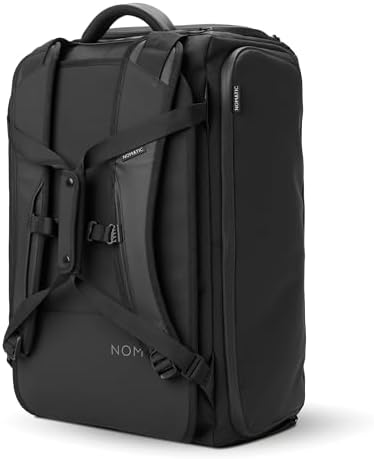
A travel laptop bag can look simple until the laptop, bottle, shoes, and airport plan all ask different things from the same space. The Nomatic Travel Bag comes in 30L and 40L versions, but the buying decision is not only about volume. The 30L has the cleaner short-trip shape, while the 40L carries more and needs stronger checks around sleeve width, overhead storage, pocket space, and loaded carry.
Scorecard
The Nomatic Travel Bag lands in the Excellent tier — strong enough to take seriously, but still tied to the variant limits below. The 30L and 40L both have clear travel-organization appeal, while the main friction points sit around laptop fit, packed size, pocket sharing, bottle access, and carry hardware.
| Field | Value |
|---|---|
| DVSS Score | 85.41 |
| Satisfaction Tier | Excellent |
| Dissatisfaction Score | 9.31% |
| Critical Dissatisfaction Rate | 7.86% |
Based on buyer feedback patterns, not hands-on testing. See how this scoring works.
Around 7.86% of ratings-level dissatisfaction reached the most serious warning level, so the right way to read the score is beside the laptop, flight, pocket, and hardware limits below. The score is not proof that a laptop will fit, that padding will protect a device, or that the bag will stay comfortable under every load.
Quick take
- Best For: Controlled 30L short-trip organization or 40L overhead one-bag travel.
- Not For: Guaranteed large-laptop fit, personal-item-only 40L travel, standard outside bottle access on the 30L, or heavy loads that need wheels.
- Top Strength: Organized travel packing for laptops, clothing, shoes, chargers, and small tech.
- Main Limitation: The 30L and 40L each stop at different setups.
Decision matrix
| Your travel or device setup | How the Nomatic Travel Bag fits |
|---|---|
| Wider laptop or large tablet | Start with sleeve width and pocket fit, not screen size |
| 30L as under-seat personal item | Accept only if overhead fallback is available |
| 30L with daily bottle carry | Weaker if you need a standard outside holder |
| 40L for full travel packing | Stronger as overhead carry-on than under-seat bag |
| One bag for travel and daily work | Access, bulk, and body-carried weight decide the fit |
Start with the device, not the liter count
The first mistake is treating 30L or 40L as the answer before the laptop is settled. A sleeve that runs out of room, a strap that blocks access, or a tablet pocket that stops short can turn a travel bag into the wrong laptop bag.
40L sleeve width beats the laptop-size label
The 40L fit starts with the laptop’s body, not the screen label.
The 40L sleeve narrows around the laptop body, tablet-pocket size, and closure security. The safety strap has to close around the device, while the tablet pocket keeps its own size limit separate from the laptop sleeve.
The bottom storage can take a large item and still leave the sleeve unresolved. That split matters when medical gear, a wider laptop, or a large tablet shares the same travel load.
In some setups, the sleeve, zipper, snap, or button no longer supports the way the bag is expected to work. That risk is not about style; it is about whether the carry system still closes, holds, and moves correctly under the load.
- Dell 14.8 x 10.2-inch laptop: The wide body is the fit concern.
- 17-inch laptop: Interior bag space still leaves secure closure uncertain.
- 12.9-inch iPad Pro: Large-tablet carry falls outside the tablet-pocket assumption.
- 15.6-inch Toshiba laptop: The travel load worked better than the sleeve.
- CPAP plus laptop travel: Medical-device packing succeeded while laptop fit stayed separate.
The table below separates fit examples from setups that still need a second look before purchase.
| Laptop or tablet setup | What the Nomatic 40L sleeve allows |
|---|---|
| 15-inch or some 16-inch laptop | Possible fit, but not proof for wider bodies |
| Dell 14.8 x 10.2-inch laptop | Width is the concern before buying |
| 17-inch laptop | Bag space is not the same as secure sleeve carry |
| 12.9-inch iPad Pro | Do not count on the tablet pocket |
| CPAP plus laptop travel | Bottom space does not prove sleeve fit |
The 40L is strongest when device dimensions are settled before travel capacity becomes the main reason to buy.
30L laptop access is a sleeve question and an opening question
A laptop can seem compatible and still be awkward to reach.
The 30L access area changes the laptop choice after basic fit. Straps can sit across the opening, and the outward-opening pocket adds more handling than a simple laptop-first layout.
The TSA-style sleeve may help with airport handling, but it does not guarantee the laptop stays inside at every checkpoint. The 30L can look like a laptop-first travel bag, but the opening adds a second choice after the sleeve fit.
- Larger 15-inch work laptop: The fit warning starts before the bag is packed.
- 13-inch MacBook Pro plus iPad: Smaller electronics are the cleaner side of the device setup.
- TSA checkpoint: Airport handling can still require laptop removal.
- Outward-opening pocket: Device handling becomes part of the access choice.
This table separates basic device carry from access situations that still need caution.
| 30L laptop setup | What the 30L allows |
|---|---|
| Smaller laptop and tablet | Cleaner fit than larger work devices |
| Larger work laptop | Do not rely on screen size alone |
| Frequent laptop access | Strap handling may become annoying |
| TSA-style sleeve expectation | Helpful design, not a checkpoint promise |
The 30L works better when laptop fit and laptop access both match the routine.

Padding is a separate question from sleeve fit
A laptop that fits may still need more protection.
The 40L padding supports normal backpack carry, but soft-sided padding does not turn the bag into a hard case. Drop-risk travel asks for a higher protection standard than ordinary sleeve carry.
The padded laptop area helps the carry setup, but it does not replace a hard case for higher-risk travel.
- 5-foot drop concern: Drop-risk travel sits outside normal sleeve comfort.
- Hard-sided case comparison: The protection standard rises beyond backpack padding.
Use this table only for the protection choice, not the sleeve-fit choice.
| Laptop protection question | What the Nomatic 40L can protect |
|---|---|
| Normal padded carry | Reasonable to treat as backpack-level padding |
| Drop-risk travel | Add separate protection before relying on the bag |
| Hard-case-level expectation | The backpack is not the right promise |
Fit answers where the laptop goes; protection answers how much risk the carry setup can accept.
The 30L is smaller, but not automatically under-seat simple
The 30L is the easier variant to imagine as a compact travel bag. That does not make every airplane, bottle setup, or daily carry need safe by default.
Smaller aircraft make the 30L less certain
The 30L is flexible, not guaranteed under every seat.
The 30L body sits or fails according to the space under the specific seat and how full the bag is packed. Smaller-flight clearance can squeeze the usable space, so the under-seat promise needs a backup plan.
The 30L looks like the easier airplane choice, but smaller seats can still make under-seat fit less certain. It can look like the safer small-plane choice, but tighter seat space turns that promise into an overhead-fallback choice.
- Smaller domestic flights: The 30L becomes less predictable.
- Larger international planes: Fit is more plausible when the seat area is more forgiving.
- Personal-item-only travel: The risk rises when overhead storage is not part of the plan.
This table separates flexible travel setups from trips where under-seat certainty matters.
| 30L flight setup | Under-seat confidence |
|---|---|
| Smaller aircraft | Treat under-seat fit as uncertain |
| Larger aircraft | More forgiving, but still not guaranteed |
| Personal-item-only trip | Too risky as the only plan |
| Overhead space available | Easier to accept the 30L tradeoff |
The 30L is a better travel pick when overhead fallback is acceptable.
Bottle carry needs an outside-access check
Bottle storage is not the same as quick bottle access.
The 30L bottle setup sits in an internal, lined, or workaround-based category rather than a normal outside bottle pocket. Covered storage can carry a bottle without making it easy to grab during daily use.
Bottle storage language does not mean the 30L has a normal outside pocket. The 30L can seem like the practical everyday size, but bottle carry changes the fit when outside access matters.
- Waterproof-lined pocket: Bottle carry is possible without quick outside reach.
- Carabiner loop: Clipped carry is a workaround, not a built-in holder.
- Daily bottle carry: Everyday use becomes harder when outside reach matters.
This table matches the 30L bottle setup to the way you carry water.
| 30L bottle setup | Daily-carry effect |
|---|---|
| Bottle stored inside | Works only if quick reach is not needed |
| Bottle clipped outside | Possible workaround, not a built-in pocket |
| Standard outside holder required | The 30L becomes a weaker daily pick |
The 30L is easier to recommend when bottle access is optional.
Pockets organize the load, but they spend the same space
Nomatic’s travel layout is strongest when you want separation. The tradeoff is that separated spaces still pull from the same body of the bag.
30L shoes spend clothing room
The shoe pocket is useful only when the clothing load leaves room.
The 30L bottom shoe section separates dirty items from clothing, but it pulls from space the main compartment may also need. Shoes do not create a free extra zone; they reduce the clothing room left above them.
More pockets do not mean more independent packing room once shoes, clothing, and side storage compete. The 30L looks highly organized, but those areas can all ask for the same space.
- Shoes in the bottom pocket: Clean and used items stay farther apart.
- Dirty clothing: Separation helps when used items need their own area.
- Clothing-heavy trips: The main space becomes the first pressure point.
Use this table to decide whether shoe separation matters more than clothing volume.
| What goes inside the 30L | Space left for clothing |
|---|---|
| Shoes in the bottom pocket | Less room remains for clothing |
| No shoes packed | Main clothing space stays more open |
| Clothing-heavy load | Shoe separation becomes harder to justify |
The 30L’s shoe pocket is best when separation matters more than maximum clothing volume.
30L side pocket loses room after clothing fills the bag
Pocket count can overstate what the 30L can hold at once.
The side exterior pocket and the main compartment press on the same usable space. When the main compartment fills with clothing, the side pocket has less room to act like a separate storage area.
The 30L’s compartments can feel like they are asking for the same space at the same time. That makes the side pocket more convincing as access space than overflow space.
- Side exterior pocket: This section is helpful until the main load expands.
- Small-item storage: Smaller items fit the pocket’s role better.
- Damp gear: Separated storage helps only if room remains.
This table keeps the side-pocket choice separate from the shoe-pocket choice.
| 30L side-pocket setup | Realistic use |
|---|---|
| Main compartment moderately packed | Side pocket remains more useful |
| Main compartment filled with clothing | Side pocket capacity drops |
| Bulky side-pocket items | Better checked before relying on the pocket |
The 30L’s side pocket is strongest as access space, not overflow space.
40L embedded pockets borrow from the main compartment
The 40L organizes gear better than it preserves open space.
The 40L embedded pockets separate gadgets, chargers, cables, and dense travel items by pressing into adjacent interior room. Top, bottom, and side pocket zones can push into the main compartment or bulge outward when filled.
When the 40L is fully packed, the embedded pockets and zipper area can turn organized storage into slower access. The 40L’s organization works best when pockets are treated as part of the interior space, not extra space outside it.
- Steam Deck and chargers: Gadget-heavy packing is the cleanest win.
- Cables and small tech: Small items stay easier to separate.
- Spectra S1 and tablets: Dense mixed loads show why the layout can feel useful.
- Adjacent pockets: One packed zone can make another harder to use.
This table weighs organized storage against open packing room.
| What the 40L pockets hold | Open space left |
|---|---|
| Gadget-heavy setup | Useful separation, less open clothing room |
| Clothing-heavy setup | Open space becomes more valuable than pockets |
| Every pocket filled | Some zones become harder to use |
| Simple open packing | A less divided bag may feel easier |
Choose the 40L for organized gear, not for maximum open clothing volume.
40L shoe storage depends on the shoes
Large footwear can turn the shoe pocket into a packing problem.
The 40L shoe section works through pocket opening and shoe volume. Smaller footwear has a better chance of staying in the dedicated area, while bulkier shoes may have to move into the main compartment.
A shoe compartment does not mean every travel shoe belongs inside that pocket. The 40L’s shoe section is useful only when the footwear fits the pocket instead of stealing the main compartment.
- Ankle boots: These fit the shoe-pocket idea better than larger footwear.
- Size 11 Dr. Martens: Bulkier footwear makes the fit tighter.
- Size 15 shoes: This is the clearest case for moving shoes elsewhere.
This table separates footwear that can plausibly use the shoe pocket from footwear that may need the main compartment.
| Shoes going in the 40L | Likely packing spot |
|---|---|
| Smaller footwear | Dedicated shoe pocket is more plausible |
| Bulkier size 11 boots | Check before relying on the pocket |
| Size 15 shoes | Plan for the main compartment instead |
| Must keep shoes separate | The shoe pocket may be too limiting |
The 40L shoe pocket is useful, but footwear size decides how useful.
The 40L is overhead-first, not daily-first
The 40L is the stronger choice when you want one larger travel bag. It becomes weaker when you ask it to act like a compact daily laptop backpack or a rolling carry-on.
A full 40L belongs above the seat before it fits below it
Plan on overhead storage when the 40L is packed full.
The 40L rigid rectangular body holds travel packing well for overhead use, but a full load can make the body bulge and resist smaller seat spaces. Under-seat spaces vary enough that the safer assumption is overhead storage when the bag is packed for travel.
Across four flights, the packed 40L fit under only half the seats, which makes overhead storage the safer travel assumption. The 40L looks like one-bag freedom, but a full load shifts the safer plan from under the seat to the overhead bin.
- Four-flight split: The under-seat result changed from flight to flight.
- 10-inch and 12-inch seat slots: Seat hardware narrowed the room available.
- Fully packed 40L: Seat fit becomes less forgiving at full travel size.
- Premium-seat assumption: More expensive seating did not automatically settle the fit.
This table separates overhead-friendly travel from trips where the 40L has to fit under the seat.
| 40L flight setup | Safer storage plan |
|---|---|
| Fully packed 40L | Plan for overhead storage |
| Under-seat personal item | Too uncertain as the only plan |
| Premium-seat assumption | Do not treat it as a guarantee |
| Lightly packed 40L | More plausible, but still check the trip |
The 40L is a travel-first bag when overhead storage is part of the plan.
Daily use asks the 40L to act smaller than it is
The 40L is better at travel packing than workday handling.
The 40L’s rigid travel body stays large in daily contexts. Its inside-opening layout and laptop-pocket placement slow repeated access compared with a smaller work backpack.
The 40L can carry a laptop, but that does not make it a low-friction daily work bag. It can solve travel packing while still being too much bag for a normal laptop-workday rhythm.
- Daily work carry: The bag’s size becomes more noticeable outside the airport.
- Repeated laptop access: The issue is reaching the device often.
- Lunch or gym gear: Extra daily items make the travel layout feel slower.
- In-flight access: Packed-away use makes slow access more noticeable.
This table separates the 40L’s travel strengths from the daily setups that ask too much of its layout.
| 40L workday setup | Access result |
|---|---|
| 3–4 day business travel | Stronger fit than daily carry |
| Repeated laptop access | The layout becomes less convenient |
| Lunch or gym gear added | Daily handling gets bulkier |
| Overhead travel | Better match for the bag’s size |
The 40L makes more sense as a travel laptop bag than a daily laptop backpack.
Full loads stay on your shoulders because there are no wheels
The 40L’s capacity is only useful if you can carry it.
The 40L non-wheeled carry system leaves a full travel load on shoulder or hand carry. That changes the portability expectation because the bag may hold a large load without moving like rolling luggage.
The 40L can hold a large travel load, but every extra pound stays on the shoulders or hands. For heavier airport days, the bag’s capacity and body-carry tolerance have to match.
- 20+ lb travel load: This is the clearest heavy-carry case.
- Clothes, laptop, and camera: The mixed travel load shows how fast weight builds.
- Airport walking: Distance turns weight into the real penalty.
This table matches the 40L’s capacity to carry tolerance.
| 40L load setup | Carry result |
|---|---|
| Light or moderate load | Easier to carry as a backpack |
| Fully packed travel load | Expect real shoulder or hand carry |
| Long airport walking | Weight tolerance matters more |
| Roller-like portability needed | A wheeled bag may fit better |
The 40L is strongest for one-bag space when body-carried weight is acceptable.
Convertible carry is useful until the load stresses the hardware
Convertible carry is a major part of the appeal, but it does not behave the same under every load. The strongest use is backpack-first, with duffle and roller pairing treated as conditional bonuses.
30L duffel mode changes when the square body gets heavy
The 30L is safer as a backpack when it is fully packed.
The 30L square body changes side carry once the load gets heavy. A full square load can bounce in duffle mode, while backpack carry spreads the weight more convincingly.
The convertible design is most convincing when backpack carry stays primary and duffle mode stays occasional. The 30L appeals as a two-mode travel bag, but a full square load can make side carry feel like the wrong use case.
- Europe week load: The bag can hold a serious travel setup before carry mode becomes the issue.
- 17-inch laptop loadout: Device and clothing carry can coexist while side carry weakens.
- Plane aisle: A packed body becomes more noticeable in tight movement.
- Stuffed duffel carry: The two-mode promise loses strength here.
This table separates occasional duffle use from full-load carry.
| 30L carry setup | Loaded-carry result |
|---|---|
| Light 30L load | Duffle mode is more believable |
| Fully packed 30L | Backpack carry is the safer read |
| Duffle-first travel | The square body can feel awkward |
| Backpack-first travel | Better match for full-load use |
Treat the 30L as a backpack-first travel bag when the load gets heavy.
Zippers and snaps need their own durability ceiling
The 30L hardware concern is about closure and conversion, not just finish.
Full packing presses on the 30L zipper track, and zipper corners can become the place where closure friction appears. The handle-flap snap adds a separate concern because one snap pulled through unsupported cloth.
In early travel use, the 30L zipper track can become more than a minor annoyance when a stuck or failed zipper interrupts normal packing. After only a few trips, zipper and thread concerns move the 30L hardware from convenience detail to buying caution.
Zipper-security wording does not erase zipper-friction cases.
- Early trip zipper issue: The concern can appear before long-term wear becomes the question.
- Inside zipper getting stuck: Closure friction matters when the bag is already packed.
- Handle-flap snap: The conversion hardware adds a separate weak point.
- Overpacked travel use: The hardware issue becomes more important when the bag is pushed full.
This table shows when the 30L hardware concern becomes harder to ignore.
| 30L hardware use | Where strain rises |
|---|---|
| Light packing | Lower strain on zipper closure |
| Full packing | Zipper friction matters more |
| Frequent conversion handling | Snap and flap hardware matter more |
| Overstuffed travel use | Better avoided with this hardware signal |
The 30L hardware signals matter most for buyers who pack full or use conversion hardware often.
Roller stacking can tip instead of steadying the bag
The pass-through is a convenience, not the main reason to buy.
The 40L luggage pass-through can place the loaded bag on a roller, but that stack changes balance. A loaded 40L can make the roller less steady, and zipper direction can create a second problem if items are exposed while stacked.
The pass-through is useful only if the loaded bag does not destabilize the roller underneath it. It seems like an easy travel helper until a loaded 40L makes the roller less steady.
- Roller bag: The issue appears when the 40L becomes the second bag.
- Loaded 40L: Weight makes the stacking setup less predictable.
- Side compartment: Access can become awkward when the bag sits on the roller.
- Items falling out: Zipper direction can create a second problem.
This table separates pass-through convenience from roller-dependent travel.
| 40L roller setup | Stability result |
|---|---|
| 40L as primary carry-on | Better match for the bag |
| 40L stacked on roller | Stability becomes less certain |
| Pass-through as occasional help | Reasonable when the roller stays steady |
| Pass-through as main reason to buy | Too much risk for this signal |
The 40L pass-through is safest as a convenience, not the foundation of the setup.
Duffle hardware has a separate repeated-use limit
Backpack carry and duffle carry do not share the same hardware risk.
The 40L duffle conversion uses buttons and handle hardware that take stress separately from the backpack straps. Repeated duffle conversion can turn that hardware into its own buying question.
After about 10 conversion uses in one case, the 40L duffle buttons pulled through the handles and made grab-and-go carry less secure. The 40L’s duffle mode is a separate hardware choice, not just a bonus carry option.
- About 10 conversion uses: The failure appears around repeated use, not just one carry.
- Buttons through the handles: The failure changes how secure the duffle grab feels.
- Backpack-primary carry: This remains the safer way to treat the 40L under load.
This table separates occasional duffle use from repeated conversion use.
| 40L duffle use | Hardware result |
|---|---|
| Backpack-primary carry | Better match for loaded use |
| Occasional duffle mode | More reasonable as a secondary option |
| Repeated duffle conversion | Hardware caution increases |
| Fully loaded duffle grabbing | Not the strongest use case |
Use the 40L as a backpack-first bag when carry hardware confidence matters.
Compact utility checks before the final decision
Small tech details should confirm the choice, not drive it.
Secondary utility details sit below the main laptop, travel, pocket, and carry choices. They can help the right setup, but they should not outweigh sleeve fit, under-seat certainty, pocket space, or loaded carry.
A tech travel bag does not automatically include built-in charging, tracking, or camera compartments.
Use these details as final checks after the main size and device choices are settled.
| Small tech detail | Nomatic Travel Bag note |
|---|---|
| Nomatic Camera Cube in 30L | Accessory fit, not full camera organization |
| 30L cord or earphone valve | Useful access detail, not charging hardware |
| 40L built-in charging or GPS | Plan on separate items |
| 40L open center | Add camera organization if needed |
| Belt-pocket passport access | Useful version-sensitive detail |
These details help confirm fit, but they should not outweigh laptop, flight, pocket, and carry limits.
Who should skip
| Device or travel need | Why the Nomatic Travel Bag may not fit |
|---|---|
| Wider laptop or large tablet needing certain sleeve fit | The 40L depends on device body and pocket size |
| Personal-item-only 40L travel | A full 40L is safer above the seat |
| Daily laptop carry with fast access needs | The 40L layout favors travel packing |
| Standard outside bottle holder required on 30L | The 30L bottle setup is not a normal outside pocket |
| Heavy travel load needing wheels | The 40L leaves the load on your body |
| Repeated duffle hardware use | The 40L button signal needs caution |
Buy or skip?
Buy the Nomatic Travel Bag if you want organized travel capacity and accept that the same design creates the main limits: sleeve and pocket boundaries, overhead-first 40L travel, body-carried weight, and hardware stress under fuller loads. The 30L makes more sense for controlled short trips where laptop access, bottle access, and loaded duffle carry are not deal breakers; the 40L makes more sense for overhead one-bag travel when device width, shared pocket space, and no-wheel carry fit your setup.
Check the Price
See More Options
When the Nomatic Travel Bag misses on sleeve width, drop-risk protection, or built-in tech needs, these comparisons match the specific gap:
- larger laptop backpacks that stay useful after the travel load gets heavy
- extra laptop protection when the sleeve fit or drop risk is uncertain
- separate charger and cable storage when built-in pockets are not enough
