
Choosing between the 21L, 25L, 27L, 30L, and 40L versions is not just a question of picking more liters. The Thule Subterra Backpack changes by size in ways that affect laptop fit, bottle carry, under-seat use, rain exposure, and loaded comfort. The safest way to choose is to match the exact variant to your laptop, daily load, and travel setup.
The Thule Subterra Backpack lands in the Excellent tier, which is strong for overall satisfaction but still needs to be read beside the size-specific limits below.
| Field | Value |
|---|---|
| DVSS Score | 89.93 |
| Satisfaction Tier | Excellent |
| Dissatisfaction Score | 6.34% |
| Critical Dissatisfaction Rate | 4.91% |
Based on buyer feedback patterns, not hands-on testing. See how this scoring works.
At 4.91%, the serious-warning share is low, but the specific variant limits below still matter before buying. DVSS is a satisfaction score, not proof of laptop fit, padding performance, rain protection, airline fit, strap comfort, or long-term durability.
Read the score beside the variant-specific limits below, because the strongest buying decision comes from the exact size and part layout.
Quick take
- Best For: organized work tech in the 30L, or planned carry-on packing in the 40L Convertible when overhead storage is acceptable.
- Not For: guaranteed packed under-seat use, verified 17-inch sleeve support, rain-exposed travel without extra protection, exterior bottle carry on the 40L, or long loaded strap carry.
- Top Strength: the Subterra line can work well for organized laptop and travel carry when the chosen size matches the load.
- Main Limitation: the shared name and liter labels do not tell you how each version behaves.
Use this first table to choose the right starting point before reading the deeper sections.
| Your Subterra setup | First thing to know |
|---|---|
| You want the smallest daily version | 21L usable room is the first limit |
| You are between 21L and 27L | Move up only if extra bulk is acceptable |
| You carry dense work tech | The 30L is the strongest structured-work option |
| You want one-bag travel packing | The 40L Convertible works better when overhead carry is acceptable |
| You assume all sizes behave alike | Read by variant, not by the shared Subterra name |
Why the size labels need separate decisions
The same Subterra name can make the lineup look like one backpack offered in different capacities. That is not the safest way to read it. The sleeve shape, padding, side storage, packed volume, and carry system change the buying decision by size.
21L, 27L, 30L, and 40L do not behave like one bag scaled up
The safest first decision is the exact size, not the family name.
The shared name changes less than the parts do. A compact 21L body, a roomier 27L body, a padded 30L structure, and a packed 40L travel shape all run into different limits.
It can happen in specific variants: larger laptop fit, side laptop access, and loaded travel use are the places where the wrong size choice can matter most.
- 21L daily carry: A journal and Sony XM hardcase can make the compact version run out of useful room sooner than expected.
- 27L size-up case: The Switch, controller, game, Chromebook, and headphone load shows where the 27L adds room.
- 30L office load: The dense tech setup points to structured work carry, not loose packing.
- Packed 40L travel: A full carry-on load shifts the storage plan toward overhead space.
Use this table to separate compact daily carry from the first size-up choice.
| Subterra size you are considering | What changes before you buy |
|---|---|
| 21L for compact daily carry | Best when low bulk matters more than spare room |
| 27L after the 21L feels tight | Adds room, but not the lowest-bulk commute feel |
| 30L for dense work tech | Better for protected organization than loose clothing space |
| 40L Convertible for travel packing | Plan around overhead carry when packed full |
The right Subterra size is the one whose first limit does not block your actual laptop, load, or travel setup.

Where laptop fit changes by sleeve design
Laptop fit is one of the easiest places to overread the size label. A larger backpack does not automatically give every larger laptop secure sleeve support.
25L sleeve support stops being clear once laptops get larger
A larger laptop only helps if it stays inside the sleeve support you expect.
The padded sleeve is the limiting part, not the product name. In the 25L, the sleeve has its clearest fit with the 15-inch MacBook class, while larger laptops depend more on chassis shape and how the sleeve handles pressure.
A larger laptop sitting somewhere in the bag is not the same as secure sleeve support. Once the device rides in the main area instead of the padded sleeve, the carry setup changes.
- 16-inch MacBook Pro cases: The larger chassis does not get the same clean fit as the 15-inch class.
- 17-inch laptop carry: The problem shifts from fitting somewhere to staying inside the intended sleeve.
- Field-service load: A 17-inch Dell setup with cooling pad, drives, cables, and charger adds pressure around device storage.
- Tablet pressure case: The iPad detail makes this a protection concern, not just a packing inconvenience.
Laptop fit needs to be read by sleeve behavior, not screen size alone.
| Laptop or tablet setup | What the sleeve can support |
|---|---|
| 15-inch MacBook-class laptop | Cleanest fit for the 25L sleeve |
| 16-inch laptop | Treat fit as case-specific, not automatic |
| 17-inch laptop | Do not assume secure padded-sleeve support |
| Small tablet around 10 inches | Cleaner tablet-sleeve fit than larger tablets |
| Dense tech load near tablet storage | Add protection or compare another setup |
The 25L works best when the laptop stays within the sleeve’s clearest support range.

30L and 40L laptop support still depends on the exact sleeve
A bigger Subterra size does not automatically solve larger-laptop carry.
More bag volume does not stretch the sleeve. The 30L padded laptop area and the 40L Convertible’s removable laptop bag each have their own laptop zone, and each zone has its own stopping point.
The 17-inch laptop issue starts at the removable laptop sleeve, not the bag’s total size. The removable laptop bag may be useful, but it does not prove that a larger laptop gets secure sleeve support.
- 17-inch Samsung in the 30L: The 17-inch Samsung fit stays dimension-dependent.
- 17-inch laptop in the 40L: The removable sleeve is the part that fails the larger-laptop expectation.
- 15-inch laptop in the 40L: This is the cleaner fit for the removable laptop bag.
- Fallback carry: Moving a larger laptop elsewhere changes the protection story.
The removable laptop bag changes the fit question for larger laptops.
| Laptop you plan to pack | Where the Subterra fit changes |
|---|---|
| 30L with 15.6-inch laptop-class devices | Stronger padded-compartment support |
| 30L with a 17-inch laptop | Do not assume secure compartment fit |
| 40L with a 15-inch laptop | Cleaner removable-sleeve support |
| 40L with a 17-inch laptop | Do not count on secure sleeve support |
The larger variants help only when the laptop also matches the intended laptop area.
Where padding and pockets change usable space
The Subterra line can be very organized, but organization is not the same as open room. Padding and pockets help most when they match the items you carry.
30L padding turns extra size into structure, not just room
The 30L is strongest when your load is tech-heavy, not clothing-heavy.
Padding changes how the 30L volume gets used. The structure can hold dense work gear in place, but that same structure leaves less open room for loose packing.
The 30L can feel more like a padded tech shell than a soft packing bag. That is a strength if you carry devices, but a limitation if the 30L label led you to expect flexible clothing space.
- Dense office setup: The load includes two laptops, iPad Mini, keyboard, phones, charger, papers, and smaller accessories.
- Sensitive computer gear: This is where the bag is strongest if padding is part of the reason to choose it.
- Smaller-feeling space: The usable space can feel below the 30L label.
- Under-seat travel: Filled packing can make airplane storage tighter than the size suggests.
Use this table to decide whether the 30L’s structure helps your load or works against it.
| 30L setup | What to expect |
|---|---|
| Dense work tech | Stronger fit for organized protected carry |
| Loose clothing travel load | Weaker fit than the size label suggests |
| Under-seat airplane use | Treat as tight and airline-dependent |
| Minimal laptop-only commute | May be more structure than you need |
Choose the 30L for organized tech structure, not for maximum soft packing room.
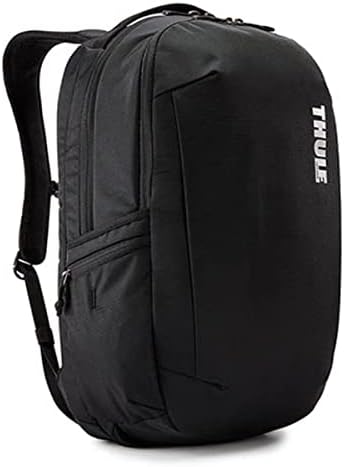
Side storage changes from bottle pocket to separation space
Do not assume every Subterra side pocket is bottle storage.
The side areas do different jobs by variant. On the 27L, bottle or umbrella carry depends on retention and pocket shape. On the 40L Convertible, the stronger side-storage use is separation for dirty or damp items, not exterior hydration access.
With repeated use, the 25L bottle holder can become a balance and wear concern instead of simple side storage.
- 27L bottle or umbrella: The pocket can be present without holding the item reliably.
- 25L full steel bottle: The side load can pull the bag off balance and add wear pressure.
- 40L dirty items: Shoes, wet clothes, or laundry get the stronger side-storage use.
- 40L hydration carry: Exterior bottle access needs a different plan.
The side-pocket choice is about what the item needs, not just whether a side area exists.
| Side item you need to carry | What to expect |
|---|---|
| Larger bottle or umbrella in the 27L | Retention is less certain than the pocket suggests |
| Heavy bottle in the 25L | Treat it as a balance and wear concern |
| Dirty shoes or damp clothes in the 40L | Side separation is a stronger fit |
| Outside bottle on the 40L | Use another carry option or compare bags |
Side storage is useful only when the variant’s side area matches the item you actually carry.
Where travel use breaks by variant
Travel use changes at different parts of the bag. For one variant, the issue is suitcase pairing. For another, the issue is where the packed bag should go on the plane.
25L travel carry changes at the suitcase handle
The 25L is not the clean pick for rolling-luggage pairing.
The missing rear strap is the travel limit. Without a pass-through, the 25L cannot secure itself to a rolling suitcase handle the way some travelers may expect.
The 25L can look ready for rolling-luggage travel, but the missing pass-through changes how it works with a suitcase.
- Rolling suitcase travel: This is the specific use where the 25L setup breaks down.
- Travel-ready impression: The bag can look ready for luggage pairing before the rear strap becomes the problem.
- Variant boundary: This 25L limit should not be applied to every Subterra size.
Travel carry changes when the backpack cannot ride on rolling luggage.
| Travel setup | What to expect |
|---|---|
| 25L with rolling suitcase | Carry separately or compare another size |
| 25L as standalone backpack | Cleaner travel use |
| 21L, 27L, or 30L suitcase pairing | Use only the variant with pass-through support |
| Family-wide suitcase claim | Do not apply across all sizes |
Choose the 25L for standalone carry, not for a suitcase-handle setup.
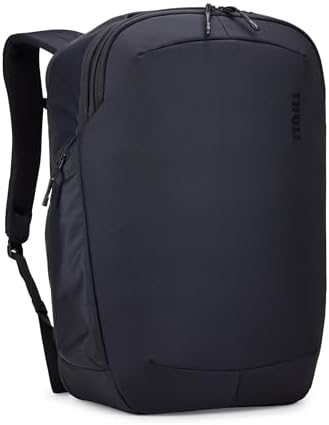
Packed 40L travel points overhead before under seat
A full 40L Convertible should be planned as carry-on storage first.
Fullness is the airline-storage trigger. The 40L Convertible can work as planned carry-on packing, but a packed body weakens the under-seat case.
A full 40L Convertible is safer to think of as overhead carry. That does not make the bag unusable for travel; it just changes the storage plan.
- Packed-out 40L: This is the condition where under-seat confidence weakens.
- Conflicting guidance: Fullness and airline space change whether it fits under the seat.
- Multi-day packing: Clothing, toiletries, tech, shoes, rain jacket, and daypack show the travel-carry setup.
- 4–5 day load: That load supports carry-on packing more than personal-item certainty.
Packed travel changes the 40L from a personal-item hope to an overhead-first plan.
| How full the Subterra is | Safer storage plan |
|---|---|
| Light 40L Convertible load | Under-seat fit remains conditional |
| Packed 40L Convertible | Plan around overhead storage |
| 30L under-seat use | Treat as tight and airline-dependent |
| Guaranteed personal-item need | Compare a smaller backpack |
The 40L is easier to justify when overhead carry is acceptable.
Where access gets faster, slower, or less secure
Access features can be useful, but they do not all solve the same problem. A zipper that improves laptop access can still create friction or leave another access point less controlled.
25L side access helps until the closure sequence matters
Fast side access does not make every 25L opening simple.
The side opening and top closure do different jobs. The side zipper can make laptop or main-compartment access faster, while the fold-over top and clips add steps when simple repeated access matters.
The 25L side opening helps, but the top closure can slow the access rhythm.
- Airport security: This is the clearest use for faster side access.
- Airplane use: This is where opening control becomes more important.
- Sliding side zipper: The failure case turns access into a spill concern.
- Frequent transit access: Repeated opening makes the extra steps more noticeable.
Use this table to separate faster laptop access from simpler everyday opening.
| 25L access situation | What changes in use |
|---|---|
| Laptop access during travel checks | Side opening is the stronger reason |
| Frequent top opening | Extra closure steps matter more |
| Opening the bag in tight spaces | Keep the zipper-control concern in mind |
| Need the simplest access rhythm | Compare a cleaner-opening backpack |
The 25L access system works best when side access matters more than simple repeated opening.
30L zipper control changes by access point
Lockable main zippers do not settle side laptop security.
Not every zipper has the same job. The 30L main zippers may give stronger access control, but the side laptop panel opens separately, and a packed front pocket can slow the front zipper.
The 30L’s lockable areas do not cover the side laptop opening. A packed front area can also make quick access feel less clean.
- Expensive laptop gear: The side panel matters most when valuable devices sit behind it.
- Public transport carry: This is where quick side access can feel less reassuring.
- Front-pocket-heavy use: A packed front area turns convenience into friction.
- Harder zipper opening: The front pocket can feel like it is pushing back.
Access security depends on which zipper the laptop or pocket uses.
| 30L access point or pocket load | What changes in use |
|---|---|
| Lockable main zipper area | Stronger security reading |
| Side laptop opening | Do not treat as full access control |
| Light front storage | Cleaner quick-access use |
| Packed front storage | Access becomes load-dependent |
The 30L is more convincing when you do not need every access point to behave the same way.
Where loaded carry and rain exposure set hard limits
Some limits only show up under a specific condition. A short office carry is not the same as a loaded travel day, and dry travel is not the same as rain exposure.
40L strap carry changes once the load gets heavy
The heavier the 40L gets, the more the roller sleeve matters.
The carry modes do not share the load equally. Shoulder, backpack, hand, and roller-sleeve carry all exist, but a heavy 40L puts more pressure on the strap options.
At a 13 lb weekend load, the 40L Convertible shifts from flexible strap carry toward roller-sleeve use.
- 13 lb weekend load: This is the point where carry comfort changes.
- Shoulder strap carry: The load becomes tiring at this weight.
- Backpack strap carry: Arm comfort becomes part of the penalty.
- Roller pairing: The sleeve becomes more than a convenience under load.
Loaded carry changes which 40L carry mode makes the most sense.
| Loaded carry setup | What carries better |
|---|---|
| Lighter 40L carry | Flexible strap options make more sense |
| Heavier weekend load | Roller sleeve becomes more important |
| Long strap carry with packed 40L | Pack lighter or compare another setup |
| Rolling luggage available | Stronger travel pairing for this size |
The 40L is easier to recommend when heavy travel use can lean on rolling luggage.
Rain and long waits create separate limits
Dry carry and short carry read better than rain exposure or long waits.
These are condition-specific breakpoints. The 40L rain concern centers on exposed side and zipper areas, while the 25L comfort concern appears under a full-pack travel-waiting setup.
In flash rain, the 40L Convertible’s exposed side and zipper areas are the weak spots shoppers need to plan around. After about 30 minutes with a full 25L pack, the shoulder straps become a different concern than short office carry.
- Flash rain: The 40L issue centers on exposed side and zipper areas.
- 5–10 minute window: The weather case is short, specific, and not a lab rating.
- Customs wait: About 30 minutes with a full 25L pack changes the comfort picture.
- Short office carry: That lighter use should not be treated as the same condition.
Weather and carry duration need separate choices because they fail under different conditions.
| Use condition | What to plan around |
|---|---|
| 40L in dry travel | Cleaner travel use |
| 40L in rain exposure | Add protection or compare |
| 25L for short office carry | Cleaner comfort use |
| 25L with full-pack waiting | Treat comfort as conditional |
The Subterra variants read better when weather exposure and long loaded waits are not central to the use case.
Compact setup checks before buying
These details matter, but they should not control the whole buying decision. Use them as final checks after you already know which size and main use case fit.
Small setup checks that should stay compact
These details can change satisfaction without rewriting the whole buying decision.
The smaller checks are about pocket shape, floor access, small tech fit, and body fit. They should not outweigh the larger laptop, travel, capacity, and loaded-carry choices above.
- 21L pocket sides: One side is open elastic, while the other closes with a zipper.
- 27L upright access: Desk-side use may involve laying or propping the bag.
- 40L battery pocket: A 7-inch auxiliary battery is not established as a clean fit.
- 30L small shoulders: The 30L has a smaller-shoulder support example, but that does not prove universal comfort.
These smaller checks should stay compact because they do not control the main buying decision.
| Small tech or carry detail | What to know before buying |
|---|---|
| 21L side pockets | The two sides do not behave the same |
| 27L upright floor access | Do not expect clean self-standing behavior |
| 40L 7-inch auxiliary battery | Pocket fit is not established |
| 30L smaller-shoulder carry | One support example does not prove universal comfort |
Treat these as setup checks, not as the article’s main decision gates.
Who should skip it
This is not a one-size-fits-all backpack family. The strongest skip cases are tied to exact sizes and exact use conditions.
| Skip this setup | Why it can disappoint |
|---|---|
| 17-inch laptop needing verified sleeve support | The clearest sleeve support is not there across the larger-laptop cases |
| Guaranteed packed under-seat personal-item fit | The packed 40L is safer to plan around overhead storage |
| Exterior bottle pocket requirement on the 40L | The 40L Convertible does not give that outside bottle setup |
| Rain-exposed travel without extra protection | The 40L rain concern centers on exposed side and zipper areas |
| Long loaded strap carry in the 40L | The heavier load makes the roller sleeve more important |
| Suitcase pass-through requirement on the 25L | The 25L reading does not support that luggage-handle setup |
Buy or skip?
Buy the Thule Subterra Backpack only after choosing the exact variant by your first real limit. The family’s strength is organized work and travel carry, especially for dense tech in the 30L and planned carry-on packing in the 40L Convertible.
Skip or compare another option if your setup depends on the wrong promise: guaranteed packed under-seat fit, verified 17-inch sleeve support, rain-ready use, an exterior bottle pocket on the 40L, or long comfortable strap carry with a loaded 40L.
The best reading is not “bigger is better.” It is “the right size is the one whose first limit does not block your laptop, load, bottle, travel storage, or carry condition.”
Check the Price
- Thule Subterra Backpack 21L
- Thule Subterra Backpack 25L
- Thule Subterra Backpack 27L
- Thule Subterra Backpack 30L
- Thule Subterra Backpack 40L
See More Options
- For another size direction, compare medium laptop backpacks when 21L feels tight but 30L is too structured.
- For a larger carry setup, compare larger laptop backpacks when 30L or 40L limits your laptop, bottle, or travel setup.
- For laptop protection outside the built-in sleeve, compare separate laptop protection when the Subterra sleeve does not verify your larger laptop.
