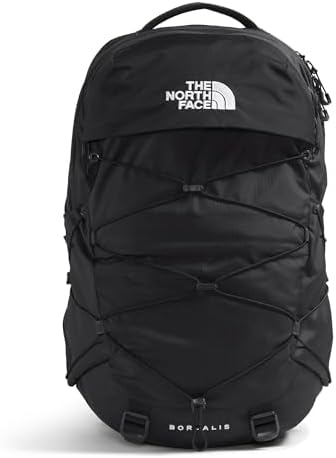
A 28L backpack sounds roomy until the laptop, books, bottles, and front-pocket items all compete for the same usable space. The North Face Borealis 28L works best as an organized daily laptop backpack, but it is not a clean answer for every large laptop, heavy textbook load, rain setup, or suitcase pairing.
Scorecard
The North Face Borealis 28L lands in the Exceptional tier — a strong result for the right daily laptop setup, but not a shortcut around fit, space, weather, or travel limits.
| Metric | Value |
|---|---|
| DVSS Score | 93.42 |
| Satisfaction Tier | Exceptional |
| Dissatisfaction Score | 4.20% |
| Critical Dissatisfaction Rate | 3.04% |
Based on buyer feedback patterns, not hands-on testing. See how this scoring works.
The 3.04% serious-warning share is low, but it still points to the problems worth reading before purchase: large laptop fit, heavy school loads, bottle pressure, rain exposure, and suitcase handling.
DVSS is a satisfaction snapshot, not proof that the Borealis will fit every laptop, protect electronics in rain, stay comfortable for every body, or avoid wear issues. Read the score beside the physical limits below.
Quick Take
- Best For: Moderate 15–16 inch laptop carry with organized daily gear.
- Not For: Large or thick laptops, heavy books, heavy rain electronics, or true trolley-sleeve needs.
- Top Strength: Organized and comfortable daily tech carry.
- Main Limitation: The 28L space tightens when books, bottles, and dense front-pocket items stack up.
Decision Matrix
| Your carry setup | Borealis 28L fit |
|---|---|
| 15–16 inch laptop plus moderate daily gear | Strongest match |
| Thick, cased, 17-inch, or 17.3-inch laptop | Read the fit section before buying |
| Heavy textbooks or large binders | Compare roomier laptop backpacks |
| Full side bottles plus full interior | Expect the inside to feel tighter |
| Heavy rain or rolling suitcase travel | Add protection or compare another setup |
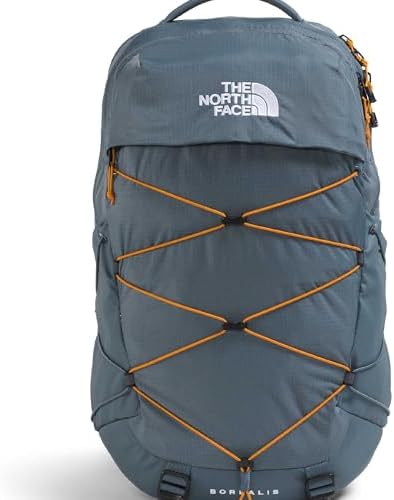
Where the laptop sleeve fits — and where it stops being a clean yes
The sleeve decision starts with laptop shape, not screen size.
17-inch and thick laptops need the most caution
Large laptop fit is uncertain even when smaller laptop cases look safe.
The laptop sleeve separates flatter devices from the main load, which helps standard laptop carry. The problem starts when the laptop body gets thicker, heavily cased, or moves into 17-inch and 17.3-inch territory, because the sleeve stops being a clean match across those larger bodies. That makes large-laptop fit uncertain before purchase, not something to assume from screen size alone.
A dedicated sleeve does not make every 17-inch or thick laptop a clean fit.
- MacBook-sized cases: 15-inch and 16-inch MacBook Pro sit on the cleaner fit side.
- Work laptop plus tablet: The Dell Latitude 5450 setup gives a specific work-carry reference.
- 17.3-inch uncertainty: MSI, HP, and Alienware-style cases keep large fit unsettled.
- Thicker laptop case: A heavier or thicker laptop adds a different laptop-body case to this fit question.
Use this table to separate stronger laptop-fit setups from the cases that need caution before buying.
| Laptop setup | Borealis 28L fit |
|---|---|
| Slim 15–16 inch laptop | Stronger fit |
| Work laptop plus tablet | Supported, but still version-aware |
| Thick, cased, or 17-inch laptop | Do not treat fit as guaranteed |
| 17.3-inch laptop | Compare before relying on the sleeve |
The safest fit is standard 15–16 inch laptop carry, not a blanket yes for every large laptop.
Raised sleeve clearance is not the same as hard-case protection
The sleeve gives a boundary, not a full protection promise.
The raised laptop compartment lifts the device above direct bottom contact. That bottom clearance gives the laptop area a useful structure limit, but it does not turn the backpack into hard-case impact protection or waterproof laptop protection.
The raised sleeve does not mean the backpack is drop-proof.
This table keeps the sleeve’s protection role inside the limit the product can support.
| Protection expectation | Borealis 28L result |
|---|---|
| Laptop lifted off the bottom | Some bottom clearance |
| Hard-case impact protection | Not established |
| Waterproof laptop protection | Add separate dry protection |
Read the raised sleeve as helpful structure, not as a replacement for separate protection when the risk is higher.
Where 28L stops feeling roomy
The capacity question changes once books and bottles join the laptop.
Heavy textbooks change the capacity decision
The 28L label works best when the load stays laptop-first.
The main compartment handles moderate daily loads better than bulky school packing. Once heavy books, binders, and stacked tech fill the space, the compact body, opening, and surrounding pocket load tighten the usable room. That is where the Borealis shifts from roomy daily carry to a more conditional school-load choice.
The 28L label suits daily tech carry better than heavy textbook packing. The Borealis can look like the right choice because of that number, then feel tighter once heavy textbooks and binders fill the main compartment. A school-load complaint after almost five months is strongest as a capacity warning, not as a durability issue.
- 12.9-inch iPad plus laptop: This setup keeps the pressure specific, not theoretical.
- 15.6-inch laptop with school papers: A laptop-and-paper load can still work better than heavy books.
- Heavy college textbooks: This is the clearest load that pushes the bag toward mismatch.
- Older Borealis expectations: Prior roominess comparisons should not be treated as a current guarantee.
The capacity choice depends on what fills the 28L space, not just the number on the listing.
| Packed load | 28L result |
|---|---|
| Laptop, documents, charger, and moderate books | Stronger everyday setup |
| Laptop plus large binders | Read the load carefully |
| Heavy textbook load | Compare roomier laptop backpacks |
| Full interior plus side bottles | Expect usable space to tighten |
The Borealis 28L works better as an organized daily tech bag than as a heavy-book hauler.
When the front pocket helps organization and when it gets in the way
The front pocket is useful because it takes space somewhere else.
The half-depth organizer changes the main compartment
Small-item organization is useful until it starts using the space behind it.
The front admin pocket occupies the upper front section of the bag. When that area fills, it thickens the upper front and narrows access behind it in the main compartment. That makes the organizer a real convenience, but not free added storage.
The front admin pocket sorts small items, but it still uses upper-front space. Chargers and small accessories can make the pocket look like the right place to pack everything, then the same pocket crowds the upper front of the bag.
- Chargers and earbuds: These small tech items make the pocket useful but easy to crowd.
- Pens and medicine: Daily small items support quick access without needing the main space.
- Passport and ticket: Travel-paper storage is a real strength of the pocket layout.
- Lower-compartment reach: Items below the front pocket become harder to reach when the upper front is packed.
This table separates useful small-item carry from front-pocket loads that crowd the bag.
| Front-pocket load | Main-space effect |
|---|---|
| Light small items | Useful quick access |
| Charger-heavy small tech | Main space starts to feel crowded |
| Travel papers and keys | Strong pocket role |
| Full-depth storage need | Compare a different organizer layout |
The front pocket is a strength when it stays organized, not when it becomes the main storage area.
Dense small items can make the bag unstable
Set-down stability depends on where the small weight sits.
Weight placed high in the front pocket changes how the bag balances when it is set down. The base stays steadier when heavier items sit lower and closer to the back panel. A top-front-heavy load moves the bag away from that more stable packing state.
A stand-up design can still tip when small heavy items sit high in the front pocket. Easy-access packing can backfire when dense items sit high enough to pull the bag forward.
- Calculator and charger: Dense small items put more weight high in the front.
- Glasses and pencils: Small objects create a bigger problem when they spill.
- Headphones: Bulky small tech can add front-pocket volume without much warning.
- Partly filled main compartment: A lighter main load can make the front feel more top-heavy.
Use this table to separate stable packing from the front-pocket loads that need more caution.
| Load position | Set-down result |
|---|---|
| Heavier items low and close to the back | More stable setup |
| Small heavy items high in front | Watch for tipping |
| Front pocket full, main space light | Stability gets less predictable |
Keep dense small items out of the upper front if standing stability matters.
Why the side bottle pockets change the main compartment
Bottle space is part of the capacity choice.
Bottles are not separate from the 28L space
Large bottles can make the inside feel smaller.
The side bottle pockets sit outside the bag, but loaded bottles still press inward. That pressure reshapes the usable main compartment, especially when the interior is already full. The result is a bottle-carry strength with a real space tradeoff.
Bottle pockets sit outside the bag, but the bottles still take room from the inside. Exterior bottle pockets do not make bottle carry capacity-neutral.
- Wide-mouth Nalgene: This bottle belongs in the side-pocket fit discussion.
- 24 oz bottle: A full interior can make even this size harder to insert.
- 32 oz bottle: The pocket can take this size, but the space tradeoff still remains.
- Hydro Flask: Larger bottle shapes need extra caution in the tight side pockets.
Bottle fit needs to be read beside the space those bottles take from the inside.
| Side-pocket item | Interior tradeoff |
|---|---|
| Bottle loaded before the main space | Easier packing order |
| Bottle added after a full interior | Fit gets tighter |
| Larger bottle shape | Read the pocket fit carefully |
| Bottle plus heavy books | Expect the inside to feel smaller |
The bottle pockets are useful, but they work best when the inside load stays realistic.
Bottle pressure is one limit; bulky side items are a separate one.
Larger bottles and bulky extras need a separate check
Side storage is useful, but it is not gym-bag storage.
Tight side-pocket construction restricts bulky side items. The pocket system fits better with bottle and umbrella use than with shoes or bulky carry that belongs in a different kind of bag.
The side pockets can hold bottles and umbrellas without becoming bulky gear storage. Pocket count does not make the Borealis a gym-bag substitute.
- Hydro Flask: The larger bottle shape is the clearest caution case.
- Umbrella: Slimmer side items sit closer to the pocket’s intended use.
- Shoes: Bulky carry should stay outside this bag’s main promise.
This table separates normal side-pocket use from the bulky items that need a different bag.
| Side-pocket use | Borealis 28L result |
|---|---|
| Bottle or umbrella | Reasonable use case |
| Larger bottle shape | Read the pocket fit carefully |
| Shoes or gym bulk | Compare a different carry setup |
Treat the side pockets as bottle-and-umbrella storage, not as bulky side storage.
What the water-resistant shell does not protect
Water resistance has a zipper-and-stitching limit.
Rain reaches the weak points before the fabric fails
Water resistance does not make the laptop area waterproof.
The outer fabric can shed light moisture, but the zipper and stitching areas remain weaker points. Heavier or longer rain can reach those openings before the fabric itself becomes the issue. That is why electronics need a separate dry layer when rain risk is higher.
Water-resistant fabric is not the same as waterproof laptop protection, because moisture can still reach zippers and stitching. The shell can look safe for laptop carry in wet weather, then still need a separate dry layer once rain reaches those areas.
It can happen: water can still reach zippers or stitching, and isolated early failure cases keep durability from becoming a guarantee.
- Laptop and books: These are the items that make the rain limit matter.
- Drybag or drybox: Separate protection is the named fix for sensitive gear.
- Heavy rain: This exposure pushes past light-moisture expectations.
- Light splashes: Lower exposure is the cleaner use case for the shell.
This table separates light rain expectations from electronics protection in heavier weather.
| Rain exposure | Electronics risk |
|---|---|
| Light rain or splashes | Reasonable weather-resistant expectation |
| Prolonged heavy rain | Add separate dry protection |
| Laptop or books in wet conditions | Do not rely on the shell alone |
| Waterproof protection need | Compare a rain-focused setup |
Treat the shell as weather-resistant for light moisture, not as waterproof laptop protection.
Durability is strong, but not unlimited
The durability picture is positive, not a no-failure promise.
The bag can hold up well across longer daily use, and material markers can support confidence. The limit is that isolated failure cases still appear around zipper edging, stitching, straps, and lining. That keeps the durability case strong but bounded.
After a few months of daily carry, one failure case centered on the organizer-pocket zipper edging separating from the bag material. Another isolated early case involved a shoulder strap ripping after 2–3 weeks, even though the load was not described as heavy. Longer-use experience still includes two- or three-year work, university, and travel use.
The brand name, 420D nylon, and YKK zippers can make the bag feel reassuring, but isolated failure cases still keep long-term confidence from becoming a guarantee.
- Few months of daily carry: One organizer-pocket zipper-edge case created an early limit.
- Two to three weeks: One shoulder-strap case is severe but isolated.
- Two- or three-year use: Longer-use experience keeps the overall durability picture positive.
- 420D nylon and YKK zippers: These markers support confidence without proving every unit.
This table keeps long-use praise and early failure cases in the same cautious frame.
| Reported wear point | Buying caution |
|---|---|
| Longer daily use | Positive confidence |
| Zipper-edge separation | Isolated early limit |
| Strap rip case | Serious, but not the common outcome |
| Material and zipper markers | Confidence support, not a guarantee |
Read durability as a strength with limits, not as proof that early failure cannot happen.
How the carry system supports daily load
Comfort depends on support, structure, and first-use feel.
Comfort improves with support, not with minimalism
The carry system favors loaded comfort over the thinnest feel.
The padded shoulder straps, back panel, sternum strap, and hip strap spread laptop-and-book weight across more contact points. That support is the reason the Borealis can make sense for daily laptop-and-book carry. The tradeoff is structure: the same support can feel bulkier than a minimalist backpack.
A supportive backpack should not be read as the slimmest backpack.
- Laptop-and-book carry: This is the load where support matters most.
- Sternum strap: The chest strap gives a stabilizing point.
- Hip strap: The waist support adds another load-control part.
- Minimalist preference: A buyer chasing the thinnest feel may notice the structure.
This table separates supported loaded carry from buyers who want the lightest feel.
| Carry load | Feel on body |
|---|---|
| Laptop plus daily books | Support is the stronger result |
| Fully packed daily setup | Expect more structure |
| Minimalist carry preference | Compare slimmer options |
Choose the Borealis for support under load, not for the thinnest carry profile.
First wear can feel different from long use
Early stiffness should not be confused with the whole comfort story.
The back padding can feel stiff early. That first-use feel may change after adjustment or break-in, so it should stay separate from the broader comfort picture.
Padding does not guarantee soft first-wear comfort. Comfort may improve after adjustment, even if the back panel feels stiff early.
This table separates early padding feel from the longer comfort picture.
| Carry moment | Feel on body |
|---|---|
| First few uses | Stiffness can show up |
| Adjusted or broken-in carry | Comfort remains stronger |
| Need soft comfort immediately | Compare before buying |
The comfort case is strongest after the harness settles, not necessarily on the first wear.
Where travel handling stops short
Travel handling is useful, but suitcase pairing has a specific limit.
The suitcase workaround is not a trolley sleeve
Suitcase pairing is possible, but not built in.
The back panel does not have a dedicated luggage pass-through. The top handle helps with short hand-carry moments, and the sternum strap can be clipped and tightened as a suitcase-handle workaround. That is useful, but it is not the same as a built-in sleeve that slides over a luggage handle.
The sternum strap can help on a suitcase handle, but it is not a dedicated luggage sleeve. The travel pockets and top handle can make the bag look suitcase-friendly, but rolling-luggage carry still depends on an improvised strap setup.
- TSA-line handling: The top handle gives a useful grab point.
- Rolling suitcase pairing: This is the setup that exposes the missing sleeve.
- Sternum-strap workaround: The strap can help, but it is still improvised.
- Airline personal item: That reading depends on airline rules and packing.
This table separates backpack-first travel from rolling-suitcase pairing.
| Travel setup | Suitcase fit |
|---|---|
| Backpack-first airport use | Stronger travel result |
| Short hand-carry moments | Top handle helps |
| Occasional suitcase pairing | Workaround only |
| Frequent rolling-luggage use | Compare a true pass-through design |
The travel setup works best when the backpack stays on your body or in your hand.
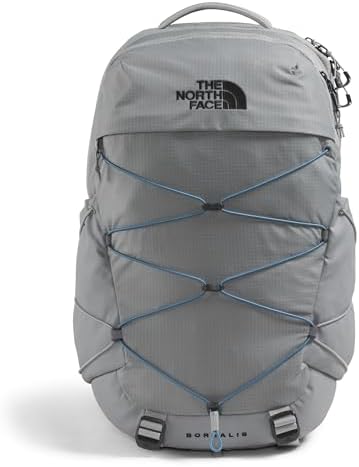
Who should skip
| Your setup | Why to compare |
|---|---|
| Thick, cased, 17-inch, or 17.3-inch laptop | The sleeve fit is not a clean yes. |
| Heavy textbooks or large binders | The 28L space can stop feeling roomy. |
| Full side bottles plus full interior | Bottle carry can tighten the main space. |
| Heavy rain electronics carry without dry protection | The shell does not act like waterproof laptop protection. |
| Frequent rolling-suitcase pairing | The suitcase setup uses a workaround, not a built-in sleeve. |
| Zero-tolerance early durability concern | The overall durability picture is positive, but isolated failures still matter. |
Buy or skip?
Buy The North Face Borealis 28L if the setup is a 15–16 inch laptop, moderate daily gear, organized small items, and light weather exposure. The same pocket layout and carry structure that make it useful also tighten space, add bulk, and leave travel handling less integrated once the load gets heavier or more suitcase-focused.
Compare before buying if the setup depends on a thick 17-inch laptop, heavy textbooks, full bottle pockets plus a full interior, heavy-rain electronics protection, or frequent rolling-suitcase pairing.
Check the Price: The North Face Borealis
See More Options:
- For heavier book loads or larger laptop setups, compare bags with more room for heavy books and larger laptop setups.
- If laptop fit or rain protection matters more than the backpack alone can cover, add a separate layer when laptop fit or rain protection matters.
- For chargers and small tech that might crowd the front pocket, keep chargers and small tech from crowding the front pocket.
