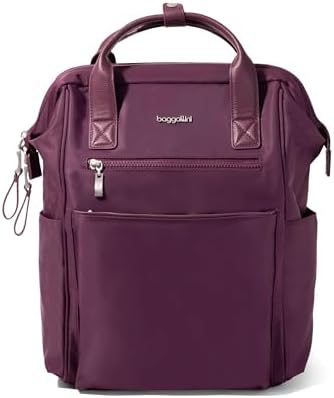
A polished work backpack can look ready for laptop carry, bottle carry, and light travel at the same time. The Baggallini Soho Backpack is strongest when that setup stays compact: a work laptop, modest extras, and light personal-item packing. The closer the setup gets to larger laptops, full side pockets, bulky weekend loads, or serious device protection, the more the 15.2L structure matters.
Scorecard
The Soho Backpack lands in the Excellent tier — a strong result for a polished work bag, but not a promise that every laptop, bottle, travel load, zipper, strap, or pocket setup will work the same way.
| Field | Value |
|---|---|
| DVSS Score | 88.52 |
| Satisfaction Tier | Excellent |
| Dissatisfaction Score | 6.77% |
| Critical Dissatisfaction Rate | 4.60% |
Based on buyer feedback patterns, not hands-on testing. See how this scoring works.
At 4.60%, the share of serious dissatisfaction remains low, but the number still matters because the most pressing problems involve laptop fit, bottle space, access, and device protection. Read the high satisfaction result as support for polished, organized work carry, not as proof that the Soho Backpack solves every travel, weather, bottle, or hardware concern.
Quick take
- Best For: Polished work carry with a laptop, modest accessories, and light personal-item travel.
- Not For: Bulky weekend packing, large bottles after full loading, waterproof laptop protection, or clasping zipper security.
- Top Strength: Structured, upright organization that suits meetings, commuting, and work travel.
- Main Limitation: The compact 15.2L shape and side pockets become more conditional once the bag is full.
Decision matrix
| Your setup | How the Soho handles it |
|---|---|
| Polished work carry with laptop and modest extras | Strongest use case |
| Larger or thicker laptop | Fit needs caution |
| Light underseat personal item | Good fit if packing stays modest |
| Large bottle after full packing | Riskier fit |
| Waterproof or clasping-security expectation | Other options may fit better |

Where the laptop fit stops being simple
The 16-inch and 17-inch laptop examples need a narrower reading.
16” MacBook Pro, 17-inch screen laptop, and the above-15-inch squeeze
Screen size alone is not enough to read this sleeve safely. The laptop sleeve accepts some larger cases, then leaves less clearance as the laptop body gets larger or thicker. The top opening also narrows the final step because the device still has to pass through the opening and zip closed. That turns some larger laptop cases into snug fits rather than clean-roomy fits.
The laptop-backpack label does not mean every larger laptop gets a clean fit.
The cleanest way to read the fit examples is by laptop case, not by screen size alone.
| Laptop you carry | How the fit reads |
|---|---|
| 13-inch laptop | Most straightforward fit |
| 10″H x 13″W laptop | Useful size reference, with thickness still unknown |
| 16” MacBook Pro | Can fit in the stated setup |
| 17-inch screen laptop | Can zip, but snug |
| Larger or thicker 16–17-inch laptop | Fit is uncertain |
This sleeve fits some larger laptops, but it is safer for moderate work-laptop shapes than thick large-laptop setups.
The fixed divider that does not become open packing space
Collapsed is not the same as removable.
The padded laptop divider folds back when the compartment is packed, but it stays attached inside the bag. That divider still occupies part of the interior instead of leaving one fully open packing space. For a removable-divider setup, this bag is better read as a structured laptop section instead.
Why the 15.2L body works better as a light personal item
The size works best when the travel load stays modest.
Light underseat loads versus shoes and bulky weekend packing
This is a light personal item, not a weekend-pack replacement. The compact body holds flat, work-focused items more naturally than thick travel items. The structured top and internal layout push back when the load becomes rigid, stacked, or shoe-heavy. That is where the useful space can feel smaller than the outside shape suggests.
- Underseat tech load: iPad, chargers, cosmetics, and toiletries fit the light-travel pattern.
- Small clothing add-on: A modest clothing change belongs closer to the supported use.
- Bulky add-on: Shoes are the item that can push the bag past its better use.
- Roomier-looking shape: The outside can look more generous than the usable packing space feels.
The Soho Backpack can look right for polished underseat travel, then run out of room once the extras become thick or bulky. The personal-item shape works for light travel, but it does not replace a larger travel backpack.
The travel fit depends on whether the load stays flat, light, and work-focused.
| Your travel load | How this 15.2L shape handles it |
|---|---|
| Laptop, folders, charger, and flat work items | Stronger fit for daily work carry |
| Light clothing plus in-flight essentials | Works when the load stays modest |
| Bulky weekend packing or footwear | A roomier backpack makes more sense |
The better use is polished work travel, not replacing a larger travel backpack.
How the top frame changes access
The opening helps visibility before it helps speed.
Top corners, wire opening, and the two-hand zipper moment
The opening favors visibility more than speed. The rigid top frame holds the bag’s mouth shape so the inside is easier to see when the Soho Backpack sits upright nearby. The wire opening and top zipper resist casual movement when the bag is not placed steadily. The same structure that gives the opening its shape can slow closure or make larger-item movement less fluid.
- Two-hand moment: The top zipper can take more deliberate handling than expected.
- Stay-open expectation: The top mouth may not stay fully propped open for every setup.
- Bulky item movement: Larger items can feel harder to pass through the opening.
- Nearby surface: Items are easier to see when the bag sits upright.
The wide top opening looks like an easy-access strength, but the mouth may not stay fully open. The access friction appears in isolated cases, but it matters if the bag needs to open quickly with one hand.
The access fit depends on where the bag is sitting and how fast it needs to open.
| How you open it | Where the frame slows things down |
|---|---|
| Upright on a table, chair, or seat | Easier to see inside |
| While moving or closing quickly | The zipper can feel slower |
| With bulky items | A simpler opening may work better |
Choose this opening for visibility and structure, not for the fastest one-handed access.
Underseat access when the frame needs room to open
Underseat access is less flexible than desk-side access. The frame corners need room to lift when the top opening is used fully. An airplane seat area gives those corners less space, so the Soho Backpack may only open partway until it is moved. The same top shape behaves differently when the seat area limits the opening.
- In-flight reach: The bag may need to come out before the top opens fully.
- Quick rummaging: Fast access under the seat is less certain.
- Nearby upright use: The same shape works better when the bag has room beside you.
When the side pockets stop working like bottle pockets
The side pockets are a separate decision, not just a small feature.
Yeti, one-liter bottle, and the full-load squeeze
The bottle pockets change after the bag is packed.
The side pockets rely on space beside the main compartment. A laptop and full interior can use that same space from the inside. Once the main load expands, the packed interior squeezes the side-pocket space that a bottle or umbrella would need.
- Yeti setup: One Yeti case can work.
- One-liter possibility: A one-liter bottle remains possible in one setup.
- Small bottle miss: Even a smaller bottle can still run into the pocket’s tight shape.
- Umbrella or drink bottle: Those items can lose space once the main compartment fills.
The side pockets look useful on their own, but the packed interior can change how much bottle space remains. The bottle-pocket friction appears in isolated cases, but it matters if a bottle is part of the daily setup.
Bottle fit depends on both bottle size and how full the main compartment is.
| Bottle and packing state | What happens after loading |
|---|---|
| Slim bottle with light packing | Stronger chance of working |
| Larger bottle with laptop and full gear | Fit becomes less certain |
| Bottle-first daily setup | Roomier side pockets make more sense |
This is not the safest pick if the bottle pocket needs to work no matter how full the bag gets.
Where the hybrid carry setup gets messy
Backpack carry is stronger than every carry mode.
One-shoulder carry, dangling straps, and the 5’4″ fit
Backpack mode is the cleaner carry read. The backpack straps serve two jobs: they carry the Soho on the back and still remain part of the bag when the top handles take over. Strap length, loose strap storage, and load all change how the bag sits. That is why backpack mode reads more clearly than one-shoulder or tote-style use.
- 5’4″ carry fit: A 5’4″ carry setup can work well.
- One-shoulder carry: This mode can slide instead of staying planted.
- Top-handle mode: The straps may remain visible or dangle.
- Loaded tech carry: Laptop, tablet, and notebooks can make weight feel different.
The hybrid carry appeal is real, but it can fall short if clean tote use or stable one-shoulder carry matters most.
The carry fit depends on which mode gets used most often.
| How you carry it | What changes in that mode |
|---|---|
| Two-shoulder backpack carry | Strongest use case |
| One-shoulder carry | Less stable for some buyers |
| Top-handle carry | Strap management matters |
| Heavier tech load | Comfort depends more on tolerance |
This bag makes more sense if backpack carry matters more than clean tote-style carry.
Away handle width and the trolley sleeve caution
The sleeve is useful, but not a universal suitcase fit. The luggage sleeve works only as well as its opening fits the suitcase handle. Wider or differently shaped handles can make the slide tighter. That keeps the sleeve useful, but it does not turn it into proof that every roller handle will work smoothly.
The trolley sleeve is useful, but the handle fit is not equally clear across every suitcase.
The roller-bag fit comes down to the handle the sleeve has to slide over.
| Suitcase handle setup | What to expect from the sleeve |
|---|---|
| Standard compatible roller handle | Better chance of smooth use |
| Away suitcase handle | Tight fit is possible |
| Wider handle setup | Fit is uncertain |
The sleeve is a useful travel feature, but it should not be treated as all-handle proof.
What the protection and hardware signals do not prove
Daily resistance is different from device protection.
Kindle screen, rain claims, and the waterproofing gap
Daily water resistance is not full device protection. The outer material can resist some everyday moisture and still leave laptop protection unanswered. The front interior pocket also does not become a safe place for every fragile screen just because it is inside the Soho Backpack. Moisture resistance, pocket placement, and screen protection are separate questions.
- Kindle screen: A Kindle screen can still crack in the front interior pocket.
- Rain and spills: The material can handle some everyday moisture.
- Fragile screens: Small electronics still need their own protection.
- Serious rain: Laptop protection becomes less certain than the fabric wording suggests.
Water-resistant material helps with daily moisture, but it does not prove waterproof laptop protection. The Kindle issue is worth knowing even if it is not the common outcome, because it affects a fragile device.
Device protection and weather resistance need a separate reading from daily organization.
| Device or weather need | What this bag does not prove |
|---|---|
| Light rain or spill cleanup | Everyday resistance, not waterproofing |
| Laptop in heavy rain | Stronger protection is safer |
| Fragile screen without a case | Add separate protection |
Treat the material as daily-resistant, not as a complete laptop or fragile-screen protection plan.
Weather and small-device protection are one kind of caution. Zippers and handles raise a separate question about closure and carry hardware.
Zipper pulls, clasping security, and handle wear reports
The quality result is positive, but hardware still needs a cautious read.
The zipper pulls close the Soho Backpack, but they do not clasp together. Zipper and handle behavior also splits into different hardware questions: ordinary closure, clasping security, zipper failure, and handle wear are not the same thing. Usage-duration signal only, not a controlled durability timeline.
- Two-use zipper break: A zipper can fail very early.
- Desk-fall zipper break: A fall from a desk can also turn into a zipper failure.
- Two-year handle wear: Handle threads can start giving after travel use.
- Long-term handle peeling: Handle peeling can appear over time with prolonged use.
- Sling comparison: The zipper pulls do not convey the same sense of clasped security.
The zipper pulls may disappoint anyone expecting a more secure feel, as they do not clasp together. Zipper and handle issues matter because they affect closure and carry hardware, but they should not be treated as the common outcome.
The hardware risk differs from the daily organizational benefit.
| Closure or handle expectation | What to treat carefully |
|---|---|
| Normal zipper closure | Supported more than security-style clasping |
| Clasping zipper security | Not established by this bag |
| Failure-proof zipper or handle use | Not supported by the mixed hardware cases |
Read the build quality as positive, but do not turn it into a no-risk hardware promise.

Who should skip
| Your setup | Why this may feel wrong |
|---|---|
| Bulky weekend packing or shoes | The 15.2L body is not built for that load |
| Large bottle plus full main compartment | Side-pocket space can shrink |
| Quick one-handed access | The top frame favors visibility over speed |
| Clean tote-style carry | Backpack straps may stay part of the setup |
The first group is about how the Soho Backpack fits the way you pack and carry. The next group is about protection and security expectations.
| Protection or security need | Why another option may fit better |
|---|---|
| Bare Kindle or fragile screen | Separate protection is safer |
| Laptop in serious rain | Water resistance is not waterproofing |
| Clasping zipper security | The zipper pulls do not clasp |
| Failure-proof hardware expectation | Mixed zipper and handle cases need caution |
Buy or skip?
Buy the Baggallini Soho Backpack if you want a polished, structured, organized work backpack that can also handle light personal-item travel. The tradeoff is physical: the compact shape that helps the bag stand upright and look professional also makes laptop fit, bottle space, quick access, and bulky packing less forgiving once the load gets bigger.
Compare other options if the setup depends on roomy weekend packing, a large bottle after the bag is full, waterproof laptop protection, clasping zipper security, or cleaner tote-style carry.
Check the Price
See More Options
- For a similar small-work-bag search, start with smaller laptop backpacks that stay focused on light work carry.
- If the 15.2L body sounds too tight for your packing style, compare roomier laptop backpacks for buyers who need more packing space.
- For the Kindle and rain-related protection cautions, consider extra protection for laptops and fragile screens
