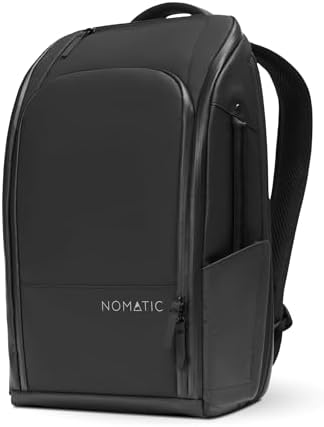
A highly organized work backpack can still be the wrong choice if the size label, zipper feel, rain promise, or lockable zipper cue does not match how the tech load sits inside. The Nomatic Work Backpack is strongest as a mobile office bag in the 14L and 20L sizes, but the 20L version expands to 24L, not 30L. Those limits matter before the bag gets treated as an all-purpose travel or laptop-protection answer.
Scorecard
The scorecard indicates strong overall satisfaction, but the product-specific limitations still matter. This bag lands in the Excellent tier — useful for the right work-tech setup, but still shaped by its zipper, rain, laptop fit, and capacity limits.
| Field | Value |
|---|---|
| DVSS Score | 80.91 |
| Satisfaction Tier | Excellent |
| Dissatisfaction Score | 13.96% |
| Critical Dissatisfaction Rate | 12.71% |
Based on buyer feedback patterns, not hands-on testing. See how this scoring works.
At 12.71%, serious dissatisfaction is high enough that zipper, rain, capacity-label, and laptop-fit limits deserve attention before purchase. The score does not prove fit, protection, durability, comfort, weather performance, or the quality of travel hardware.
The Excellent tier still supports a positive read, but the bag’s main limits remain the 20L-to-24L expansion ceiling, upper-corner zipper friction, mixed rain performance, and laptop-sleeve fit.
Quick take
- Best For: Work shoppers who carry a laptop, tablet, chargers, documents, and small tech accessories in a structured daily setup.
- Not For: Shoppers who need smooth zipper certainty, regular rain-safe laptop carry, true 30L expansion, or full anti-theft security.
- Top Strength: The internal layout works best when the bag carries a mobile-office load.
- Main Limitation: Zipper friction at the upper corners is the primary point of hesitation.
Decision matrix
| Your Nomatic setup | Where the bag changes fit |
|---|---|
| Work laptop, tablet, chargers, and documents | Strongest match for the bag |
| 14L compact daily carry | Best when body bulk matters |
| 20L work-tech carry | Good when 24L expansion is enough |
| Moderate-rain laptop commute | Separate laptop protection matters |
| Smooth zipper certainty | A smoother laptop backpack makes more sense |
Why the organization works best as a mobile office
Internal pockets decide whether this is a work bag first.
Internal pockets separate work tech from loose daily items
The strongest fit is an organized workday, not open-ended packing.
The internal pocket system provides dedicated storage for work devices, chargers, cables, battery packs, and small accessories. Small tech has a lower chance of pooling in the main space, but the bag also becomes more work-focused than clothing-focused.
That tradeoff matters. The same divided interior that helps a daily tech setup has less freedom when clothes, shoes, or loose packing become the main load.
- Business-tech load: reMarkable, portable monitor, DAC, foldable stands, and documents give the layout real work depth.
- Long accessory carry: an Apple keyboard with a numeric pad shows that the bag can hold more than a laptop and a charger.
- Dense conference setup: the Moshi power backup is meant for the all-day work-event load, not a weekend clothing load.
- Multi-device routine: laptop, tablet, chargers, cords, and documents are the setups that make the organizer matter.
This table separates the work setup the layout supports from the packing job it does not replace.
| Work items you carry | What the layout supports |
|---|---|
| Laptop, tablet, chargers, and documents | Strong match for daily work tech |
| Shoes and folded clothes | Better handled by a travel pack |
| Current removable file/gear panel | Useful, but not older modular-panel proof |
| Hard eyewear case in a full pack | Protection trades against pocket space |
Treat the Work Backpack as a structured mobile office bag first.
The 14L and 20L fit different work-carry problems
The choice of size starts with body fit and workload.
The 14L solves the compact daily carry first
Choose the smaller size when body bulk matters more than overflow.
The 14L body gives the bag a smaller daily-carry shape than the 20L version. That body-size difference changes how the backpack sits before extra capacity becomes useful.
The 14L is not just the “lesser” version. It is the cleaner choice when the Nomatic layout matters, but the daily setup does not need the larger body.
- 5’6″ body-fit example: the larger 20L felt too big for everyday carry in this height setup.
- Everyday-size preference: the 14L became the better match when the daily load stayed compact.
This table splits the 14L and 20L by daily body fit and work-tech load.
| Your size choice | What the bag does differently |
|---|---|
| 14L daily work carry | Keeps the setup smaller and lighter-looking |
| 14L expanded to 17L | Adds limited overflow without becoming travel-first |
| 20L work-tech load | Gives more room for devices and accessories |
| 20L daily carry | Can feel like more bag than needed |
Pick the 14L when compact daily carry matters more than extra work-tech room.
The 20L label does not mean 30L expansion
The 20L number needs a cleaner reading than “bigger Nomatic bag.”
20L-to-24L is as far as the Work Backpack expands
The 30L expansion does not belong to this version.
The 20L Work Backpack does not expand to 30L, so the capacity label needs to stay separate from the Travel Pack.
Similar size language can make two Nomatic product lines sound closer than they are. For this product, the 20L version works as a medium work-carry backpack with expansion, not as a 30L travel-capacity bag.
- 20L Work Backpack: This product line is tied to the 24L expansion choice.
- 30L Travel Pack cue: the 30L number belongs outside the Work Backpack promise.
The 20L capacity choice needs a clean split between the Work Backpack and Travel Pack expectations.
| The capacity label | What it really means |
|---|---|
| 14L Work Backpack | Compact size with 17L expanded state |
| 20L Work Backpack | Medium size with 24L expanded state |
| 30L expansion need | Compare beyond the Work Backpack |
| 30L Travel Pack cue | Keep separate from this product |
The 20L Work Backpack is a medium work-carry choice, not a 30L travel-capacity choice.
How laptop fit changes beyond the screen-size label
Device shape matters more than the number of screens.
Thick 15.6-inch and unresolved 17-inch setups need caution
Screen size is not enough to predict the sleeve result.
The laptop sleeve responds to more than the diagonal screen size. Sleeve volume and laptop chassis depth can change whether the device sits cleanly, shifts loosely, or becomes uncertain.
Fit and protection are not the same promise. The sleeve can work for some laptop-plus-tablet setups while still leaving thick, oversized, or unusually thin devices less settled.
- Lenovo P50/P51 class: thick 15.6-inch workstation-style laptops are the setups where screen size is less reliable.
- 17-inch fit limit: A 17-inch laptop should not be treated as a settled fit.
- Laptop-plus-tablet carry: the bag can carry some multi-device work setups, but those setups do not accommodate every laptop size.
Laptop fit depends on the device’s shape and sleeve behavior, not on screen size alone.
| Your laptop setup | What changes inside the sleeve |
|---|---|
| Known 15- or 16-inch work laptop | Strongest fit when dimensions are familiar |
| Thick 15.6-inch laptop | Fit becomes less predictable |
| 17-inch laptop | Fit is not established |
| Small thin laptop | Snug hold may be less certain |
The sleeve works best for carrying a work device, but the screen label should not stand in for device fit.
Fit answers whether the device belongs in the sleeve. Protection asks a different question.
Sleeve padding does not provide impact protection
Comforting sleeve padding is not the same as stronger device protection.
The suspended, soft-lined sleeve can give the laptop pocket more cushion than a basic sleeve. That padding still does not establish an impact rating, and bottom-edge cushioning remains a separate question.
This matters most when an expensive laptop sits in the sleeve, and the device’s bottom is not fully hugged. The safer role is normal work carry, not dedicated rugged protection.
- MacBook example: one MacBook setup can sit with more sleeve confidence, but that does not create an impact rating.
- MacBook Pro concern: the bottom-edge question remains when the device is not hugged.
This table keeps normal sleeve confidence separate from stronger protection needs.
| Protection expectation | What is not proven |
|---|---|
| Normal work carry | Sleeve confidence only |
| Drop protection | No impact rating is established |
| Bottom-edge certainty | Extra cushioning is not established |
| Rugged device safety | Add separate protection or compare |
Treat the sleeve as work-carry protection, not a rugged protection promise.
Where the zippers change the buying decision
The upper corners decide how much friction you accept.
Upper curved zipper seams are the main friction point
The layout is strong only if the zipper feel is acceptable.
The main zipper has to move around the upper curved seams, where coated material and corner geometry can increase resistance. That corner movement is where sticking, stalling, or harder pulls become part of daily use.
The front-opening design can make the interior easier to reach, but that advantage still depends on zipper movement. A broad opening loses some of its value when the zipper stalls before the bag opens smoothly.
Zipper friction comes up often enough to plan for, especially around the upper curved seams, where sticking, stalling, and worse failures occur.
- Seven-month zipper failure: the teeth separated from the fabric, and a slider fell off.
- 13-month trip failure: zipper derailment became a travel problem during a 2.5-week trip.
- Nearly one-year seam failure: the track detached near an upper curved section.
- 32-flight long-use example: the zipper held up, but the corner felt still part of the tradeoff.
The zipper table separates normal friction from failure risk rather than blending them into a single complaint.
| Zipper situation | What it can mean in use |
|---|---|
| Some corner resistance is acceptable | The layout can still make sense |
| Smooth daily access is required | Compare bags with fewer zipper complaints |
| Travel failure risk is unacceptable | Look for a smoother closure setup |
| Broad front access matters most | Judge it together with zipper feel |
The zipper is the main tradeoff: strong access layout, less certain zipper feel.
Where water resistance stops protecting tech
Rain matters most once a laptop is inside.
Moderate rain is where the laptop area gets risky
Wet-commute laptop carry needs a separate read.
The exterior shell may shed water in some light-water examples, but the shell behavior does not settle what happens inside the laptop area. The rain examples here indicate a split between exterior water behavior and compartment outcomes.
The exact entry point is not established, so the safest limit is not that a specific seam always fails. Water-resistant wording should not be treated as laptop-safe rain protection.
- MacBook rain example: a seven-minute rain situation matters because water reached the inside and the device area.
- Short office walk: one brief walk still left the laptop padding damp.
- Paper-and-electronics concern: the issue is not exterior beading; it is what happens inside the work area.
Rain behavior needs a table because the shell and laptop area do not always tell the same story.
| Rain situation | What happened to the tech area |
|---|---|
| Light water contact | The shell can shed light water |
| Short rainy walk | Laptop padding ended damp |
| Moderate rain with laptop inside | Water reached compartment and device area |
| Routine wet commute | Separate protection or another bag matters |
Add protection or compare elsewhere if moderate-rain laptop carry is routine.
Where travel features need tighter boundaries
Locks, handles, and stowage each fail differently.
Lockable zippers do not close every opening point
The lock cue is limited, not full security.
The lockable zipper setup includes pulls that can be locked, but other pulls still open access to the main compartment. Locking only part of the opening system leaves other entry points available.
That makes the security cue useful only in a limited sense. It may help with light deterrence, but it should not be treated as full anti-theft storage.
- Four-pull setup: the zipper system has more opening points than the lock cue suggests.
- Two lockable pulls: only part of the main opening is described as lockable.
- Security-minded travel use: this matters most when the bag itself is expected to secure the main compartment.
This table distinguishes between light deterrence and stronger main-compartment security.
| Security expectation | What the lock cue does not settle |
|---|---|
| Light zipper deterrence | The lock cue may be enough |
| Main compartment security | Sealed access is not established |
| Anti-theft backpack need | Stronger security storage makes more sense |
| Public-transit worry | Separate protection for valuables matters |
Do not make true security the reason to choose this bag.
Roller handles can turn the pass-through into a fit problem
The pass-through is useful only when the roller pairing works.
The luggage pass-through depends on the roller handle width and sleeve tightness. When the handle fit gets tight, the sleeve sits close enough to the laptop area that the pairing becomes more than a convenience.
Roller compatibility remains conditional. The pass-through can help when the handle slides in cleanly, but it does not make it universal luggage support.
- Briggs & Riley example: the Baseline Rollerboard is the roller example that did not fit cleanly.
- Delsey example: a tight-sleeve issue prevents suitcase pairing from being universal.
- Laptop-zone concern: the issue matters more because the sleeve sits near the computer area.
This table distinguishes occasional pass-through convenience from dependence on roller handles.
| Travel feature | Where it needs caution |
|---|---|
| Occasional pass-through use | Useful when the handle pairing is clean |
| Wide roller handle | Fit may not be smooth |
| Tight suitcase sleeve | Easy sliding is not guaranteed |
| Laptop carried inside | Tight handle fit matters more |
The pass-through is a convenience, not a universal pairing for suitcases.
The major travel features set a bigger caution. Strap hiding, bottle pockets, and standing behavior are smaller details, but they still change how the bag feels in daily use.
Strap stowage is slower in airport moments than it looks
This is an occasional convenience, not a fast-moving travel shortcut.
The strap-hideaway flaps rely on snaps to hold the straps away. When those snaps resist closure, the snap flaps can add handling at exactly the moment they are supposed to simplify movement.
That difference matters because strap hiding behaves differently when the bag is stationary and when it is moving through airport steps.
- Boarding line: this is the moment where two-hand fussing can matter.
- Metal detector: strap hiding is less helpful when it slows the step it is meant to simplify.
- Under-seat or overhead storage: the feature can still help when there is time to close it.
This table separates planned strap stowage from rushed airport movement.
| Strap situation | Where it needs caution |
|---|---|
| Stowing straps before moving | Most likely to feel useful |
| Stowing straps while rushed | Snaps can slow the moment |
| Leaving straps out | Simpler when speed matters |
| Handle-style carry | Best when strap hiding is already done |
Count strap stowage as a nice extra, not a reason to buy the bag.
Bottle storage is a separate, smaller choice. It should remain tied to the bottle examples rather than become a broad promise.
Bottle pockets stay example-based
Use bottle examples as clues, not universal fit proof.
The side pockets collapse into the bag’s profile when empty, but larger bottles can stretch the pocket fabric. Under bottle load, shape and alignment can become part of the tradeoff.
That means the bottle pocket should be read through examples rather than treated as a universal solution for oversized bottles.
- 32 oz bottle: One oversized-bottle setup supports a positive fit example.
- 40 oz Hydroflask: this bottle fits snugly, not as a universal large-bottle promise.
- 36 oz Yeti: This size should not be treated as a settled fit.
Bottle examples should remain example-based, as large-bottle fit varies with size and stretch.
| Bottle example | How the side pocket responds |
|---|---|
| Standard daily bottle | Most likely to fit cleanly |
| Larger bottle | Fit can become snug |
| Oversized bottle need | Every size is not guaranteed |
| Shape-sensitive carry | Stretch remains the caution |
Use the bottle examples as size clues, not universal fit proof.
The last travel-use detail is not about a pocket. It is about how the bag behaves when the load changes.
Standing and strap comfort stay load-sensitive
Useful structure does not mean the same feel across all load states.
The base can stand differently depending on whether a laptop is inside. The strap system also changes with load because the weight is concentrated through the shoulder straps, sternum strap, and bag body.
So the structured shape should not become a blanket promise of standing or comfort. The bag behaves more accurately as a load-based carry system.
- No-laptop setup: standing behavior can change when the laptop is not inside.
- Conference load: 10 lb+ of work gear falls under the positive loaded-carry example.
- Sternum strap split: elastic support and first-day detachment are different issues.
This table links standing behavior and strap comfort to the load state.
| Carry or standing setup | What changes with load |
|---|---|
| Laptop loaded inside | Standing behavior is more likely to work |
| No laptop inside | Tipping becomes more possible |
| Dense work carry | Comfort depends on load tolerance |
| Strap reliability is critical | Keep the sternum caveat in mind |
Count the structure as useful, but keep standing and comfort claims load-based.
Who should skip it
Use this section as a quick final filter. These are summary points only; the section above explains the physical tradeoffs.
| If this is your priority | Why to compare elsewhere |
|---|---|
| Smooth zipper certainty | Upper-corner zipper friction is central |
| Moderate-rain laptop carry | Laptop-area dampness appears in rain examples |
| True 30L expansion | Work Backpack ceiling is 24L |
| Full anti-theft security | Extra zipper pulls remain usable |
| Clothes-first packing | Layout favors devices over shoes and clothes |
| 17-inch or thick-laptop certainty | That fit is not established |
Buy or skip?
Choose the Nomatic Work Backpack if the main need is organized work-tech carry and the central tradeoff makes sense: the same structured, work-focused design that keeps laptops, tablets, chargers, documents, and small accessories organized does not remove the zipper, rain, capacity-label, laptop-fit, and security limits that decide whether the 14L or 20L actually fits the use case.
Check the Price
See More Options
- For less body bulk than the 20L, compare smaller work backpacks for buyers who want less bulk.
- For a medium work setup where 20L-to-24L carry is enough, compare medium work backpacks.
- For stronger laptop protection than the built-in sleeve can provide, consider extra laptop protection when the built-in sleeve padding is not enough.
