
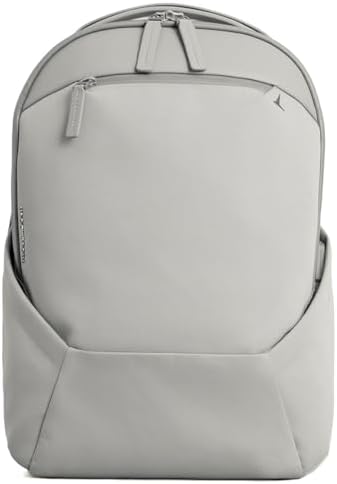
A larger laptop is the first place this bag family gets tricky. The Troubadour Apex 4.0 has a polished 16L Compact and a roomier 22L, but the safer choice depends on where the laptop sits, how much daily bulk it carries, and whether the travel and strap details suit your use.
The sleeve can get tight with larger laptops, the side pockets can steal room from the main compartment, and the 22L zipper can make bottom items harder to reach.
Scorecard
The Troubadour Apex 4.0 lands in the Good tier — promising for the right work setup, but not clean enough to ignore the fit limits. The strengths are real, but the variant and fit tradeoffs matter more than they would on a cleaner high-confidence pick.
| Field | Value |
|---|---|
| DVSS Score | 78.58 |
| Satisfaction Tier | Good |
| Dissatisfaction Score | 13.77% |
| Critical Dissatisfaction Rate | 11.26% |
Based on buyer feedback patterns, not hands-on testing. See how this scoring works.
At 11.26%, the serious-warning share is large enough that the main fit and access limits deserve attention before purchase. The score should not be treated as proof that every laptop, bottle, strap, zipper, or wet-weather setup will work the same way.
The main issue is not whether the Apex 4.0 looks like a premium work backpack; it is whether your laptop, bottle, travel, and carry style fit the version you choose.
Quick Take
- Best For: Polished work carry, especially the 16L Compact for light daily setups and the 22L for larger work-tech loads.
- Not For: 16-inch laptops that need clean Compact sleeve placement, large bottle carry, heavy travel gear, fast bottom access, or waterproof laptop certainty.
- Top Strength: Structured, professional carry with a clean work-bag look.
- Main Limitation: Tight-fit points change by variant, especially around laptops, bottles, suitcase handles, and strap stability.
Decision Matrix
| Your Apex 4.0 setup | What to know before choosing |
|---|---|
| Small laptop and light daily work carry | The 16L Compact is the cleaner fit. |
| Larger laptop needing sleeve-specific placement | The 22L is safer, but still needs laptop-space caution. |
| Large or rigid bottle carry | The 16L Compact can lose usable internal room. |
| Loaded suitcase stacking or fast bottom access | The Compact and 22L slow down in different places. |
| Strap-stability or wet-weather certainty | The bag still needs caution, not a blanket yes. |
Where larger laptops split the Compact and 22L
A larger laptop changes where the device sits.
16L Compact padded sleeve versus body fit
A laptop going inside the Compact does not always mean it sits in the protected sleeve.
The Compact separates where a laptop can sit from where the sleeve holds it. A larger laptop may enter the bag body while the padded sleeve and zipper area tighten first. That turns a simple laptop fit into a placement problem.
The Compact can turn a larger laptop from a clean fit into a squeeze. The 16-inch laptop label does not mean every 16-inch laptop gets clean, protected-sleeve placement.
- 14-inch Mac plus tablet case: This setup turns flat-device carry into a forced stack.
- 14-inch ThinkPad X1 Carbon: This laptop raises the in-and-out friction.
- Work papers beside the laptop: The fit issue can lead to device carry and document damage.
- 16-inch laptop cases: A larger laptop can shift the problem from fit to protected placement.
The laptop size matters because the device needs the right place to sit, not just enough room to enter the bag.
| Laptop setup | Apex 4.0 laptop fit |
|---|---|
| Small laptop or tablet-heavy work carry | The Compact is the cleaner fit. |
| 15.6-inch PC | Treat the Compact as a tight-fit choice. |
| 16-inch laptop needing protected sleeve carry | The Compact sleeve runs out of room sooner. |
| Larger work laptop with more daily tech | The 22L is safer, with its own sleeve caveat. |
The Compact works best when the laptop setup stays small; larger laptops push the choice toward the 22L or separate protection.

22L dedicated laptop space versus a regular compartment
The 22L gives larger laptops more room, but where the laptop sits inside is still a separate issue.
The 22L adds room, but room and laptop-space placement are not identical. A larger device may fit in the regular compartment, but the dedicated laptop space may still feel tight at first. That makes the 22L a stronger, larger-laptop choice, not a universal laptop-space answer.
The 22L gives larger laptops more room, but the dedicated laptop space still may not work for every larger laptop. It can be a better, larger laptop pick while still leaving the dedicated laptop space as the part to watch.
- Dell Precision 7680 plus iPad: This is the strongest large-work-laptop setup.
- 16-inch MacBook Pro: The 22L changes the outcome after the Compact becomes too tight.
- Larger MacBook in the regular compartment: This setup keeps the laptop-space limit visible.
- Separate laptop case: Protection can shift from the bag’s own space to an added item.
The 22L laptop area matters differently depending on whether the device only needs room or needs the dedicated laptop space.
| Larger-laptop setup | Apex 4.0 laptop fit |
|---|---|
| Larger work laptop needing more body room | The 22L is safer than the Compact. |
| Larger laptop needing the dedicated laptop space | The 22L laptop-space limit matters before purchase. |
| Larger laptop carried with a separate case | The regular compartment may matter more than the laptop space. |
| 22L EPX Edition | Do not assume the 22L behavior transfers. |
The 22L is the stronger, larger-laptop variant, but the dedicated laptop space still warrants caution.
Where the 16L Compact loses space before it looks full
Compact storage changes fastest when bottles and bulk enter.
Side bottle pockets that push into the main compartment
Large bottles can make the Compact feel smaller than its 16L label.
The Compact’s side pockets sit close enough to the storage area to change it. Larger or rigid bottles can press from those pockets into the main compartment rather than remain separate. That turns bottle carry into a storage issue, not just a side-pocket issue.
The bottle pockets behave more like slim side slots than forgiving bottle holders. The side pockets are not the same as standard bottle pockets, as rigid bottles can crowd the main compartment.
- Two metal thermoses: Rigid bottle carry turns the side pocket into a storage space problem.
- Tall bottle: Retention becomes less certain when the bottle sits high.
- 32 oz Yeti: The initial fit does not indicate how the holder behaves after stretching.
The 32 oz Yeti matters because the bottle holder not only starts tight but also loses retention after stretching.
The bottle size matters because it can also take up space in the rest of the bag.
| Bottle or daily load | Where the Compact runs out of room |
|---|---|
| Small bottle with a light work load | The Compact stays closer to its intended use. |
| Tall or large bottle | Bottle carry becomes less reliable. |
| Rigid bottles in both side pockets | Main storage can become tighter. |
| Heavy bottle used repeatedly | Fit now does not prove long-term hold. |
The Compact is safest when the bottle carry stays small and does not become part of the main storage plan.
The 16L label beside 20L and other 16L expectations
The 16L number can sound roomier than the Compact feels once food, bottles, and chargers go in.
Capacity is not only the number printed beside the bag. The Compact’s structure and internal divisions shape usable room, so bulky daily items can fill the space before the outside looks overloaded. That is why the 16L number depends on what goes in after the laptop.
The 16L label is not usable when the Compact sits beside roomier 16L backpacks or a 20L bag. The capacity number can feel smaller in practice than it looks on paper.
- Coming down from 20L: The Compact solves the bulk issue, but can feel like too sharp a drop.
- Other 16L backpacks: Same-number comparisons can still leave the Apex 4.0 feeling tighter.
- Lunch, bottle, book, and chargers: Everyday bulk can quickly consume the margin.
The Compact changes most when it replaces a roomier small backpack.
| Daily setup | Where the Compact runs out of room |
|---|---|
| Small laptop and light essentials | This is the safest 16L Compact use. |
| Daily carry with food, bottle, and extras | The bag can tighten before it looks full. |
| Replacing a roomier small backpack | The 16L number needs extra caution. |
| Travel gear beyond light personal items | Compare a larger work or travel-ready backpack. |
The Compact is a small, polished work bag first, not a smaller version of every roomier daily backpack.
Full-size Apex expectation versus Compact clearances
The Compact is not simply the larger Apex made smaller.
The Compact can tighten multiple areas at once. Its smaller body pulls the laptop area, passport access, luggage sleeve, document carry, and book space closer together. That makes the problem feel broader than one tight pocket.
The Compact should not be read as the full-size Apex scaled down, with every pocket still working the same way. The Compact’s problem can show up as several tight spots working together.
- Passport wallet: Quick access to travel documents can become less ready.
- Magazine or folder: Flat documents can contribute to the fit problem.
- Book after small items: Everyday extras can disappear once the small pockets fill.
This is a compact-carry tradeoff, not full-size Apex behavior in a smaller body.
| Carry expectation | Where the Compact fits best |
|---|---|
| Smaller polished work bag | This matches the Compact’s strongest role. |
| Full-size Apex function in a smaller body | This is the risky expectation. |
| Daily extras beyond light tech | The 22L or another size may be safer. |
The Compact works best when it is chosen as a compact bag, not as a smaller copy of the full-size layout.
Where the 22L works better, but still has limits
The larger variant solves space, not every use case.
22L work tech versus heavy travel gear
The 22L is the roomier work pick, not a heavy-travel replacement.
The 22L gives the Apex 4.0 more working room than the Compact. Its body and pocketing fit the role of a slim work backpack more than a heavy-travel bag or feature-dense camera backpack. That creates a useful middle ground, but it should not be stretched into a do-everything claim.
The 22L size does not mean it can replace a larger travel bag or a camera-focused backpack. It can feel under-featured if the setup needs camera-bag-level organization.
- Dell XPS15 work setup: The 22L has a clear office-load use case.
- Camera, hard drives, and a 15-inch laptop: Mixed tech can work when the load stays organized.
- Old Tumi kept for travel: Heavy travel gear still pushed the setup back to a larger bag.
- Camera-backpack comparison: Feature-density expectations can make the 22L feel too minimal.
The 22L works best when the load needs more work-tech room than travel-gear depth.
| 22L carry setup | Where the 22L fits best |
|---|---|
| Office laptop with daily accessories | This is the 22L’s strongest role. |
| Moderate mixed tech carry | The 22L can work if bulk stays controlled. |
| Lots of travel gear | A larger backpack is the safer comparison. |
| Camera-style pocket expectations | A dedicated camera-laptop bag may fit better. |
Choose the 22L for a more polished work-tech room, not as a substitute for a larger travel or camera-focused bag.
Where travel convenience changes by variant
Travel friction varies by size.
Compact luggage sleeve under a loaded tech setup
The Compact is easier under a seat than over some suitcase handles.
The Compact’s travel issue is not its under-seat size. The luggage sleeve needs enough pass-through clearance, and a packed bag body can crowd that space over the suitcase handles. The result is tight sliding or blocked pass-through use, which is different from simply fitting under a seat.
The luggage sleeve looks like an airport helper, but a loaded tech carry can turn it into a tight pass-through problem. The pass-through can make suitcase stacking feel like a fight instead of a convenience.
- Away suitcase handle: The pass-through can take wiggling instead of sliding cleanly.
- Standard suitcase handles: Handle fit does not appear universally smooth.
- Laptop, charger, headphones, and bottle: A loaded tech setup can turn the sleeve into the problem.
The travel move changes depending on whether the Compact rides under the seat or over a suitcase handle.
| Travel move | Where the Compact slows down |
|---|---|
| Sliding the Compact under an airplane seat | This is the cleaner travel use. |
| Using the sleeve on a suitcase handle | Expect a tighter fit than the feature suggests. |
| Stacking the Compact when fully loaded | The pass-through can stop being convenient. |
| Frequent airport suitcase transitions | Compare bags with roomier handle clearance. |
The Compact’s best travel role is low-bulk personal-item carry, not repeated stacking of loaded suitcases.
22L main zipper access at the bottom of the bag
The 22L changes the travel problem from suitcase stacking to accessing the bag’s contents.
The 22L access issue depends on the item position. The main zipper opening does not expose the entire lower compartment, so items packed low can sit below the easy reach zone. The physical issue is less about the zipper feel and more about the line of sight and hand access.
A polished main compartment may still not provide quick bottom access if the zipper stops above the lower contents. Bottom items can become hard to find when the zipper stops short.
- Heavy travel: The access issue becomes more costly when the bag is packed for movement.
- Business meetings: Bottom contents are a worse problem when quick retrieval matters.
- Low-packed items: The penalty appears when important items settle below the opening.
The 22L zipper issue is not just about the zipper’s feel; repeated work and travel use can put the contents at the bottom out of easy reach.
The lower compartment matters most when daily items need to stay reachable during the day.
| Packing style | Where the 22L slows access |
|---|---|
| Often-used items packed near the top | The 22L is easier to live with. |
| Important items packed low | The zipper opening becomes the concern. |
| Workday setup with frequent retrieval | Careful packing matters more. |
| Lower storage for rarely used items | The access issue matters less. |
The 22L suits setups that keep frequent-use items high, not setups that need quick access to the bottom.
Where comfort praise separates from strap stability
Comfort praise does not settle or carry movement.
22L straps during walking and one-shoulder carry
The 22L can be comfortable without feeling stable in every carry style.
Strap comfort and strap stability answer different questions. A strap can feel comfortable in a normal two-strap carry yet still shift, slide, or push outward during movement. When that happens, the carried bag can feel less balanced even if the padding itself is not the problem.
Comfort comments should not be read as proof that the straps stay stable in every carry style. Comfort praise does not erase strap movement for one-shoulder or walking carry.
- Hot, humid days: Comfort praise has a real positive context.
- One-shoulder carry: Strap movement becomes more important than padding.
- Left strap movement: Fit adjustment does not improve walking stability.
- Two-month tear report: The strap story also includes a time-linked caution.
The two-month strap-tear issue keeps the 22L comfort praise from becoming a blanket strap claim.
The strap behavior changes with the carry style.
| Carry situation | Comfort or stability call |
|---|---|
| Two-strap office carry | Comfort is the stronger point. |
| Walking with shifting straps | Stability becomes the bigger question. |
| One-shoulder carry habit | The 22L needs extra caution. |
| Expecting included stabilization | The chest-strap assumption matters. |
The 22L is strongest for conventional two-strap work carry, not for setups that rely on shifting or one-shoulder carry.
Compact comfort and body-scale notes
Compact comfort is strongest as a light carry, not as a body-fit promise for everyone.
The Compact has positive comfort notes for light daily carry, including use with smaller frames and sensitive backs. That should stay separate from body-scale appearance, where one 5’8″ average-build setup made the bag look undersized even though the carry items fit. Internal fit and how the bag looks on the body are different questions.
What the weather and small-part reports should not overstate
Some cautions protect the claim boundary.
DWR fabric and the soaked laptop-compartment report
Treat the Compact as water-resistant, not laptop-waterproof.
Water resistance and laptop waterproofing are not the same claim. DWR can help the outer fabric shed water while the treatment is working, but exposure to water can still push past the protection limit. That matters most when the laptop compartment is expected to stay dry on its own.
Water-repellent language does not mean waterproof laptop protection. The Compact can resist some wet-weather carry, but heavier wet exposure can still reach the laptop compartment.
- Rain-positive use: Some wet-weather carry did not lead to wet contents.
- Heavier wet exposure: The laptop compartment concern arises when the bag is expected to do more than just resist water.
- Re-proofing note: Maintenance language keeps the weather claim from sounding permanent.
The weather trade-off is between splash resistance and laptop certainty.
| Wet-weather expectation | What to assume before buying |
|---|---|
| Light rain around daily carry | Water resistance is the more limited claim. |
| Laptop protection in heavier wet exposure | Do not treat the bag as waterproof. |
| Long-term water repellency | Care and maintenance may matter. |
| Expensive laptop in uncertain weather | Separate protection is the safer plan. |
The Compact’s weather story is strongest when treated as limited resistance rather than laptop insurance.
Strap, zipper, elastic, and trim reports by duration
Wear notes and wet-weather limits are separate cautions, not one blanket warning.
The durability cautions sit around smaller parts, not the whole bag. Strap, zipper, elastic, and trim issues create a timing pattern to notice, but not a controlled durability timeline. Premium build praise can remain true while these parts still deserve caution.
Premium build praise should sit beside the strap, elastic, zipper-finish, and trim issues instead of replacing them.
- Compact after about 12 months: The carry strap belongs in the small-part caution.
- Compact after 13 months of travel-only use: The zipper pull adds a note on travel use
- 22L after about two months: The shoulder strap is the sharpest early-use caution.
- 22L under one year: Bottle-elastic wear keeps retention separate from initial bottle fit.
- 22L after 10 months: Top-handle trim belongs with the time-linked finish and trim notes.
A 13-month zipper-pull issue, a two-month strap-tear issue, and a 10-month trim issue should shape expectations without becoming universal failure claims.
The small-part cautions are easiest to read when grouped by timing and part.
| Use period | Part to watch |
|---|---|
| Early use | Strap movement and finish details need caution. |
| Around 10 to 13 months | Trim, strap, and zipper parts need context. |
| Repeated bottle carry | Elastic retention is separate from bottle fit. |
| Premium-build expectations | Keep the timing cautions visible. |
These durability notes should temper premium expectations without turning into a blanket claim of failure.
Who should skip
| Setup that should pause | Why it may miss |
|---|---|
| 16-inch laptop needing clean Compact padded-sleeve placement | The Compact sleeve is too location-sensitive. |
| Large or rigid bottle carry in the Compact | Bottle carry can make the bag feel smaller. |
| Loaded suitcase-handle stacking with the Compact | The pass-through can stop feeling convenient. |
| 22L bottom-access dependency | The zipper opening may slow retrieval. |
| One-shoulder or strap-stability-sensitive 22L carry | Comfort praise does not settle movement. |
| Waterproof laptop-compartment expectation | Water resistance is the more limited claim. |
| EPX-specific certainty | The EPX Edition needs its own support. |
Buy or skip?
Buy the Troubadour Apex 4.0 if you want a polished work backpack, and your setup matches the right variant: the 16L Compact for smaller laptops and light daily carry, or the 22L for larger work-tech loads with sleeve and access caveats still visible.
Skip it if the capacity label, larger-laptop cue, luggage sleeve, water resistance, or premium build needs to answer every question on its own. The tradeoff is simple: the Apex 4.0 looks clean and structured, but the bag only works well when laptop placement, bottle size, travel movement, and strap stability match the variant.
Check the Price
See More Options
- For smaller work bags that stay useful after the laptop and bottle are packed, compare Best Small Laptop Backpacks.
- For medium work backpacks with more room than the Compact, compare Best Medium-Size Laptop Backpacks.
- For separate laptop protection when body fit is not sleeve fit, compare Best Laptop Sleeves.
