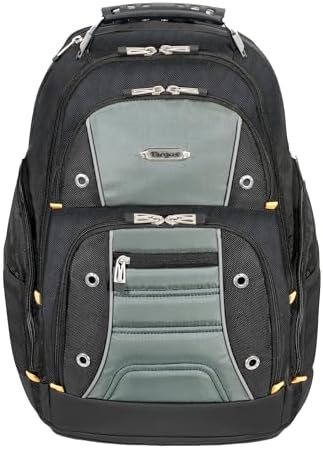
A large laptop backpack can look like the easy answer when you carry a big laptop, chargers, books, and travel extras. The Targus Drifter II 34L has the size and pocket layout for that kind of load, but its strongest limits appear when the 17.3-inch label, 34L body, padding, and rugged-looking hardware are asked to settle every setup.
The main question is not whether this is a roomy bag. It is whether the laptop pocket, body size, side pockets, and protective areas match the gear you plan to carry.
Scorecard
The Targus Drifter II 34L lands in the Excellent tier — strong enough to stay in the conversation, but still tied to real fit, zipper, strap, and protection limits.
| Field | Value |
|---|---|
| DVSS Score | 85.34 |
| Satisfaction Tier | Excellent |
| Dissatisfaction Score | 10.62% |
| Critical Dissatisfaction Rate | 9.17% |
Based on buyer feedback patterns, not hands-on testing. See how this scoring works.
At 9.17%, serious warnings are present enough to read the laptop fit, strap stitching, zipper track, and protection limits before buying. These numbers do not prove that the bag will fit every laptop, protect every device, or hold up under every heavy load.
The score supports taking the Drifter II 34L seriously, but the buying decision still depends on the exact laptop and load you plan to carry.
Quick take
- Best For: Heavy laptop, charger, book, and travel loads that can actually use the 34L body.
- Not For: Thick 17.3-inch gaming laptops where chassis depth matters more than screen size.
- Top Strength: High-up and soft-lined pockets make small tech easier to separate.
- Main Limitation: Zipper tracks and strap stitching deserve caution under repeated packed loads.
Decision matrix
Use this table as a first sort before going deeper.
| Your setup | What to know first |
|---|---|
| Thick 17.3-inch gaming or workstation laptop | Screen size alone does not settle fit. |
| Heavy laptop, chargers, books, or travel extras | This is where the 34L size makes the most sense. |
| Many small accessories | The upper pockets are one of the bag’s stronger cases. |
| Large bottle carried outside the bag | The side pockets are not a dependable large-bottle answer. |
| Need rigid protection or full-load zipper certainty | The rugged look should not settle the decision. |
The 17.3-inch label covers screen size, not chassis depth
The fastest decision starts with the laptop body, not the product label. The Drifter II 34L has a padded laptop pocket for large laptops, but thick gaming and workstation bodies can change the outcome.
ASUS G75VX and G750 sit on the wrong side of the fit line
The screen label is not enough for thick gaming laptops.
The padded laptop pocket accepts many large laptops, but usable fit changes when the laptop body gets thicker, deeper, or harder to slide through the opening. The pocket runs out of usable room when chassis shape exceeds what the opening and padded area can accept. Worth knowing even if it’s not the common outcome — the strongest downside cases involve laptop fit failure, not just mild annoyance.
The 17.3-inch label is a screen-size clue, not a promise that every thick gaming chassis fits. The bag looks like the safe pick for a 17.3-inch laptop until a thick gaming chassis lands on the wrong side of the padded pocket.
- Pressure-fit case: One large gaming-style laptop case shows the awkward middle ground between fits and fails.
- Successful 17-inch cases: The laptops that fit support the bag’s large-laptop appeal.
- Pre-purchase penalty: The laptop size label cannot settle the fit by itself.
Laptop fit works best by chassis case, not screen label.
| Your laptop case | Fit result for this bag |
|---|---|
| ASUS G75VX or G750-style chassis | Do not assume the padded compartment fits. |
| ASUS G74SX-style pressure case | Treat fit as uncertain before buying. |
| Successful 17-inch cases | Useful reassurance, not a universal rule. |
| Any thick 17.3-inch gaming laptop | Model shape matters more than the label. |
Use the laptops that fit as support, but let the ASUS failure side set the fit limit.
The 34L body rewards heavy loads and punishes light carry
The size works best when the load is real. Extra room is the main appeal, but it is also the fastest way for this bag to become too much.
Smaller laptops and smaller frames hit the size problem first
Extra room only helps when the load earns it.
The 34L body fills out well with a large laptop, chargers, books, clothing, or travel extras. With a thinner daily setup, the same body leaves more space than the load needs, and the wide strap layout can sit less cleanly on smaller frames. When the laptop is missing, the soft body can lose shape instead of standing ready.
The organization can attract light-carry shoppers, but the body size can make a thin tablet setup feel swallowed by the bag. Travel carry works best when the 34L body is not packed to its limit.
- Smaller-frame carry: Wide straps can make the bag feel less centered.
- Thin tablet setup: The bag can feel like far more space than the device needs.
- Normal daily backpack expectation: The size can surprise shoppers who wanted everyday carry first.
- Under-seat travel: The travel case weakens when the bag is packed to its limit.
The 34L body changes the choice once the load gets lighter or the frame gets smaller.
| Your carry load | Size result |
|---|---|
| Heavy laptop, chargers, books, or travel extras | This is the bag’s strongest size match. |
| Thin tablet or light daily laptop | The 34L body is likely more bag than needed. |
| Smaller shoulder frame | The wide strap layout may feel less centered. |
| Under-seat travel while fully packed | The fit should not be treated as guaranteed. |
| Desk or floor use where the bag must stand | The soft body may be the wrong style. |
Buy the size for heavy carry, not because extra room sounds harmless.
Pocket placement matters more than pocket count
The best pockets are not just the most visible pockets. The Drifter II 34L is strongest when the item matches the pocket type.
High-up and soft-lined pockets keep small tech reachable
The best organization comes from pocket placement, not pocket count.
High accessory pockets sit above the main load, so small items stay above books, clothing, or bulky tech instead of sinking under them. Soft lining gives the top pocket a different job: it separates scratch-prone items from rougher cargo. That is why the upper pockets matter more than the raw pocket count.
The pocket layout looks like an easy win until the side pockets, middle pocket, and deep front spaces start behaving differently. The lower-back pocket places cash or documents against the wearer’s back, but that position should not be treated like security hardware.
- Calculator and mouse: Small work or school tools get a stronger home near the top.
- Drives and cards: Small tech accessories are less likely to disappear under the main load.
- Glasses or Kindle: The soft-lined pocket is the better delicate-item case.
- Too many pockets: The layout can become more storage than a minimalist setup needs.
The best pocket cases are about placement and lining, not pocket count alone.
| Small item you carry | Where it belongs |
|---|---|
| Calculator, mouse, or small work tools | High-up accessory pockets. |
| Hard drives, cards, glasses, or Kindle | Soft-lined top storage. |
| Cash, passport, wallet, or documents | Lower-back pocket, with security limits. |
| Only a few daily items | The pocket layout may feel excessive. |
This is a strong organizer when the small items match the pockets that actually separate them.
Concealed storage is helpful, but it should not be treated as security hardware. The side pockets need a different reading because they do not behave like the upper pockets.
Side storage splits between tall zippered pockets and shallow mesh
The side pockets do not all solve the same job.
Side storage is divided between enclosed tall zippered pockets and shallower exposed mesh pockets. When the main body is packed, the side area has less room to expand, and exposed mesh can catch in tight spaces. The side-pocket issue is about pocket type and load state, not just bottle size.
The side pockets need to be judged separately because the enclosed pockets and mesh pockets do not solve the same job. The side pockets look like simple bottle storage until the mesh pocket and tall zip pocket split into different uses.
- Tight spaces: Exposed mesh can become the part that catches first.
- Mesh wear: Outside storage can create wear before the main bag body fails.
- Enclosed side pocket: Small side items have a better case than wide bottles.
Side storage needs two readings because the pockets do not behave alike.
| Side-pocket item | Pocket result |
|---|---|
| 16 oz drink can or small snack | Better fit for the tall zippered side pocket. |
| 1-liter bottle | The mesh pocket is not the dependable case. |
| 50 oz Smartwater-style bottle | Fit depends on how packed the bag is. |
| Large bottle with zipper left open | Pressure fit, not a clean storage win. |
| Wide everyday bottle | A different bottle-carry setup may fit better. |
Count the tall side pockets as useful small-item storage, not a large-bottle guarantee.
Comfort praise stops where strap and zipper stress begins
Comfort and durability live on different parts. The padding can feel good while the stitching and zipper tracks still deserve a separate look.
Shoulder padding and strap stitching solve different problems
Comfort praise does not make the straps failure-proof.
The padded straps and back pads spread load feel across the shoulders and back. Strap stitching does a different job because it holds the places where strap sections join. Under a student-style heavy load, the lower strap junction can take enough stress for the stitching to fail within a few weeks.
The 34L size invites heavier packing, but the strap stitching is where repeated heavy loads can turn into a durability problem. The comfort praise should not be read as a load rating.
- Heavy-load comfort: Comfort praise is strongest when the setup accepts a large carry load.
- Smaller-frame carry: Strap width can become a fit problem before padding helps.
- Early strap cases: Some downside cases turn into stop-use problems, not just discomfort.
- No torso support: The shoulder straps carry the stabilizing job alone.
The comfort cases and the failure cases point to different physical parts.
| Stress point | Durability concern |
|---|---|
| Padded shoulder contact | Comfort signal, not a load rating. |
| Strap stitching under repeated heavy loads | The failure concern sits at the joined sections. |
| Smaller shoulder frame | Padding does not fix strap spacing. |
| Need chest or waist support | This carry system does not provide it. |
| Raised back pads | Comfort support is clearer than cooling proof. |
Let the padding support comfort, but let the stitching set the durability limit.
The strap cases explain load-bearing stress; the zipper cases explain closure stress.
Zipper pulls look stronger than the tracks behind them
The pull hardware is not the part that settles zipper reliability.
Zipper pulls can look sturdy without proving the zipper track and stitching are durable. Packed compartment tension can pull against the track, nearby stitching, and slider alignment. After nine months of commute use, the zipper rail and nearby stitching became the failure point in one packed-use case.
The zipper pulls look tougher than the failure cases behind them, where the tracks and stitching do the real work. Travel setups should not assume luggage-style locking just because the bag has large zipper pulls.
- Packed laptop-and-binder carry: Closure stress shows up when the compartments are tight.
- Commute-use failure: The failure case centers on the rail and stitching.
- Stored spare case: Old-stock or storage context should stay as caution, not a universal claim.
- Travel locking: Large pulls should not be treated as easy lockable zippers.
The zipper pattern needs the same separation between appearance and structure.
| Zipper situation | Durability concern |
|---|---|
| Tight packed compartments | Track and stitching reliability matter most. |
| Rugged-looking zipper pulls | Appearance does not prove closure strength. |
| Stored spare zipper problem | Treat as listing-age caution, not a universal rule. |
| Luggage-style locking need | Simple lockable zipper function is not established. |
If the compartments are packed tight, zipper-track reliability matters more than how strong the pulls look.
Handle and bottom panel are strengths with boundaries
The handle and bottom are positives, not guarantees.
The top handle reinforcement improves confidence at the grip, but the load still runs into the cover, stitching, and attachment fabric. The bottom panel helps when the bag sits on wet or dirty surfaces, but long-term wear can still appear. A long-use travel case praised the bag for years before the bottom material became the wear point.
- Packed-bag lift: The handle earns a useful strength signal.
- Handle cover cases: Cover and attachment points remain part of the choice.
- Long-use bottom wear: The bottom can be both a strength and a wear point.
The support parts are useful, but each has a different limit.
| Support part | What to keep in mind |
|---|---|
| Cable-style top handle | Good strength signal for short lifts. |
| Handle cover and attachment fabric | Still carry the load into the bag body. |
| Reinforced bottom panel | Useful for wet or dirty placement. |
| Long-term bottom wear | Rain confidence does not mean endless material life. |
Treat the handle and bottom as practical strengths with limits, not proof the bag can take every stress.
The bag carries gear better than it protects every kind of gear
Carrying gear is easier than proving protection. The Drifter II 34L has real space, but space and padding do not settle every device-risk question.
Padding helps, but rigid protection is a separate decision
The laptop area is padded, not proven as a hard case.
The laptop area has soft padding and room for some sleeve-within-bag setups. Soft padding cushions the laptop area, but it does not create rigid walls or a proven suspended base. Two-laptop carry also changes protection because a second laptop may sit outside the main padded position.
The padded area helps, but expensive workstation hardware may still need firmer protection than the bag proves. The padded laptop area is useful, but rigid workstation protection is a different question.
- Expensive workstation carry: The cost of being wrong is higher than with a basic laptop.
- Second laptop: Carrying two devices does not mean both get the same padded placement.
- Camera gear: The main space can hold camera gear before it proves camera protection.
The padding is useful, but it does not answer every protection need.
| Your device setup | Protection call |
|---|---|
| One laptop in the padded area | Supported for ordinary laptop carry. |
| Laptop inside a separate sleeve | Better when extra caution matters. |
| Second laptop in another compartment | Add a sleeve if both devices need padding. |
| Loose camera gear | Use a camera insert or separate camera bag. |
| Rigid laptop protection required | A more protective setup may fit better. |
Use the padded pocket for ordinary laptop carry; add protection when the device or gear needs more than soft padding.
Camera gear needs its own protection plan
Volume does not turn the main compartment into a camera bag.
The main compartment has open room for bulky gear, but open room does not provide camera dividers, hard separation, or camera-bag structure. A camera insert changes how the space works by adding the missing protection layer.
Camera gear can fit by volume, but the inside is not built like a camera bag. The main compartment may hold camera gear, but it does not become a camera bag without a separate insert.
- Camera gear: Fit by volume is only the first question.
- Separate insert: Protection comes from the added organizer, not the open space.
- Bulky tech item: The open compartment is stronger for large non-fragile gear.
The main compartment is strongest when the gear does not need built-in dividers.
| Gear setup | Better reading |
|---|---|
| Camera insert inside the main space | Supported as a separate protection plan. |
| Loose camera gear | Do not treat the bag as camera protection. |
| Projector or bulky tech item | The open volume is the better case. |
| Item that needs internal restraint | This compartment does not prove that support. |
Use the main compartment for bulky carry; add a separate item when the gear needs protection or restraint.
Protection is not only about padding; weather claims need the same caution.
Rain use supports rain confidence, not waterproof use
Rain confidence is not waterproof proof.
The shell and bottom have positive rain and wet-placement support. That does not prove waterproof construction, and zipper areas and submersion protection remain outside the supported claim. Bottom wear over time also limits any permanent weather-confidence claim.
Rain use can support wet-weather confidence, but it does not prove waterproof laptop protection.
- Rain-use case: The bag has positive wet-weather support.
- Long-use bottom wear: The bottom can become the wear point later.
- Laptop protection: Rain use should not become a waterproof claim.
Weather confidence has to stay inside the rain and wet-placement outcomes that appear.
| Weather situation | Safe claim |
|---|---|
| Campus rain or short rain exposure | Rain exposure supports cautious confidence. |
| Wet ground placement | The bottom has practical support. |
| Waterproof or submersion use | Not supported by the rain outcomes here. |
| Long-term bottom material life | Positive early use does not settle it. |
Read this as rain-use confidence, not waterproof laptop protection.
Small access details that should stay small
These details should not carry the article’s decision.
A few smaller details can help, but none should outweigh laptop fit, size, organization, protection, or durability. A headphone wire can exit through a zipper gap, but that is not a dedicated port. Zipper lockability is not established, and reflective pinstripes should be treated as a small visibility aid.
Small details can help, but none of these should become a main reason to buy.
| Small detail | How much weight it gets |
|---|---|
| Headphone wire through the zipper gap | Workaround only, not a dedicated port. |
| Lockable zipper expectation | Not established enough to rely on. |
| Reflective front pinstripes | Mention as a visibility aid only. |
| Metal grommets or ringlets | Do not treat as a functional feature. |
Keep these as small notes; they should not outweigh laptop fit, size, organization, protection, or durability.
Who should skip it
These are the setups where the bag’s strengths turn into the wrong match.
| Your setup | Reason to compare |
|---|---|
| ASUS G75VX or G750-style thick gaming laptop | The 17.3-inch label does not settle fit. |
| Thin tablet or light daily laptop | The 34L body is likely more than you need. |
| Smaller frame needing centered straps | The wide strap layout may not feel stable. |
| Large bottle carried outside the bag | Side-pocket fit is too conditional. |
| Rigid laptop or drop protection required | Padding alone does not prove that protection. |
| Camera gear without an insert | Open space is not camera-bag protection. |
| Lockable zipper security requirement | Simple lockable zipper function is not established. |
| Waterproof laptop protection expectation | Rain use does not prove waterproofing. |
Compare another option when your main need lands on the mismatch side.
Buy or skip?
Buy the Targus Drifter II 34L if your setup is a heavy organized tech load: a compatible large laptop, chargers, books, documents, clothing, and enough small accessories to make the upper pockets useful. The size and pocket layout are the main advantage, while the fit, protection, side-pocket, zipper, and strap limits are the tradeoff that comes with treating a large, rugged-looking backpack as a universal answer.
Check the Price
See More Options
- Larger backpacks for heavy tech loads that need more than everyday space
- Sleeves for expensive laptops that need firmer protection than padding alone
- Pouch options for chargers and small tech when pocket count gets hard to manage
