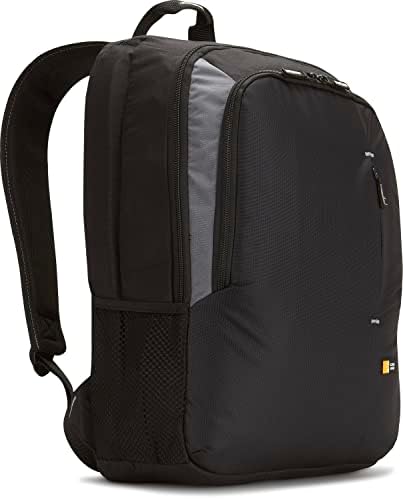
A 17.3-inch laptop backpack can still fail the fit test when the laptop body is thick, square-cornered, or hard to close around. The Case Logic VNB-217 has room for many large laptops, but its limits show up around chassis shape, zipper closure, padding, and daily load.
This is a better match for slim large-laptop work or school carry than for heavy gaming chassis, hard-drop protection, or overloaded textbook days.
Scorecard
The Case Logic VNB-217 lands in the Excellent tier — a strong result for the right large-laptop setup, but not a pass for every 17.3-inch chassis or heavy load. The score should sit beside the product’s fit and padding limits, not stand in for them.
| Metric | Value |
|---|---|
| DVSS Score | 89.79 |
| Satisfaction Tier | Excellent |
| Dissatisfaction Score | 5.76% |
| Critical Dissatisfaction Rate | 4.17% |
Based on buyer feedback patterns, not hands-on testing. See how this scoring works.
At 4.17%, the serious-warning share is low, but the fit, padding, and load limits below still matter before buying. DVSS is a satisfaction signal, not a lab score or a guarantee of laptop fit, drop protection, zipper strength, weather performance, or long-term durability.
For this bag, the score is most useful when paired with the chassis depth, bottom padding, and heavy-load limits below. The value case is strongest for slim, large-laptop carry, while 17.3-inch fit, base protection, and heavy daily loads still need a closer look.
Quick Take
- Best For: Large laptops that match the Dell 17R, HP G71, Alienware 17, or ASUS ROG 17 fit side, plus moderate school or work carry.
- Not For: Thick 17.3-inch gaming chassis, hard-drop protection, heavy textbooks, or very heavy daily loads.
- Top Strength: Slim large-laptop carry with repeated support from specific large-laptop setups.
- Main Limitation: Chassis-specific fit, thin base and edge padding, and heavy-load durability limits.
Decision Matrix
| Your laptop or carry setup | What to expect from the VNB-217 |
|---|---|
| Dell 17R, HP G71, or similarly shaped 17-inch laptops | Stronger large-laptop fit support. |
| Thick 17.3-inch gaming chassis | Full laptop-body size matters before relying on the label. |
| Large laptop plus moderate books and work gear | This is the strongest everyday use case. |
| Large laptop plus heavy textbooks or clothing | Space gets tight quickly. |
| Padded laptop carry for drops or very heavy loads | The bag needs caution or a stronger alternative. |
The 17.3-inch label is not the whole fit test
The zipper decides more than the screen label.
Chassis depth and zipper closure decide the risky cases
The screen number is only the starting point.
The laptop compartment accepts only large laptops, while the laptop body stays inside the bag’s closing shape. Full chassis depth, extra outer edging, and thick corners press into the zipper opening before the screen number explains the fit. When that happens, the zipper becomes the fit limit, and the laptop may squeeze, stretch the closure, or sit partly outside the closed shape.
- Acer Nitro uncertainty: Acer V17/V7-style laptops sit on the riskier side of the closure story.
- ASUS corner exposure: ASUS G74SX-style corners can leave the laptop sitting outside the closed shape.
- Gaming-laptop orientation: ASUS G751JL-style carry can depend on how the laptop sits inside the compartment.
- Stretched-bag squeeze-fit: A later squeeze-fit after years of use is not the same as new-unit support.
Years of carrying an extended-battery laptop may stretch the compartment, so later squeeze-fit should not be treated as clean new-bag support. A 17.3-inch screen does not include the laptop’s outer edging, where the closure can fail. The screen number sounds decisive until the laptop’s outer frame reaches the zipper before the screen does.
This table separates screen-size confidence from the chassis cases that still need caution.
| Laptop shape or fit detail | What the VNB-217 supports |
|---|---|
| Flatter large laptops with direct fit support | The fit is stronger. |
| Thick 17-inch or 17.3-inch gaming chassis | Full laptop-body dimensions matter before relying on the label. |
| Outer edging beyond the screen size | The screen number alone is not enough. |
| Squeeze-fit after years of stretching | Fresh-unit fit remains less certain. |
The safest fit is for a matching chassis footprint, not every laptop with a 17.3-inch screen.
Named 17-inch laptops support the fit claim, but not every gaming chassis
The cleanest fits come from specific laptop shapes.
The protected laptop area works best when the laptop shape matches the compartment. A second device may still fit elsewhere in the bag, but it may not sit in the same padded position as the main laptop. Space inside the bag and protected placement are two different questions.
- Dell 17R and HP G71: These 17.3-inch laptops support the clean-fit side.
- Gateway NV7802u: This laptop fits inside a broader student load.
- Alienware 17 and ASUS ROG 17: Larger gaming laptops can work when the shape matches.
- HP Pavilion, Sony Vaio, and Asus netbook: Multi-device space exists, but placement changes.
A second device may fit, but it may not get the same padded placement. Two-device carry should not be treated as two-device protection. The bag can look like a two-laptop solution because the space is there, but only one device gets the stronger padded spot.
This table separates direct-fit support from setups that still require caution.
| Laptop or device setup | What the VNB-217 supports |
|---|---|
| Direct 17-inch and 17.3-inch fit cases | Stronger support for similar chassis. |
| One large laptop plus smaller second device | Space may work, but placement changes. |
| Two larger laptops | Carry space is not equal protection. |
| Proxy answers for exact gaming models | Treat the fit as less certain. |
Use the Dell, HP, Alienware, and ASUS ROG fit examples as shape guidance, not as a promise for every large chassis.
The laptop pocket cushions daily carry, but the base is the weak spot
The base matters more than the padded back.
Bottom padding can shift away from the laptop base
The base is the first protection limit to read carefully.
The bottom padding offers weaker protection than the padded back area. The padding can shift forward from where the laptop base meets the ground, so the soft layer no longer sits under the spot that lands first. The concern is base contact, not whether the bag has a padded laptop pocket at all.
- Foam, towel, or T-shirt: Added cushioning appears as the practical fix.
- Heavy laptop base: More weight makes the weak spot more important.
- Fast set-downs: The bottom becomes the initial point of contact.
- Shockproof expectation: Ordinary travel handling is not hard-drop support.
The protection question starts at the base, not the padded back panel. The laptop area is padded for daily carry, but that does not make the base or edges drop-safe. The padded laptop pocket can feel reassuring, but the base and edges set a lower protection ceiling.
In some setups, the padding and heavy-load durability concerns matter most when the laptop is expensive, unusually heavy, or carried hard every day.
This table separates daily laptop cushioning from protection needs that the bag does not address.
| Laptop protection need | How much padding support is shown |
|---|---|
| Daily carry and ordinary bumps | The padded laptop area has support. |
| Hard drops or heavy laptop impacts | Protection is not established. |
| Stronger base protection | A sleeve or more protective bag fits better. |
This bag is easier to trust for ordinary carry than for impact protection.
Side and top padding do not prove shockproof carry
Daily padding is not the same as drop protection.
The side and top areas do not carry the same support as ordinary laptop-pocket cushioning. The bag’s padding setup fits daily carry better than hard-impact survival. The protection gap sits around the edges and top of the laptop, not only underneath it.
- 10-pound laptop: Heavy devices raise the cost of a protection mistake.
- Chair-fall concern: A fall can test areas beyond what ordinary carry can.
- Shockproof question: Travel success does not establish hard-impact safety.
This table separates everyday padding from shockproof expectations.
| Protection expectation | What the bag supports |
|---|---|
| Ordinary daily carry | Padded laptop storage has support. |
| Heavy laptop drops | Impact survival is not established. |
| Shockproof use | Stronger protection is the safer match. |
Treat the VNB-217 as a padded daily carry, not a rugged laptop case.
The slim body works until books or clothes take over
The space issue starts after the laptop.
Heavy textbooks crowd the space left after the laptop
Large-laptop fit does not settle the school-load question.
The laptop compartment and main storage divide the load. Once a large laptop occupies its area, books, accessories, and work gear compete for the remaining space. Heavy textbooks create a different result than flat folders, notebooks, and compact technical items because the remaining volume has already been partly claimed.
- Gateway NV7802u student load: The bag can handle a specific moderate school setup.
- Big accounting textbook: One large book can change the capacity call.
- Contigo bottle and TI-84: The successful school load includes compact extras, not just books.
- Firewall and manuals: Technical work gear can fit when the shapes stay compact.
The large-laptop fit is real, but heavy textbooks can crowd the remaining space. The slim profile is appealing for school, but a large laptop plus heavy textbooks can quickly crowd the bag.
This table separates daily school and work loads from the book loads that make the bag tight.
| Your school or work load | Where the space starts to tighten |
|---|---|
| Laptop, folders, charger, moderate books | This is the strongest daily-carry fit. |
| Laptop plus one or two large textbooks | Capacity becomes conditional. |
| Large laptop plus a heavy textbook stack | A larger backpack is the safer match. |
| Compact work gear and manuals | More plausible than bulky clothing. |
The bag is strongest before the load turns into heavy textbooks.
Clothing uses the same remaining compartment space, so the overnight question needs its own split.
Work papers fit better than overnight clothing
This is a work bag before it is an overnight bag.
Work papers, binders, and devices use the same primary storage as clothing. Clothing capacity comes after the laptop and work items, not beside them. The real limit is the space left once the work setup is already packed.
- 13-inch MacBook Pro and paper stacks: The work-carry case is specific.
- 3-inch binder and iPad: Flat work items are the stronger fit.
- Overnight clothes: Clothing becomes the named space loser.
- Smaller travel laptop: Less laptop bulk leaves more room for extras.
Work papers and tech fit better than clothes for an overnight setup. The bag can work as a tech personal item, but that does not make it an overnight bag. It looks like a work-and-overnight shortcut, but paper-heavy carry leaves limited room for clothes.
This table keeps work carry separate from overnight packing.
| Work or overnight setup | How far the main compartment goes |
|---|---|
| Laptop, papers, binder, and iPad | Work carry is supported. |
| Work load plus a few clothes | Clothing space is limited. |
| Overnight-style packing | This is not the strong use case. |
| Smaller laptop travel setup | More room remains for extras. |
Treat the VNB-217 as a work bag first and a clothing bag second.
The front organizer is useful, but the pocket layout may not match the photos.
The front pocket is useful, but not photo-proof.
The organizer pocket works best for compact accessories. Pocket depth and divider layout shape what fits there, so larger items and fuller organizer expectations can run into shallow sections. The risk is the pocket layout and depth, not the bag’s overall capacity.
- Small tech accessories: Power brick, mouse, headphones, USB drives, cards, and phone fit the basic story.
- Missing mesh pocket: The strongest mismatch is between the pocket layout shown and the pocket layout received.
- Shallow pocket areas: Small sections aid organization but limit space for larger items.
- Pen-pocket sizing: Tiny organizer spaces can disappoint shoppers expecting a fuller panel.
The organizer is useful, but photo-level pocket expectations can overpromise it. The front pocket can organize small tech, but the photo layout should not be treated as a promise for every unit. The front organizer looks useful, but exact-photo expectations can run into a pocket-layout mismatch.
This table separates compact accessory storage from photo-based organizer expectations.
| Front pocket expectation | What the pocket layout can disappoint |
|---|---|
| Chargers, mouse, USB drives, phone | Basic small-tech organization is supported. |
| Exact mesh pocket from photos | Layout may not match expectations. |
| Deep organizer panel | Pocket depth is limited. |
| Extra book storage | The main compartment is the better place. |
The front pocket is useful, but not a premium organizer promise.
The straps feel comfortable before heavy daily loads test the seams
Comfort and heavy-load durability split apart.
Shoulder straps split comfort from overload durability
Comfort is the strength; overload is the test.
Wide padded straps spread common laptop and school loads across the shoulders. Repeated heavy loading pulls at the strap stitching over time. Without a chest strap, heavier carry stays concentrated on the shoulder system.
- 25 lb comfort case: A heavy-feeling day can still be carried comfortably.
- Under-six-month strap report: Early stitch failure keeps the durability call cautious.
- No chest strap: Heavier loads stay on the shoulder system.
- Regular heavy carry: Daily overload is a different use pattern from normal commuting.
Under six months, a single strap-stitch issue turned a comfortable carry setup into a durability concern. Comfortable straps do not automatically mean heavy-load stitching will hold. The comfortable straps help the value case until heavy daily loads start testing the stitching and seams.
This table separates normal carry comfort from heavy-load durability expectations.
| Heavy-load case | Where hardware wear can show up |
|---|---|
| Normal laptop, papers, and moderate books | Strap comfort has support. |
| Repeated heavy daily carry | Stitching becomes the concern. |
| Heavier load needing stabilization | No chest strap is included. |
| Comfort used as durability proof | That jump is not supported. |
If the load is heavy every day, hardware strength matters more than first-carry comfort.
Comfort describes how the bag carries; durability describes how repeated heavy loading affects the parts.
Back padding helps comfort, but traps heat without mesh
Choose it for cushioning, not airflow.
Back padding cushions the carry against the body. The same foam layer can retain heat against the back, and the bag lacks mesh-backed airflow support. The tradeoff is cushioning versus breathability.
- +35C heat: Hot weather makes the tradeoff visible.
- University walking: Longer walks turn warmth into a daily comfort issue.
- No back mesh: Breathability should not be assumed.
- Back-pain comfort: The cushion side still matters for normal carry.
Cushioning and airflow are separate comfort questions here. The back panel can feel cushioned without giving the airflow people expect from mesh. The padded back can make carrying feel easier, but it does not solve airflow for hot-weather walking.
This table separates padded comfort from breathable-back expectations.
| Carry condition | How the back panel feels |
|---|---|
| Cooler walking or short daily carry | Padding helps comfort more than airflow. |
| Hot walks or sweaty-back concern | Heat remains part of the choice. |
| Mesh-back expectation | The bag does not support that expectation. |
| Cushion-first daily carry | This is the stronger comfort case. |
Choose it for cushioning, not mesh-style breathability.
Heavy laptops can turn a zipper fit into zipper wear
A laptop can fit before the hardware proves itself.
Zipper fit and zipper durability are separate questions. A very heavy laptop stresses the zipper over time, so the question is not just whether the laptop enters the bag once. The part that closes the bag counts toward the durability limit.
- 19.5 lb laptop: Very heavy carry can move the risk to the zipper.
- 20 lb daily load: The handle seam becomes part of the same heavy-load story.
- One-month handle fray: Smaller hardware wear stays secondary but relevant.
- Multi-year positive cases: Long use is possible, not promised.
With a 19.5 lb laptop, zipper fit eventually became zipper wear in one case. Very heavy laptop carry can make the zipper part of the durability choice. A very heavy laptop may fit in the bag, but the zipper won’t show whether it can handle that load over time.
This table separates laptop fit from the effects of repeated heavy loading on the hardware.
| Heavy-load case | Where hardware wear can show up |
|---|---|
| Normal-weight laptop carry | The durability picture is stronger. |
| 19.5 lb laptop | Zipper wear becomes part of the choice. |
| About 20 lb daily overpacking | The top seam becomes a concern. |
| Long-use cases | Positive outcomes exist, but heavy-load risk stays. |
Very heavy daily carry is the point where stronger construction becomes a safer comparison.
Travel use is light tech carry, not full packing
Under-seat fit is not luggage capacity.
Under-seat fit can be snug once the bag is packed full
It works best as a tech personal item.
The slim body fits in tight travel spaces. Once the bag is packed full, under-seat comfort becomes tighter because the low-profile body has less spare room to give back. A large laptop can also add pressure to the closure during travel.
- Southwest and United: Under-seat use supports the personal-item case.
- Limited foot room: A packed-full setup can still feel cramped.
- Overhead locker: Another placement supports light travel use.
- 17.3-inch flight carries: Large laptop travel can add zipper pressure.
Under-seat fit is possible, but a packed-full bag can still crowd your feet. The bag can work as a personal item, but a packed-full setup can make the under-seat fit cramped.
This table separates light tech travel from packed-full airplane use.
| Flight setup | What the slim body changes |
|---|---|
| Light tech personal item | Under-seat use is more plausible. |
| Packed-full flight setup | Foot room becomes the tradeoff. |
| Large laptop plus clothing | Travel packing gets weak. |
| Overhead locker use | The fit case is easier. |
It works better as a tech personal item than a small suitcase.
A snug under-seat fit still leaves weather and security limits to consider.
Light weather feedback does not prove waterproof carry
Light weather is the safe limit.
The shell can handle light rain and snow exposure, but waterproofing is not established. Conflicting fabric labels should not turn into a stronger weather claim. The safest reading is light moisture exposure, not waterproof laptop protection.
- Falling snow: The strongest weather case is light exposure.
- Campus rain and snow: Useful for light moisture, but still not waterproof support.
- Electronics carry: Overstating weather protection raises the consequences.
- Material-name conflict: Fabric labels should not carry the weather claim.
Light rain or snow use is useful to know, but it does not prove a laptop is waterproof.
This table separates light-weather feedback from protection that the bag does not provide.
| Weather or security need | What is not established |
|---|---|
| Light rain or snow feedback | Useful signal, not waterproof support. |
| Storm or long wet exposure | Stronger weather protection fits better. |
| Conflicting fabric labels | Do not treat them as weather-performance proof. |
| Electronics in heavy rain | Do not rely on this as waterproof carry. |
Keep weather expectations modest unless light exposure is all you need.
Lock-ready zipper use is not established
The zipper story is closure, not travel security.
The zippers close the bag in ordinary use. Lock-ready travel use is not established, and the zipper tabs do not provide clear support for TSA lock expectations. Security needs and everyday zipper function should stay separate.
- TSA lock question: Built-in travel locking is not supported.
- Cloth zipper tabs: Lock-loop confidence stays weak.
- 17.3-inch travel load: A large laptop carry can add closure pressure.
- Sideways carry: Briefcase-style use stays outside the strongest design.
The zippers close the bag, but lock-ready travel security is not established.
This table separates normal zipper use from travel-security expectations.
| Travel protection need | What is not established |
|---|---|
| Normal zippered backpack use | Everyday closure is supported. |
| TSA-lock setup | Lock-ready use is not established. |
| Heavy-duty travel zipper | Luggage-grade hardware should not be assumed. |
| Briefcase-style side carry | Backpack carry is the stronger use. |
Keep this as a backpack-first, everyday-zipper setup.
Who should skip the VNB-217
| Skip setup | Where the mismatch starts |
|---|---|
| Thick or square-corner 17.3-inch gaming laptop | The full chassis may reach the zipper before the screen label helps. |
| Hard-drop or shockproof laptop protection | The padding support is stronger for daily carry than impact protection. |
| Large laptop plus heavy textbooks | The remaining space tightens before the laptop fit disappears. |
| Exact photo-matched organizer layout | The front pocket may not match every product photo. |
The first skip group concerns the laptop itself; the second concerns how the bag is packed and carried.
| Skip setup | Where the mismatch starts |
|---|---|
| Very heavy daily carry or 19.5 lb laptop class | Straps, seams, and zipper wear become part of the choice. |
| Hot-weather mesh-back expectation | The back panel is padded, but mesh airflow is not supported. |
| Waterproof or lock-ready travel use | Light weather exposure and everyday zippers do not prove those needs. |
| Overnight packing after work gear | Papers, binders, and devices leave limited room for clothing. |
Buy or skip?
Buy the Case Logic VNB-217 if you want a slim, affordable backpack for a large laptop shaped like the stronger Dell, HP, Alienware, or ASUS ROG fit cases, plus basic tech organization and moderate school or work carry.
Skip it if the laptop is a thick 17.3-inch gaming chassis, the load includes heavy textbooks, the bag needs to protect against hard drops, or the carry weight is very heavy for daily use. The trade-off is clear: the VNB-217 offers strong value for large-laptop everyday carry, but it asks you to accept chassis-specific fit, a thin base and edge protection, a basic organizer structure, and limited heavy-load durability.
Check the Price: Case Logic VNB-217
See More Options:
- When the laptop fits, but the books, chassis depth, or daily load do not, compare larger laptop backpacks when heavy books or thick gaming chassis make this one tight.
- If the fit works but the base or edge protection feels too thin, compare sleeves that add protection where the VNB-217 base and edges are thin.
- If the front pocket is too basic for chargers, cables, and small accessories, see pouches for buyers who need more organizer structure than the front pocket gives.
