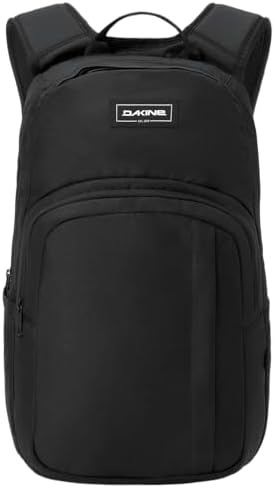
Choosing between 25L and 33L is not just a size upgrade. With the Dakine Campus, pocket layout, bottle width, laptop chassis, and body size all change how each version behaves once packed. The 25L works best as compact daily carry, while the 33L makes more sense when the load is truly bigger.
Scorecard
The Dakine Campus lands in the Exceptional tier — a strong result for the right load, but still a size-specific bag with real fit limits to read first.
| Field | Value |
|---|---|
| DVSS Score | 93.20 |
| Satisfaction Tier | Exceptional |
| Dissatisfaction Score | 4.11% |
| Critical Dissatisfaction Rate | 2.56% |
Based on buyer feedback patterns, not hands-on testing. See how this scoring works.
At 2.56%, serious warnings sit low enough that the scorecard stays favorable, but the number still belongs beside the 25L and 33L limits below. It should not be used as proof that either size fits every laptop, bottle, school load, rain setup, or travel situation.
The main choice is still size-specific: the 25L can run out of practical room sooner than its pocket count suggests, while the 33L adds space but also adds bulk and fit checks.
Quick Take
- Best For: Lighter laptop/day loads in 25L, or full school and work setups in 33L.
- Not For: Anyone expecting pocket count, screen size, or water-resistant wording to settle the whole choice.
- Top Strength: The Dakine Campus gives clear size choices for organized laptop carry when the load matches the variant.
- Main Limitation: The 25L can lose usable space through pocket and bottle interactions, while the 33L can become bulky and still needs laptop and weather checks.
Decision Matrix
| Your Dakine Campus setup | What the setup changes |
|---|---|
| Light laptop carry with small accessories | 25L starts as the cleaner size |
| Books, lunch, jacket, or PE-style extras | 33L deserves comparison before buying |
| Wide binder plus outside bottle carry | The 25L bottle pocket becomes less dependable |
| Large laptop chosen by screen size alone | Sleeve fit stays device-specific |
| Heavy rain or airline certainty matters | The bag does not settle the choice |

25L vs 33L: the size choice starts with load, not liters
The first split is load size, not capacity label.
The load that pushes buyers out of 25L
The 25L body handles lighter carry more easily than heavier combined loads. Once books, food, jackets, or larger school items fill the same compact space, the bag runs out of usable room before the size label settles the choice.
- Books plus laptop: This is the clearest load that turns compact carry into pressure.
- Lunch box or jacket: Soft extras matter because they occupy the remaining room.
- Later school years: Textbooks and a full-size laptop change the size choice.
This table separates light daily loads from the loads that should make the 33L worth comparing.
| Your Dakine Campus load | Size to consider |
|---|---|
| Laptop, small accessories, and light soft items | 25L stays the cleaner fit |
| Books, lunch, jacket, or PE-style extras | Compare the 33L before buying |
| Early school years without many textbooks | 25L can stay realistic |
| Textbooks plus a full-size laptop | 33L deserves the first look |
The 25L is the compact answer only while the load stays compact too.
Where the 25L feels smaller than the pocket count suggests
The 25L pocket layout is the main compact-carry tension.
Loaded pockets that press into the main compartment
The 25L separates small items from the main area, but those smaller areas still share space inside the same bag. Filled pockets press inward, and lower sections crowd the room left for larger items.
- Laptop, notebook, and binder: This school setup makes the space penalty easiest to feel.
- Chargers and small items: Organization stays useful until those pockets compete with the larger area.
- Bottom-section crowding: The lower compartments can make the remaining space feel less predictable.
This table separates useful organization from packing setups that make the 25L feel crowded.
| How the 25L is packed | What changes |
|---|---|
| Main space plus light pocket use | Organization helps without crowding the bag |
| Every pocket filled at once | Main space becomes harder to use |
| Laptop with one or two flat items | The 25L stays closer to its compact purpose |
| Laptop, binder, lunch, and bottle together | Compare a larger bag before choosing 25L |
The 25L pockets work best as organization, not as extra independent capacity.
Binder width that can take away bottle-pocket room
The outside bottle pouch depends on the space left beside the main compartment. A wide item inside the bag can press into that side area, which makes the bottle pocket less dependable even though the bottle sits outside.
- Wide binder: This is the object that changes the side-pocket choice.
- Outside bottle pouch: The bottle space becomes the part that can disappear.
- School-day packing: Binder and bottle needs often show up in the same carry setup.
This table shows when bottle carry stays separate and when the binder changes it.
| Binder and bottle setup | What to expect |
|---|---|
| No wide binder inside the 25L | Bottle carry stays more plausible |
| Wide binder packed inside | The outside pouch becomes less dependable |
| Bottle carry is essential | Compare 33L or use a slimmer setup |
| Binder carry matters more than bottle carry | The bottle-pocket issue matters less |
The 25L bottle pocket becomes conditional when a wide binder is part of the load.
The 32 oz Hydro Flask threshold
The 25L side pocket depends on width and tension. Wider bottles can push beyond the pocket’s comfortable range, so bottle fit should be read by bottle size rather than by the presence of a side pocket alone.
- 25 oz bottle: This is the cleaner bottle setup.
- 2.5-inch Thermos: This keeps the smaller-bottle side of the pattern visible.
- 32 oz Hydro Flask: This is the large-bottle warning.
This table keeps the bottle-size setups separate from a general side-pocket promise.
| Bottle setup | Side-pocket reading |
|---|---|
| 25 oz bottle | Cleaner fit setup |
| 2.5-inch Thermos | Smaller-bottle setup |
| 32 oz Hydro Flask | Too tight to treat as a clean fit |
| Large bottle is non-negotiable | Compare bigger carry or use a slimmer bottle |
The 25L side pocket is strongest with slimmer bottles, not wide 32 oz carry.
The cooler pocket is short-lunch space
The 25L front insulated pocket has a bounded role because food size and carry duration both matter. It can help with small food carry, but it should not be treated as support for a full lunch box or a long outdoor day.
- 4-hour work lunch: This is the clearest short-duration cooling setup.
- Small sandwich complaint: Pocket size can become the problem before cooling does.
- Long outside day: That use needs more than this built-in pocket shows.
This table separates small food carry from cooler expectations the 25L does not establish.
| Food setup | What the 25L pocket supports |
|---|---|
| Snacks or small lunch items | Reasonable built-in food space |
| A 4-hour work lunch | Short-use setup |
| Full lunch box | Not established for this pocket |
| Long outside day | Separate cooling support still matters |
The pocket is best for small food convenience, not for replacing a lunch bag on longer days.

Where the 33L earns its size — and where bigger pushes back
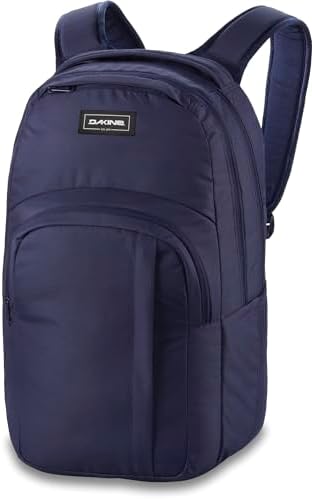
The 33L helps only when the load justifies the body.
Full school load separation
The 33L uses a larger body and more separated space, which gives bulky school or work items more room to live apart. The same larger body can feel excessive when the load stays light.
- Homework, lunch, and PE kit: This is the load where the 33L makes the clearest sense.
- Sweatshirt and trainers: Soft bulky items are part of the 33L advantage.
- Light-load regret: A light load can make the larger body feel unnecessary.
This table separates the load the 33L solves from the bulk it adds.
| 33L carry situation | Capacity gain or bulk cost |
|---|---|
| Full school-day load | The 33L earns its extra size |
| Light daily laptop load | The 25L deserves comparison |
| Lunch, PE kit, sweatshirt, and trainers | The 33L is the stronger size |
| Compact body feel matters most | The 33L can become too much |
The 33L is strongest when the load is real enough to justify the larger body.
Back panel size on shorter bodies
The 33L’s larger body also changes how it sits on the wearer. A larger back panel, strap pressure, and chest-strap contact can matter more for shorter or strap-sensitive bodies than the added space does.
- 165 cm body size: This setup makes bulk visible.
- Narrower straps: Pressure can become part of the larger-size tradeoff.
- Chest-strap use: Neck rubbing belongs to the fit discussion, not the capacity win.
- Additional clips: Stabilizing support exists, but it does not erase the size cost.
This table separates the 33L’s carry support from the body-size cost.
| 33L carry situation | What to expect |
|---|---|
| Larger load and compatible torso | Padded carry can support the weight |
| Shorter body or strap sensitivity | The larger body may feel excessive |
| Clip stability matters | Stabilizing support is present |
| Compact feel matters most | Compare the 25L before choosing 33L |
The 33L makes sense for load support only when the larger body also fits the wearer.
Bottle pockets after the main compartment is full
The 33L side pockets are not fully separate from the rest of the bag. Once the main body is packed out, side-pocket room can tighten, and school-year bottle carry can make the bottle pocket the first part to wear.
- Two-laptop daily carry: This full-pack setup is where side space tightens.
- School-year bottle use: The bottle pocket can become the part that wears first.
- Bottle or thermos positives: The pocket still has useful setups before the limits appear.
This table shows why the 33L side pockets change after the main body is packed.
| 33L packing state | What happens to bottle carry |
|---|---|
| Moderate internal load | Side pockets stay more plausible |
| Main body packed full | Bottle pockets can tighten |
| Heavy bottle use through school year | Pocket wear becomes part of the choice |
| Large bottle plus full pack | The setup becomes less dependable |
The 33L side pockets are useful, but they are not independent of how full the bag gets.
Laptop fit is a chassis question, not just screen size
Screen size is only the start of the sleeve choice.
The 25L sleeve and the pressure-fit 17-inch case
The 25L sleeve reads strongest for thinner laptop setups. As the laptop gets thicker, cased, or oversized, the sleeve has less room, so clean fit and pressure fit become different outcomes. The sleeve itself does not establish drop or impact protection.
- 13-inch laptop: This is the smaller-device fit setup.
- 14-inch MacBook Air plus large iPad: Thin devices are the strongest 25L fit setup.
- 15-inch laptop: Some setups work, but the chassis still matters.
- 17-inch laptop: This belongs as a tugging setup, not a clean promise.
The laptop table separates clean laptop setups from pressure-fit limits.
| Laptop setup | 25L sleeve reading |
|---|---|
| 13-inch laptop | Clean fit |
| 14-inch MacBook Air plus large iPad | Strong thin-device fit |
| 15-inch laptop | Possible, but setup still matters |
| 17-inch laptop | Pressure-fit setup only |
| Laptop case or thick chassis | Fit stays uncertain without a matching chassis |
The 25L works best as a thin-laptop fit, not a broad oversized-laptop answer.
The 33L sleeve and the 15-inch versus 17-inch conflict
The 33L sleeve gives larger laptop bodies more room than the 25L, but the fit still depends on the laptop’s chassis. Because 15-inch and 17-inch compatibility details do not line up cleanly, the safest view is device-specific rather than screen-size-only.
- 15-inch Lenovo: This is the clean smaller large-laptop setup.
- MacBook Pro 16-style chassis: Chassis shape matters more than the number alone.
- 17.3-inch gaming laptop: This is the large-device setup that keeps the 33L in play.
- Older 16-inch laptops: Thicker bodies are more likely to sit outside the clean-fit range.
This table keeps laptop setups separate from universal fit promises.
| Laptop setup or size detail | What the 33L sleeve suggests |
|---|---|
| 15-inch Lenovo | Fits in this setup |
| MacBook Pro 16-style chassis | Fits with this chassis |
| 17.3-inch gaming laptop | Strong setup, not a universal promise |
| 15-inch and 17-inch details both appear | Device dimensions matter more than the stated limit |
| Older or thicker 16-inch laptop | Fit stays uncertain |
The 33L may handle larger laptops, but the safest view is still device-specific.
Travel fit and rain protection stop short of guarantees
The 33L can help with travel packing and light water exposure, but neither becomes a guarantee.
The 33L under-seat setup is not a promise
The 33L can hold a laptop, headphones, small jacket, drink, and snack in one under-seat travel setup. That success belongs to that setup, so it should not be stretched into a guarantee for every airline, seat layout, or travel rule.
- Laptop, headphones, jacket, drink, and snack: This is the under-seat load.
- Chargers and devices: The 33L has broader travel-carry support beyond one item list.
- Seat-layout uncertainty: The travel question changes when airline rules matter.
This table keeps the under-seat travel setup inside its real limit.
| Travel load in the 33L | What this setup supports |
|---|---|
| Laptop, headphones, jacket, drink, and snack | One useful under-seat fit |
| Larger mixed travel load | More room, but not a rule |
| Guaranteed personal-item fit | Not established here |
| Airline-specific limits matter | Airline and seat layout still control the outcome |
The 33L travel setup helps, but it does not guarantee every seat.
Heavy rain is not the same as everyday water resistance
Water-resistant wording around the 33L does not equal dry laptop carry in heavy rain. Zip flaps can cover the zipper area, but that is not the same as sealing the whole bag around a laptop or tablet.
- Heavy rain: This is the weather setup the bag does not settle.
- Laptop or tablet inside: The consequence is higher when devices are being carried.
- Zip flaps: Zipper coverage is not the same as full-bag waterproofing.
This table separates everyday water help from laptop protection in heavier rain.
| Rain situation | What the 33L does not prove |
|---|---|
| Light everyday exposure | Water-resistant wording may help |
| Heavy rain with devices inside | Dry laptop protection is not established |
| Need waterproof laptop carry | Add separate protection |
| Zipper flap detail | Useful around zippers, not full-bag proof |
The weather wording works as a caution line, not as a waterproof promise.
Durability issues that should stay small but visible
The small-part warnings matter, but they are not the center.
25L lining and seam complaints
The 25L durability concerns should stay tied to specific parts. The main-pocket lining can shred and thin, while stitching, seam, elastic, and handle or strap concerns belong as separate small-part warnings.
In some setups, the laptop, weather, zipper, lining, and strap issues become limits rather than the main pattern.
- Main-pocket lining: This is the material complaint to preserve.
- Four-week stitching: The timing belongs with the warning, not the main verdict.
- Side elastic pocket: Keep this separate from bottle-size fit.
- Repeat Dakine comparison: Prior model trust can sharpen the disappointment.
This table keeps small-part failures from becoming the whole verdict.
| Small part mentioned | What it can change |
|---|---|
| Main-pocket lining | Long-use confidence in the main pocket |
| Stitching or seam concern | Confidence after early use |
| Side elastic tearing | Bottle-pocket durability, not bottle-size fit |
| Low-risk construction from day one | Another bag may make more sense |
Small-part complaints belong as warnings beside the stronger overall satisfaction score.
Zipper modes that should stay separated
The 33L zipper details should not be collapsed into one generic zipper problem. A zipper catching at a seam, becoming stiff, breaking, falling off, or failing at the end are different issues with different consequences.
- Top zipper seam: This is the access-friction issue.
- Stiff after weeks: This is short-use zipper friction.
- Two zippers within one week: This is the severe failure warning.
- Zipper end: This is a closure problem, not just a pull-tab issue.
This table separates zipper friction from zipper failure.
| Zipper issue named | What kind of problem it is |
|---|---|
| Top zipper catches at the seam | Access friction |
| Zippers turn slow or stiff | Early-use friction |
| Zippers break or fall off | Severe failure warning |
| Zipper end does not seal | Closure failure warning |
| Smooth zipper positives | Keep separate from failure cases |
Zipper issues should stay specific to the part and failure mode named.
Who should skip
| Skip condition | What it can cost you |
|---|---|
| You need 25L to handle books, lunch, jacket, and a full-size laptop | The compact body may feel crowded quickly |
| You carry a wide binder and rely on the outside bottle pouch | The bottle pocket may become less dependable |
| You choose laptop bags by screen size alone | The sleeve fit may be too optimistic |
| You want the 33L but prefer compact body feel | The larger body may become the thing you notice most |
| You need heavy-rain laptop protection | The weather details do not establish waterproof carry |
| You want very low small-part failure risk | Lining, zipper, strap, or pocket complaints may matter more to you |
Buy or skip?
Buy the Dakine Campus if the chosen size matches the way the load behaves: 25L for compact laptop/day carry, or 33L for fuller school and work separation. Skip it, or compare other options, if the choice depends on full 25L school capacity, a wide bottle-and-binder setup, screen-size-only laptop confidence, heavy-rain laptop protection, or very low tolerance for small-part issues.
Check the Price:
See More Options:
- For a similar size range without the same pocket-space squeeze, compare medium laptop backpacks for 25L carry without the pocket-space squeeze.
- For heavier school and tech loads, compare larger laptop backpacks for full school loads without choosing 33L just because it is bigger.
- For laptop protection beyond the built-in sleeve, consider separate laptop sleeves when Dakine Campus fit or padding proof is not enough.
