
Choosing between the 16L and 20L versions is not just a bigger-or-smaller choice. The Thule Lithos looks like a slim office backpack in both sizes, but the 16L and 20L run into different limits around laptop fit, bottle carry, packing, and loading.
Scorecard
The Thule Lithos lands in the Exceptional tier — a strong result for the right setup, but still one that needs to be read beside the 16L and 20L limits below. That score does not make every laptop, bottle, or packing style work.
| Field | Value |
|---|---|
| DVSS Score | 91.75 |
| Satisfaction Tier | Exceptional |
| Dissatisfaction Score | 4.87% |
| Critical Dissatisfaction Rate | 3.90% |
Based on buyer feedback patterns, not hands-on testing. See how this scoring works.
At 3.90%, serious warning-level dissatisfaction stayed low, but that number does not answer whether the sleeve, side pocket, or 20L base fits your setup. The rest of this article explains where the positive score lines up with the bag’s physical limits.
The main choice is simple: treat the Lithos as a slim laptop-first backpack, then see whether your laptop, bottle, small items, and packing style stay inside that slim design.
Quick take
- Best For: 16L slim flat-tech commuting or 20L work-tech carry with selected small items.
- Not For: relaxed MacBook Pro 16 fit in the 16L, wet umbrella storage beside tech, freestanding 20L loading, or book-heavy packing.
- Top Strength: slim office-first carry that stays low-profile for daily laptop use.
- Main Limitation: tight-fit tradeoffs around devices, bottles, loose accessories, and how each size is loaded.
Decision matrix
| Your Lithos setup | Main Lithos takeaway |
|---|---|
| 16L with slim flat tech | Strongest small-size use case |
| 16L with MacBook Pro 16 or cased tablet | Treat fit as tight or uncertain |
| Side pocket with a narrow dry bottle | Safer than wide or wet side carry |
| 20L with work tech and compact travel items | Stronger than book-heavy packing |
| 20L expected to stand by itself | Flat bottom does not settle that |
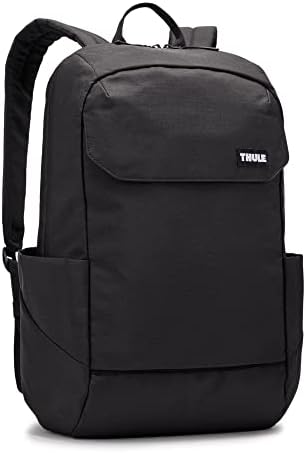
Thule Lithos 16L vs 20L: start with the size split
The two sizes solve different laptop-carry problems.
Start with the size that matches the problem you most need to avoid, not the larger number.
The 16L and 20L expose different physical limits because their slim bodies put pressure on different parts of the bag. The 16L concentrates the tradeoff around sleeve clearance, shared flat-device space, side-pocket width, and a lean main compartment, while the 20L shifts the tradeoff toward front-pocket organization, a narrow main compartment, and flat-bottom loading that still depends on balance.
- 16L flat-tech cases: MacBook Pro 16, X1 Carbon, and cased iPad setups do not carry the same risk.
- 20L work-and-travel cases: Passport, power-bank, A5 notebook, and packing-cube loads fit the larger variant’s strongest pattern.
- Wrong-size penalty: The wrong pick can mean tight device carry, extra pouch use, tipping, or book-load mismatch.
Start with this size split before judging the rest of the bag.
| Lithos size | Main fit or limit |
|---|---|
| 16L | Slim flat-tech commute with a narrow dry bottle |
| 20L | Work-tech carry or compact travel with selected small items |
| Neither size | Relaxed MacBook Pro 16 fit, many books, or freestanding loading |
The right Lithos size depends on the mismatch you are trying to avoid.
Where the 16L laptop fit needs a closer read
The 16L fit question starts with device shape.
MacBook Pro 16 and cased iPads change the 16L fit reading
The 16L is safer for slim flat tech than for large or cased devices.
The 16L laptop sleeve and the nearby tablet or notebook space share a tight flat-device area. As the stack gets thicker, that area runs out of separate room, so a larger chassis or added case can make the sleeve feel less forgiving.
The 16-inch label does not mean loose MacBook Pro 16 fit. The 16L can look like the right size for a MacBook Pro 16, but the hidden problem is that “fits” may mean tight rather than relaxed.
- MacBook Pro 16: The fit turns cautious instead of relaxed.
- X1 Carbon: This is the cleaner slim-laptop example for the 16L.
- Cased iPad: The tablet pocket should not be read as case-proof.
- Second flat item: A filled laptop sleeve can leave less usable room beside it.
The fit changes by device shape and case use.
| Your laptop or tablet | How the 16L reads |
|---|---|
| Slim 13–15-inch-class laptop | Stronger fit range |
| MacBook Pro 16 | Treat the fit as tight, not relaxed |
| Cased iPad | Do not assume the tablet pocket works |
| Laptop plus second flat item | Expect less independent sleeve room |
The 16L is strongest when the tech stack stays slim, flat, and uncased.
Where the 16L stops being a simple laptop pack
The 16L capacity limit appears after flat tech.
Laptop, lunch, and a rain layer fill the 16L quickly
The 16L works best before the daily load turns bulky.
The 16L main compartment favors flat stacking. Once the laptop is in place, soft extras take the remaining space quickly, so the compartment behaves more like a low-profile daily space than a broad carryall.
The 16L works best when the daily load stays lean instead of turning into everything-carry. The same slim profile that makes the 16L easy to carry can disappoint when non-flat extras need to go in.
- 15-inch ThinkPad load: Laptop, accessories, lunch, and a rain layer push the 16L close to its ceiling.
- Lean commute load: Laptop and lunch fit the better-supported everyday use.
- Carryall expectation: The 16L becomes the wrong choice when the load stops being flat and compact.
The capacity choice changes once the laptop load adds lunch, accessories, or a rain layer.
| Your 16L load | Where the space goes |
|---|---|
| Laptop and flat work items | Best-supported daily setup |
| Laptop plus lunch | Still inside the lean-commute pattern |
| Laptop, lunch, accessories, and rain layer | Expect the slim space to feel tight |
| Bulky extras or overnight packing | Look beyond the 16L |
The 16L is a low-profile daily pack first and a carryall second.
Why the side pocket is not just a bottle question
The side pocket changes by bottle width and wet carry.
Standard bottles and wet umbrellas create different side-pocket risks
Bottle tightness is annoying; wet carry beside tech is the bigger warning.
The side pocket is narrow, and it sits beside the main area used for laptop carry. Bottle width determines how tight the pocket gets, while wet side storage can send water concern toward the main area because the pocket sits close to where tech is carried.
The side pocket is better read as a narrow-bottle pocket than an all-bottle pocket. Rain confidence does not make the side pocket a safe wet-umbrella space beside a laptop.
The side pocket can look like the obvious umbrella spot, but the wet-umbrella setup changes the tradeoff because water reached the lower main area. It can happen: wet side carry is different from ordinary bottle tightness because water reached the lower main area near the laptop space.
- Standard-width bottle: This is the safest side-pocket fit.
- Wide-mouth bottle: The pocket should not be treated as outdoor-bottle friendly.
- Wet umbrella: The concern changes because the item is wet, not just wide.
- Lower main area: Water reaching that space turns the side pocket into a tech-carry concern.
Bottle fit should be read by bottle width, not by the presence of a side pocket.
| Bottle in the side pocket | How tight it gets |
|---|---|
| Standard-width bottle | Best-supported bottle fit |
| Wide-mouth bottle | Expect uncertainty before buying |
| Larger bottle that must slide in easily | Do not treat this pocket as safe |
A narrow dry bottle is the safer fit for this pocket.
Bottle tightness is one issue. Wet storage beside tech is a different and higher-stakes concern.
| Item in the side pocket | What it can reach |
|---|---|
| Dry small item | Stays within the lower-risk use case |
| Wet umbrella | Can reach the lower main area |
| Wet item that needs separation | Needs separation from laptop carry |
Wet carry belongs away from laptop-adjacent storage.
Why the 20L flat bottom still needs support
The 20L loading issue starts with uneven weight.
Front or rear weight is what makes the 20L tip
The 20L can still tip even with a flat bottom.
The 20L has a flat bottom, but the base does not balance the bag by itself. When heavier items sit toward the front or rear, the slim body can shift off balance, so loading may still need a hand or wall.
The 20L flat bottom still needs help when front or rear weight pulls the slim body off balance. It can look like a packing convenience, but uneven weight can still tip the bag.
- Front-heavy packing: Weight near the front can pull the slim body off balance.
- Rear-heavy packing: Weight toward the back creates the same standing problem.
- One-handed loading: The bag may need a hand or wall before it is easy to fill.
The 20L loading choice depends on where weight sits inside the slim body.
| How the 20L is loaded | Whether it stands easily |
|---|---|
| Light and balanced load | Easier to handle while packing |
| Heavier front or rear load | Expect it to need support |
| You need hands-free packing | Better matched by a more self-standing backpack |
Choose the 20L for slim carry, not for freestanding packing convenience.
Where the 20L organization still stays minimal
The 20L front pocket works best with selected items.
Passport-sized access works better than loose-accessory overload
The 20L organizes selected items better than a pile of loose accessories.
The 20L front pocket has a limited opening and a minimal pocket set. Once it is packed full, the pocket gets less forgiving, so it works better for selected access items than for every small piece of tech gear.
The front zipper looks simple, but the pocket gets harder to use when it is packed full. The 20L can organize a work setup, but many loose pieces can still push you toward a pouch.
The 20L looks like the safer organizer, but loose accessories can still end up needing their own pouch.
- Passport and power banks: These are the cleaner quick-access cases.
- Full front pocket: Unpacking gets harder once the pocket is packed out.
- Loose accessories: A separate pouch becomes the cleaner way to control cables and small pieces.
The 20L front pocket works best when it holds selected items, not every loose accessory.
| Items in the front pocket | When a pouch helps |
|---|---|
| Passport, pens, notepad, or power bank | Built-in access makes sense |
| Charger bits, cables, and many loose items | A pouch keeps the load cleaner |
| Pocket-heavy organization needs | Compare a more divided bag |
The 20L is organized enough for selected work tech, not every loose accessory.
Where the 20L main compartment splits work carry from book carry
The 20L main compartment favors organized compact loads.
Packing cubes suit the 20L better than many books
The 20L is a work-tech and compact travel size before it is a book-heavy school size.
The 20L main compartment has a slim, narrow shape. Soft organized loads fit that shape better than wide or rigid stacks, so compact work or travel packing sits closer to the bag’s strengths than book-heavy carry.
The 20L label does not turn the narrow main compartment into a book-heavy student pack. The 20L is a work-tech size before it is a many-books size.
- Packing cubes: This is the cleaner compact travel case.
- Many books: This is the clearer student-load mismatch.
- Mixed work and day items: This sits closer to the bag’s intended daily strength.
- Short-trip setup: Treat that as an individual positive setup, not a broad travel promise.
The 20L main compartment favors compact organized loads over wide stacks.
| What goes in the 20L | Where the narrow shape matters |
|---|---|
| Packing cubes or compact travel items | Stronger use case |
| Laptop plus work/day items | Fits the daily-carry pattern |
| Many books | Look beyond this narrow main compartment |
| Wide bulky objects | Compare a roomier backpack |
The 20L is better for organized work and compact travel than for book-heavy carry.
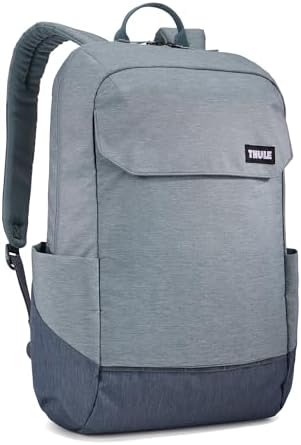
What the slim carry does well
The slim profile still matters after the limits.
Shorter-frame comfort and warm padding stay secondary
The slim shape is a real strength, but comfort still depends on body and use.
The Lithos keeps a slim body shape, which can help in close daily carry. Back-panel size and padding contact still matter, so the same compact structure can work well in transit while becoming warmer or stiffer during walking use.
In walking use, the thick back and strap padding can feel warm or stiff even when the slim body is otherwise a commute advantage.
- Shorter-frame comparison: The 16L can read better than the 20L for some smaller-body setups.
- Crowded transit: The low-profile body is useful when space is tight.
- Warm walking carry: Padding can feel less easy when heat builds.
This comfort check belongs after the fit and capacity decisions.
| Carry situation | Comfort reading |
|---|---|
| Crowded bus or train | Slim profile is a strength |
| Shorter buyer choosing 16L vs 20L | Smaller size may be easier |
| Warm walking carry | Padding comfort stays conditional |
Comfort supports the Lithos, but it should not override fit, bottle, or capacity limits.
Who should not choose this setup
These cautions matter, but they should stay smaller than the main fit and packing decisions.
The clip or buckle can break early, including one first-use case and one under two months, so this stays as a serious but isolated closure note. One shoulder-strap break makes strap reliability a compact caution, but it should not override the broader comfort and shape-retention strengths.
Hardware breakage points matter because the consequence is serious, but they stay compact in the article.
- Clip or buckle: Early breakage appears as a serious but isolated closure note.
- Shoulder strap: One breakage case makes strap reliability a compact caution.
- Neutral work look: Version-sensitive styling details may bother appearance-sensitive shoppers.
- Luggage handle: No luggage pass-through is supported here.
The fastest mismatch cases are the ones below.
| Your main concern | Why Lithos may miss |
|---|---|
| MacBook Pro 16 in the 16L | Fit can read tight, not relaxed |
| Cased tablet in the 16L | Tablet-pocket confidence is not established |
| Wet umbrella beside laptop carry | Water reached the lower main area in one case |
| 20L packed hands-free | Flat bottom still may need support |
| Many books in the 20L | Narrow shape favors other loads |
| Luggage-handle stacking | No pass-through support is shown here |
| Zero-tolerance hardware concern | Clip, buckle, and strap cautions exist |
Skip the Lithos when your main need is outside its slim office-first design.
Buy or skip?
Buy the Thule Lithos if you want a slim office-first laptop backpack and your setup matches the right size. The same slim design that keeps the bag low-profile also creates the main limits: the 16L asks for lean flat-tech carry, the side pocket asks for dry narrow items, and the 20L asks you to accept non-freestanding loading and lighter built-in organization.
Skip it when the size label or visible pocket layout is doing too much work in your choice. A relaxed MacBook Pro 16 fit, wet umbrella storage beside tech, book-heavy 20L use, and pouch-free loose-accessory carry all sit outside the strongest Lithos setup.
Check the Price
See More Options
- When the 16L idea is right but the fit or daily load is too tight, compare smaller laptop backpacks for lean flat-tech carry.
- When the 20L is close but the bag still feels too narrow for your setup, compare medium laptop backpacks with more room than the 16L.
- When the issue is MacBook Pro 16 room or book-heavy carry, compare larger backpacks for MacBook Pro 16 or book-heavy loads.
