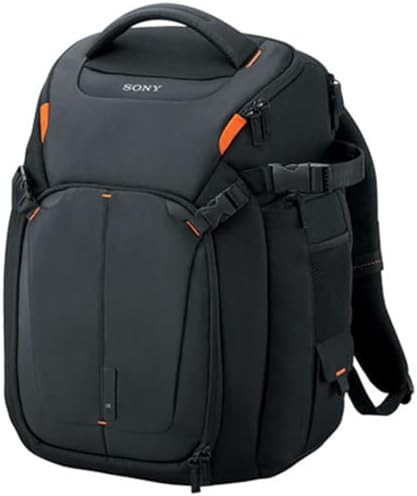
The Sony LCS-BP3 solves a real problem for buyers who need to carry a full camera system and a laptop in one structured backpack. Owner reports back up its ability to handle multi-lens, multi-device, and mixed photo/video setups. That same capacity comes with a trade-off: fill the bag, and it gets heavy and bulky fast. Smaller mirrorless kits often rattle around or waste space.
There’s no evidence-backed size or configuration variant to pick from. The real question is whether your gear load actually needs this much volume, and whether you’re willing to accept the bulk, tripod limits, and access trade-offs that come with it.
Product Snapshot
The LCS-BP3 works best as a high-capacity camera backpack when your gear load justifies the space. Variant choice doesn’t factor in here.
| Product detail | Decision relevance |
| Movable padded dividers and large camera compartment | Best aligned with substantial, reconfigurable camera and lens setups rather than minimalist carry. |
| Listed laptop storage up to 15.5 inches | Buyer evidence is strongest around 15-inch-class laptops; 17-inch use becomes conditional. |
| Side camera access and small-tripod side attachment | Both can be useful, but convenience drops with larger loads or tripods. |
| Integrated rain cover | Adds weather protection when deployed; buyer evidence does not establish that the uncovered bag itself is waterproof. |
| Air-travel use | Overhead-bin carry is repeatedly reported as workable; under-seat fit is less dependable, especially where legroom is tight. |
Buyer Evidence Metrics
Buyer evidence draws three clear lines: capacity always brings bulk, 15-inch-class laptops fit more reliably, and side-access problems under a packed load show up too rarely for a solid number.
| Buyer Question | Metric | Evidence |
| Does high gear capacity often come with a bulk or weight burden? | TCR 0.63 | Moderate · n=19 |
| Does laptop fit become less consistent when moving from 15-inch-class to 17-inch-class devices? | UBC 0.88 | Moderate · n=8 |
| Does side access become more awkward with a large lens plus computer/top-compartment load? | CFL — | Very Limited · n=1 |
How these metrics work:
- Trade-Off Coupling Rate (TCR) measures how often an observed product strength appears together with a specific friction among eligible buyer evidence. It does not establish causality.
- Use Boundary Consistency (UBC) measures how consistently eligible buyer evidence separates a supported use case from the condition where that use becomes more limited or conditional. It is not a probability of fit.
- Context Friction Lift (CFL) measures whether a known friction is more concentrated in a defined eligible context than in the eligible baseline. It is not severity or probability; public n reflects the smaller eligible comparison group.
- n is the number of relevant, eligible, deduplicated buyer observations used for that metric—not the product’s total review count.
These are buyer-evidence signals, not product-performance scores. See how these buyer-evidence metrics work.
Fit–Friction Matrix
The LCS-BP3 fits best with gear-heavy camera setups. Fit gets more conditional if you carry a minimal kit, a larger laptop, or bulkier external gear.
| Buyer Setup / Context | Fit Signal | Main Friction |
| Large camera system with mounted lens, additional lenses, accessories, and laptop/tablet | Recurring Strong Fit | A full load can become heavy and physically bulky. |
| Small mirrorless kit or lightly filled setup | Limited Fit | The volume can feel excessive, and smaller gear may need careful divider placement to stay secure. |
| 15-inch-class laptop plus camera gear | Generally Works | Thick 15-inch chassis or large battery packs can already make fit tight and consume accessory space. |
| 17-inch laptop plus a loaded camera compartment | Conditional Fit | Some 17-inch laptops can enter an empty bag, but retrieval and full-load fit can become difficult or fail. |
| Side-access camera retrieval with a manageable configured load | Generally Works | Some buyers still prefer removing the pack; a large lens, computer/top load, or attached tripod can reduce convenience. |
| Side-mounted tripod | Conditional Fit | Small compatible tripods can work, while medium or larger tripods may exceed the holder or interfere with side pockets/access. |
Large Camera Systems Use the Space Better Than Minimal Kits
Photographers and videographers who carry enough gear to need a dedicated system backpack get the best fit here. Typical setups include a camera body with a mounted lens, several extra lenses, flash, batteries, chargers, filters, cables, and a laptop. Heavier loads add a second body, drone, video gear, or a monopod.
That much capacity comes with a cost. TCR 0.63 means bulk or weight burden shows up often right alongside the high-capacity benefit in eligible buyer reports. This signal does not mean the bag always feels uncomfortable—some buyers mention good shoulder and back support—but if you fill the space, portability becomes a real part of the decision.
For mirrorless users with a light kit, the problem flips. Several buyers call the bag oversized or awkward to secure around a small setup. The LCS-BP3’s main advantage only makes sense if you actually need the volume.
A 15-Inch-Class Laptop Is the Safer Match; 17-Inch Carry Is Conditional.
Buyer evidence is much more consistent for 15-inch-class laptops than for 17-inch models. Working examples include a 15-inch MacBook Pro and other 15- to 15.4-inch laptops carried with camera gear. One thicker 15-inch Lenovo with an extended battery was already a tight fit.
UBC 0.88 does not mean an 88% chance your laptop will fit. It means eligible evidence is consistent at the boundary: 15-inch-class laptops usually work, but 17-inch fit depends on chassis size and how full the camera compartment is.
One 17-inch laptop fit when the backpack was empty but needed coaxing to remove. The buyer warned that a loaded camera compartment could make removal impractical. Another 17-inch laptop was too large. If you’re near this boundary, check your actual chassis dimensions, not just the screen size.
Side Access Helps Most Before the Load Gets Crowded
Side access helps when you want to grab a camera without opening the whole pack. Still, it’s not always faster or more comfortable. Some buyers still prefer taking the backpack off, and one large-lens setup got awkward once a laptop and top-compartment gear were added.
The CFL signal for that crowded setup is intentionally shown without a numeric value because only one eligible observation directly supports the context-specific lift. It is a useful warning, not a general rate.
Tripod carry runs into a similar limit. Small tripods secure at the side, but medium or larger tripods often run into undersized pockets, workarounds, or block other storage and camera access. Sony Support calls the side attachment a small-tripod solution, which matches what buyers report.
What Buyers Carry With It
Real-world loadouts show the LCS-BP3 works best as a system bag, not a minimalist daypack.
| Observed setup | What it shows |
| Sony A99-class body with vertical grip, 70–200mm lens attached, flash, and several additional lenses | The main compartment can support a substantial still-photography system when dividers are configured around the load. |
| Sony A7RII, lenses, 15-inch laptop, audio/video accessories, DJI Spark, and support gear | Mixed photo/video and laptop carry is possible, but this is the kind of load that can push weight and bulk upward. |
| Canon 800mm F11 carried vertically with a detached body and smaller lenses | Very long-lens carry can be possible in a specific configuration, but this is a single example rather than a universal capacity claim. |
Long-Term Durability Is Mixed, Not Settled
Durability evidence splits both ways. Some buyers report years of travel and use without zipper or seam failure, including long-term use up to six and nine years.
Other buyers report early main-zipper failure, two zipper failures within two years, top-handle fraying, or concern that the handle stresses the zipper area. The evidence does not show a clear pattern, so treat durability as mixed—not unusually strong or weak.
What Buyers Should Check Before Buying
The most useful pre-purchase checks focus on your real gear load, not just the headline capacity.
- Measure your laptop chassis. A 15-inch-class machine is the safer, evidence-backed target. 17-inch fit depends a lot on thickness and how full the rest of the bag is.
- Map your camera layout before assuming you can fit two bodies. Two bodies and several lenses can work, but lens size and whether both bodies need mounted lenses change the outcome.
- Check your tripod size. The side attachment works best for small tripods. Larger supports may need a workaround or may block pockets and access.
- Decide how much side access you need when the bag is full. It can be handy, but large lenses, a laptop, top-compartment gear, or a tripod can cut into that benefit.
- Treat the rain cover as your weather protection. Buyers report the cover’s usefulness, but don’t expect the uncovered backpack to be waterproof.
- Inspect zippers and the top handle closely, especially on older or used bags. Long-term durability reports are positive in some cases and clearly negative in others.
For alternatives built around different lens loads, laptop needs, and access styles, browse our camera backpack comparison.
