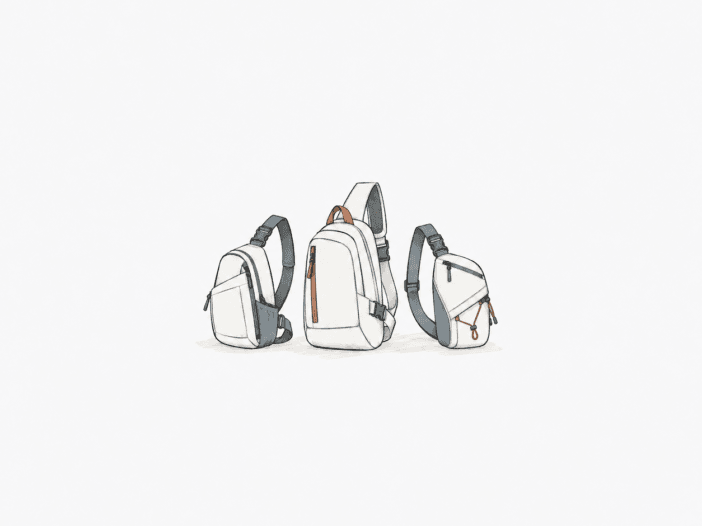
The right tech sling depends less on finding one universal winner than on matching the bag to what you actually carry. A tablet-focused EDC load, a 14-inch laptop, a camera kit, or a passport-and-phone travel setup each push different limits on capacity, access, structure, and comfort.
This list organizes seven options by real-world differences, not by a simple ranking. Each one fits within compact one-strap tech carry. If your load gets heavy enough that shoulder comfort keeps coming up as a problem, switching to a backpack usually solves more than just buying a bigger sling.
Quick Comparison: Best Tech Sling Bags at a Glance
| Product | Setup it matches | Main trade-off |
| tomtoc Navigator-T24 5L | Minimal tablet or light-device EDC | Very little overflow or device-fit margin |
| tomtoc Navigator-T24 7L | Laptop/tablet plus chargers and accessories | Added capacity can become added shoulder weight |
| Peak Design Everyday Sling 6L | Compact-to-mid-size camera kit | Large lenses and extra tablet gear tighten access |
| Peak Design Everyday Sling 10L | Larger multi-lens camera travel kit | More room requires a larger footprint |
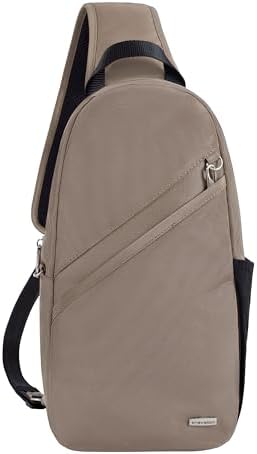
| Travelon Anti-Theft Classic Sling | Security-priority city or international travel | Security features slow access and limit some fit options |
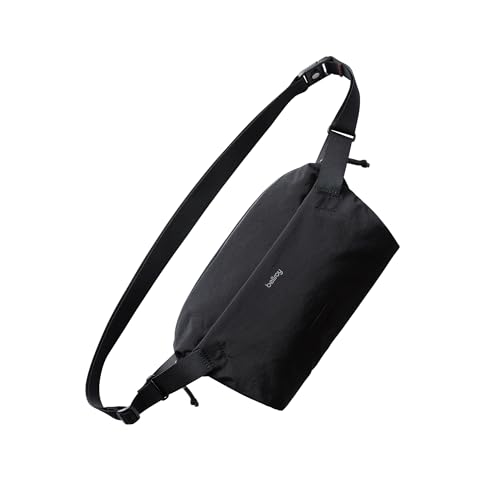
| Bellroy Lite Sling | Lightweight, packable EDC or secondary travel carry | Practical capacity and load support are limited |
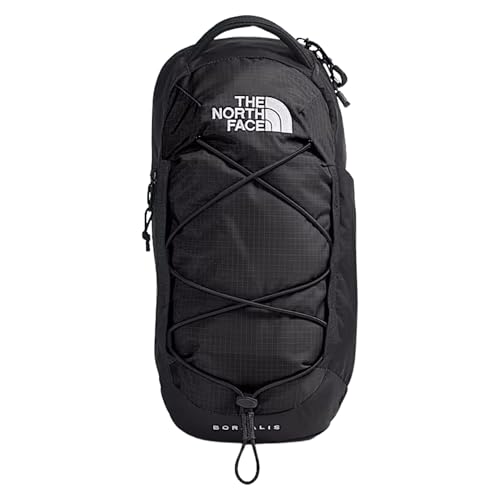
| The North Face Borealis Sling Bag | Compact essentials and small-tech day carry | Laptop carry is out and fit margins stay narrow |
Laptop or Tablet Carry: Let the Largest Device Set the Limit
Once a laptop or tablet becomes the main item, device dimensions matter more than the stated liter size. The two tomtoc variants mainly differ by how much extra room you need around your device.
tomtoc Navigator-T24 5L: keep the footprint small when the load stays light
The 5L fits buyers who want the smallest practical sling and usually carry a tablet or another slim device, not a full work-bag load. Typical setups include 10.5- to 11-inch tablets with light accessories or a tightly packed mix of small devices.
Key boundaries appear quickly:
- A tablet, slim book, small essentials, and modest accessories fit the available room better than folders or bulky extras.
- A 13-inch MacBook Air is not a guaranteed fit; buyer evidence is mixed enough that you should check exact device and case dimensions.
- Historical capacity labels are inconsistent, so the exact version matters more than relying on an older 5L or 7L reference.
Step up to the 7L if chargers, documents, a bottle, or a laptop-focused setup regularly compete for space.
Need the family-level fit evidence before deciding? Read the tomtoc Navigator-T24 Sling Bag Product Insight.

tomtoc Navigator-T24 7L: take the extra room when the laptop is part of the normal load
The 7L works better when a laptop or tablet shares the sling with chargers, a bottle, or other electronics. Buyer reports include several 14-inch-class laptops and dense tech setups.
The added capacity comes with its own limits:
- A laptop, tablet, power bank, charger, and accessories can make the sling noticeably heavier on one shoulder.
- Protective cases and keyboards can change tablet compatibility; some 12.9-inch configurations remain conditional.
- Older capacity labels are inconsistent, so check the current compartment dimensions instead of relying on past size names.
If your load keeps growing past this point, switching to a different carry format usually makes more sense than moving to an even heavier sling.
Want the complete device-fit and carry-boundary picture? See the tomtoc Navigator-T24 Sling Bag Product Insight.

Camera Carry: Size the Sling Around the Whole Kit
Sling size depends on more than just the camera body. Lens diameter, hoods, dividers, batteries, chargers, and a tablet can eat up space faster than the stated capacity suggests.
Peak Design Everyday Sling 6L: keep camera carry compact when the kit stays disciplined
The 6L fits compact or mid-size photo setups where organization and access matter more than carrying a full lens collection. Buyer reports cover street, travel, event, and day-shoot use.
What changes the fit:
- Compact or mid-size bodies with one to several reasonably compact lenses fit this variant better.
- Padding and dividers help with organization but cut into usable interior space.
- Larger full-frame bodies, long zooms, multiple bulky lenses, or adding an 11-inch-class tablet can make fit and access much tighter.
- Front-pocket and tablet access often get less convenient once the main compartment is packed full.
The 10L becomes more relevant when larger lenses or additional gear are normal parts of the kit, not occasional additions.
If your camera setup is close to the 6L boundary, explore the Peak Design Everyday Sling Product Insight.

Peak Design Everyday Sling 10L: trade minimum bulk for more camera-system headroom
The 10L fits a broader photo kit where extra lenses and accessories need real space. Buyer setups include larger camera bodies, several lenses, batteries, chargers, and sometimes an 11-inch iPad Pro.
Its extra capacity should still be viewed realistically:
- Thick padding and internal structure take up part of the stated volume.
- The larger footprint is part of the trade-off, especially if you want a small everyday sling.
- Direct 10L evidence is thinner than for the 6L. Treat individual successful setups as examples, not as universal upper fit limits.
- A few long-term reports mention tight zippers, oxidizing hardware, or abrasive fabric contact. The evidence is too limited to show a general durability pattern.
Drop back to the 6L when minimum footprint matters more than carrying the wider camera system.
Planning a larger kit? Check the Peak Design Everyday Sling Product Insight for the fuller capacity and configuration evidence.

Crowded Travel: Security Features Change the Access Trade-Off
Travel-focused security creates a different buying problem than everyday carry. The Travelon stands out for its deterrence features, but those same features also change how quickly you can access the bag.
Travelon Anti-Theft Classic Sling: prioritize deterrence when crowded travel is the concern
Buyer reports often link the Travelon to a sense of security and peace of mind. The design includes a locking main zipper pull and manufacturer-listed slash-resistant elements in the strap and body.
Those features support deterrence-oriented carry; they do not prove that theft cannot happen.
For day travel, buyer-reported loads include passports, phones, wallets, power banks, glasses, snacks, a compact umbrella, and other essentials. Front- or back-of-body carry and reversible shoulder use also work well for crowded sightseeing.
The trade-offs show up more when convenience matters most:
- The one-way zipper and clip-based security can slow access.
- The tall, deep compartment can slow organization.
- The external bottle pocket suits smaller or slimmer bottles better.
- Comfort depends on load, body shape, and how the strap fits.
- Buyer reports cover both positive long-term use and concerns about some strap-loop, clip, or locking parts.
A simpler sling makes more sense if rapid access or broad bottle compatibility matters more than the security-oriented design.
For a deeper look at the security-versus-access decision, read the Travelon Anti-Theft Classic Sling Product Insight.
Everyday Essentials: Decide Whether Packability or Utility Matters More
Bellroy and The North Face both work for compact everyday carry, but each solves a different problem. Bellroy focuses on low weight and packability. The Borealis leans toward small-day utility and external carry features.
Bellroy Lite Sling: minimize bag weight when the load itself stays modest
The Bellroy Lite Sling fits buyers who want the bag itself to add almost no bulk. Buyer feedback favors its light build, body-conforming shape, magnetic buckle, and easy two-way access.
It works best with a phone, wallet, keys, glasses, earbuds, power, a small notebook, and other compact essentials. The open interior may appeal to buyers who prefer less segmentation.
There are three important limits:
- Multiple buyers describe the real usable capacity as smaller than the stated 7L figure.
- Less structure means less support when the load gets heavier.
- Larger tablets and bulkier camera setups quickly become conditional fits.
Choose something more structured when device protection, extensive organization, or heavily loaded all-day carry matters more than packability.
Wondering whether the low weight is worth those compromises? See the Bellroy Lite Sling Product Insight.
The North Face Borealis Sling Bag: favor compact utility when the tech load stays small
The Borealis Sling fits errands, sightseeing, short outdoor use, and compact everyday tech better than laptop carry. Buyer setups include phones, power and cables, Kindle-sized devices, small tablets, and compact camera or action-camera gear.
Its utility comes with tight fit margins:
- Laptop carry falls outside the role.
- Larger tablets, particularly with bulky cases, can become difficult or uncertain fits.
- Buyers repeatedly describe the external bottle pocket as narrow.
- The strap pocket often doesn’t fit larger phones well.
- Strap comfort and sling stability depend on body shape and movement.
Switch to another option if you need to carry a laptop, a larger bottle, a roomy tablet compartment, or want stable carry during high-motion activity.
Before deciding whether its compact layout fits your everyday load, explore The North Face Borealis Sling Bag Product Insight.
How to Choose Among These Options
Start with the item that cannot flex: the laptop, tablet, camera body plus lens, or a security requirement. That single constraint usually eliminates more options than comparing capacity numbers.
Then narrow the choice using four questions:
- Carrying a laptop or large tablet? Verify the actual device and case dimensions instead of treating screen size as a guarantee.
- Building a dense electronics load? Decide how much total weight you genuinely want on one shoulder.
- Carrying camera gear? Count lenses, hoods, dividers, batteries, tablet, and personal items—not just the camera body.
- Prioritizing travel security? Expect locking or deterrence-oriented features to trade some speed and simplicity of access.
What to Check Before Choosing
A sling can close and still be the wrong fit. Most mistakes show up near the capacity, device-fit, or comfort boundary.
- Measure the largest device with its normal case, sleeve, keyboard, or other attached accessory.
- Estimate the fully loaded weight rather than evaluating the laptop, tablet, or camera alone.
- For photography setups, account for lens orientation, hoods, dividers, batteries, and any tablet carried at the same time.
- Measure bottle diameter before assuming an external pocket will accept your usual reusable bottle.
- Check usable strap length and preferred body position if body fit is likely to be sensitive.
- On switchable-shoulder designs, confirm that quick-access pockets remain convenient from the side you actually use.
- For the tomtoc Navigator-T24 family, verify the current variant dimensions rather than assuming older 5L, 7L, or 9L labels map cleanly to the version being sold.
The practical rule is simple: pick the smallest sling that fits your real load and still leaves enough room for comfortable access and carry. Once every compartment is packed tight or shoulder fatigue sets in, adding more sling capacity stops solving the main problem.
