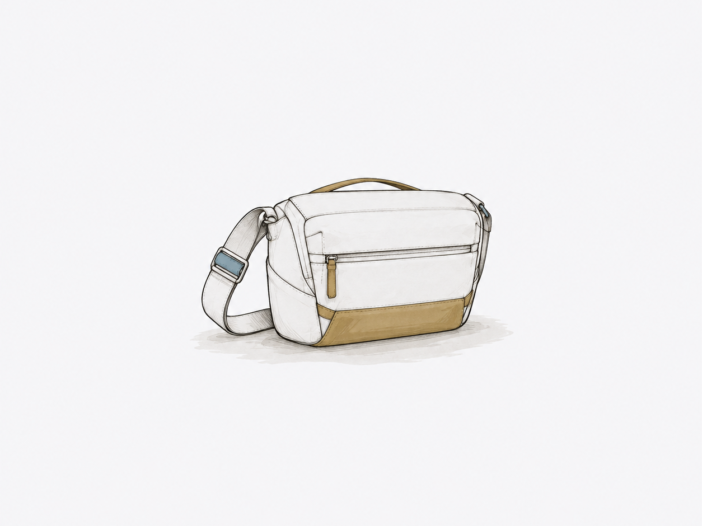
The Peak Design Everyday Sling works best when you size it for your actual camera kit, not just the liter label. The 3L covers minimalist one-camera setups with a little extra. The 6L fits compact or mid-size kits most reliably. The 10L only makes sense once bigger lenses or a heavier travel load start crowding out the smaller slings.
Smaller slings feel lighter on your body but leave less room for bulky zooms, big hoods, a tablet, or extra personal items. This trade-off shows up most clearly in the 6L, where buyer evidence runs deepest.
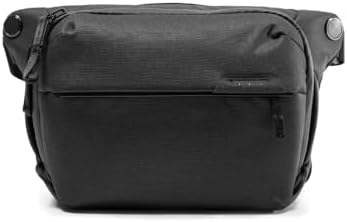
Product Snapshot
Every size in this family prioritizes camera carry, but the real-world role shifts as capacity changes.
| Product detail | Decision relevance |
| Capacity options | 3L, 6L, and 10L serve different camera-load roles rather than functioning as interchangeable sizes. |
| Core role | Structured, camera-oriented sling carry with configurable organization and fast body-worn access. |
| Strongest evidence base | 6L has the broadest buyer evidence, so its fit boundaries are clearer than those of 3L or 10L. |
| Main trade-off | Compact carry versus remaining accessory space and easy access as the load gets bulkier. |
Buyer Evidence Metrics
Buyer evidence draws a clear line between compact camera kits and bulkier loads, especially in the 6L.
| Buyer Question | Metric | Evidence |
| Does the 6L stay in its comfort zone as the camera kit gets bulkier? | UBC 0.79 | Strong · n=28 |
| Does the 6L’s compact profile often come with less accessory headroom? | TCR 0.62 | Moderate · n=13 |
| Does tablet size or a fuller camera load make 6L tablet carry more conditional? | UBC 0.80 | Moderate · n=10 |
| Is the 3L most consistent with minimalist one-camera carry? | UBC 1.00 | Limited · n=4 |
How these metrics work:
- Use Boundary Consistency (UBC) measures how consistently eligible buyer evidence separates a supported use case from the condition where that use becomes more limited or conditional.
- Trade-Off Coupling Rate (TCR) measures how often an observed product strength appears together with a specific friction among eligible buyer evidence.
- n is the number of relevant, eligible, deduplicated buyer observations used for that metric—not the product’s total review count.
- These are buyer-evidence signals, not product-performance scores, probabilities, or lab measurements. See how these buyer-evidence metrics work.
Fit–Friction Matrix
Fit shifts most when you add camera bulk, extra lenses, or a tablet to your load.
| Buyer Setup / Context | Fit Signal | Main Friction |
| 3L + one small camera, compact lens, and light essentials | Generally Works | Adding personal items, a larger DSLR, or another lens quickly consumes the remaining headroom. |
| 6L + compact or mid-size camera kit with one to three compact lenses | Recurring Strong Fit | Friction rises as larger zooms, hoods, a tablet, or more personal items are added. |
| 6L + full-frame body, long zoom, or multiple bulky lenses | Conditional Fit | Lens length, orientation, hood use, divider placement, and extra items determine whether closure and access stay easy. |
| 6L + camera kit and tablet | Conditional Fit | Smaller tablets are more workable; 11-inch-class tablets and fuller camera loads are repeatedly more difficult to insert, remove, or accommodate. |
| 10L + larger multi-lens day or travel kit | Generally Works | The larger footprint is the trade-off, and protective structure still consumes some nominal interior volume. |
Variant Fit Patterns
Pick the smallest sling that still gives you working room for your real camera setup.
3L: Best aligned with minimalist camera carry
The 3L fits best for one small camera and almost nothing else. Buyer reports back up compact street-photography use and easy body-worn access, but the evidence pool is thin.
You might squeeze in a larger DSLR or a second lens, but that does not mean you have real working room. The 3L’s UBC 1.00 comes from just four eligible reports, so treat it as a clear but limited boundary signal, not a guarantee that every minimalist kit will fit.

6L: The strongest all-around fit, until the kit gets bulky
The 6L fits compact or mid-size camera kits most consistently. Buyers report workable setups from compact mirrorless bodies with several small lenses to APS-C kits with a flash, batteries, and other essentials.
Fit gets tricky when your load turns physically bulky, not just numerous. Full-frame bodies, long zooms, big hoods, and multiple large lenses can lead to mixed results: some setups fit, while others barely close or become awkward to access.
UBC 0.79 does not mean a 79% chance that a camera kit will fit. It means the evidence is relatively consistent in separating compact-to-mid-size kits from bulkier setups, where fit becomes more conditional.

10L: More convincing when larger lenses are part of the plan
The 10L makes more sense once the 6L starts forcing you to compromise on lens size or total load. Buyer examples include a Nikon Z8 with two lenses, batteries, chargers, and an 11-inch iPad Pro with keypad, or a Canon R6 with three lenses including a 100-500mm.
You trade away some compact feel for that extra headroom. The 10L evidence is much thinner than the 6L, so it supports bigger kits but doesn’t set a clear upper fit limit.

The 6L’s Compactness Is Also Its Main Trade-Off.
The 6L works best if you want a sling that stays smaller than a backpack and you are willing to manage what you pack.
Compactness comes with a cost. A TCR of 0.62 means buyers often see the compact profile and reduced accessory headroom together. This does not mean compactness causes the limitation, just that both show up together often enough to matter.
The practical pressure points are consistent:
- Large zooms and hoods eat up usable space faster than the 6L label suggests.
- You might fit your camera but still run out of room for a second lens, flash, wallet, or other personal items.
- Packing close to the limit makes it harder to get gear out or close the zipper, even if everything technically fits.
Tablet Carry Is a Separate Fit Decision
If you need to carry a tablet, count it as part of your camera load, not as a free add-on.
The 6L’s UBC 0.80 shows a fairly consistent boundary between smaller-tablet use and the more conditional experience of carrying an 11-inch-class tablet alongside a fuller camera kit. Buyer reports include both successful and frustrating 11-inch iPad experiences, so the evidence does not support a simple yes-or-no rule.
What you pack around the tablet changes the fit. Camera depth, divider position, lens bulk, and how tightly you pack the main compartment all affect whether the tablet stays easy to insert and remove.
Buyer evidence does not support a 12.9-inch tablet as a reliable fit. The 10L has at least one successful 11-inch iPad plus camera travel load, but there isn’t enough tablet evidence to support a broad compatibility claim.
Quick Access Works Best Before the Bag Is Packed to Its Edges
You get the best access from the Everyday Sling when your load still has room to move.
In the 6L, buyers like quick camera access and adjustable sling carry. Still, tight front-pocket access and a stiff opening come up when the bag is packed full. The front pocket works better for slim items than for bulky everyday-carry gear.
One buyer lost an external carry strap after leaving it slack in a crowd. This is a single example, not a recurring failure, but it is a good reminder to keep external straps tensioned when they are not carrying a load.
What Buyers Compare It With
There is not enough comparison evidence to rank alternatives, but a few buyer decisions show what people want when the Everyday Sling feels too tight.
- AER Day Sling 3 Max: one 3L buyer considered using a padded insert in the AER to gain more usable space.
- PGYTECH OneGo 6L: one buyer preferred its pocketing, zippers, price, and lower perceived weight.
- Hex Ranger DSLR Sling: one 6L Q&A respondent preferred its construction.
These are isolated buyer comparisons, not enough to call any alternative better.
What Buyers Should Check Before Buying
Lay out your camera body, mounted lens, spare lenses, hoods, and personal items before you pick a size. Lens length and hood bulk change fit more than the liter label suggests.
- Lay out the exact body, mounted lens, spare lenses, hoods, and personal items you expect to carry. Lens length and hood bulk change fit more than the liter label alone suggests.
- For the 6L, treat large full-frame setups as conditional, not automatically compatible. Some work well, but others get tight depending on orientation and what else you pack.
- If you need to carry a tablet, test it as part of your full packed setup. Smaller tablets fit more reliably than an 11-inch-class tablet next to a full camera load.
- Do not treat the front pocket as generous overflow. Repeated 6L feedback calls it tight, especially when the main compartment is full.
- Move up to the 10L when lens size, not just item count, starts forcing compromises. That is where buyer reports show the strongest reason to switch.
- Treat 3L and 10L conclusions with more caution than 6L. Both have useful direct examples, but their variant-specific evidence is much thinner.
Need more context before committing to the larger camera-focused format? Compare the best tech sling bags across different carry setups.
