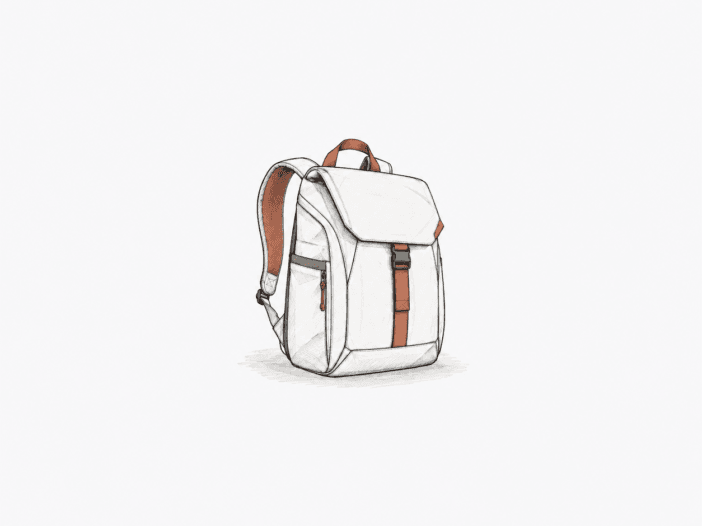
The Peak Design Everyday Backpack works best for buyers who want structured, adjustable organization for a camera and tech setup and choose the size based on the real shape of their gear. The 20L handles a compact camera load well. But buyer reports show that once you add a larger laptop, travel gear, or a mixed camera setup, the 30L becomes the more practical choice.
Moving up to the 30L only solves part of the problem. The extra space helps, but some buyers then hit new limits: more bulk, higher empty weight, shifting gear, or laptops that still run too large. Carry comfort is even harder to predict. Long-wear reports split, and many skip which size they used.

Product Snapshot
The main question is not whether this backpack keeps gear organized—buyer reports already back that up. The real test is how much weight and gear you expect the dividers to handle before you run into limits with size, laptop fit, or comfort.
| Product detail | Decision relevance |
| 20L and 30L capacity variants | Capacity materially changes which camera, laptop, and travel setups remain practical. |
| Configurable/removable dividers and side access | Strong fit for buyers who want structured camera/tech organization and fast access without unpacking from the top. |
| Dedicated laptop/device area | Useful, but device fit varies with capacity, chassis size, and protective cases. |
| Expandable top section and structured body | Adds flexibility, but some buyers still describe the larger setup as bulky or heavy. |
| Comfort evidence is mixed | Strap comfort cannot be cleanly generalized to the family because many long-duration reports omit capacity and contradict one another. |
Buyer Evidence Metrics
The clearest metric is the capacity boundary. Once your load outgrows a compact 20L setup, buyer evidence consistently favors moving to the 30L. The other metrics explain why that move does not fix every problem.
| Buyer Question | Metric | Evidence |
| Does a larger mixed load consistently push the decision from 20L toward 30L? | UBC 1.00 | Limited · n=4 |
| Does the 30L’s higher gear capacity sometimes arrive with bulk or empty-weight friction? | TCR 0.40 | Limited · n=5 |
| Is strap discomfort more concentrated in extended-duration carry? | CFL 1.17× | Limited · n=6 |
| Is the 30L a safe assumption for every large laptop setup? | UBC — | Very Limited · n=3 |
How these metrics work:
- Use Boundary Consistency (UBC) measures how consistently eligible buyer evidence separates a supported use case from the condition where that use becomes more limited or conditional.
- Trade-Off Coupling Rate (TCR) measures how often an observed product strength appears together with a specific friction among eligible buyer evidence. It does not establish causality.
- Context Friction Lift (CFL) measures whether a known friction is more concentrated in a defined eligible context than in the eligible baseline. It is not a severity or probability measure; its public n uses the smaller eligible comparison group.
- n is the number of relevant, eligible, deduplicated buyer observations used for that metric—not the product’s total review count.
- These are buyer-evidence signals, not product-performance scores. See how these buyer-evidence metrics work.
UBC 1.00 does not mean the 20L has a 100% chance of failing with a larger load. It means the four eligible observations used for this relationship consistently separated compact 20L use from larger setups that became more conditional or moved to the 30L.
The CFL result is much less decisive. Extended-use discomfort is only modestly more concentrated than the broader comfort baseline, and three extended-duration reports describe acceptable or strong comfort. That makes strap comfort a check-for-yourself issue rather than a clean family-wide verdict.
The large-laptop UBC value is intentionally suppressed because only three eligible 30L observations support that boundary. Those examples are still useful, but not strong enough to publish a numeric rate.
Fit–Friction Matrix
Match the bag to how you actually carry your gear. The biggest pattern in buyer evidence is the jump from compact 20L setups to larger, mixed loads—not just the stated liter size.
| Buyer Setup / Context | Fit Signal | Main Friction |
| 20L with a compact camera load such as an R5, 24-105 F4L, RF 100-400, plus a jacket or lunch | Specific Example Only | The same detailed buyer report also found the device area tight and loaded comfort poor, so this is a useful setup example rather than a broad 20L guarantee. |
| 20L with a 16-inch-class laptop or a larger mixed travel/camera load | Limited Fit | Capacity and closure become the constraint; several cross-variant buyers moved to the 30L when their load grew. |
| 30L with a 15-inch laptop or tablet plus camera and tech accessories | Generally Works | More room reduces the 20L capacity squeeze, but some buyers still report pack bulk, empty weight, or gear movement inside the divider layout. |
| 30L with a 17-inch or unusually large gaming-laptop setup plus accessories | Limited Fit | Direct buyer examples show the fit boundary reappearing even in the larger capacity. |
| Extended all-day or heavy carry when the exact capacity is not stated | Mixed / Variant-Dependent | Strap comfort is materially contradictory across buyers, so duration alone does not predict whether the harness will work for you. |
Variant Fit Patterns: Start With What Must Fit Together
The 20L works best when you keep the load camera-first and stick to the essentials. One buyer packed an R5, 24-105 F4L, RF 100-400, plus a jacket or lunch, and still called the bag compact and usable.
The limit shows up when your device or travel load gets bigger. One buyer could not close the 20L with a 16-inch MacBook Pro. Other buyers switched from 20L to 30L after finding the smaller size too tight for their camera and travel gear.
The 30L is the safer bet for mixed camera, laptop, or tablet, and accessory loads. It does not solve every fit problem, but it gives you more space before you hit a wall.
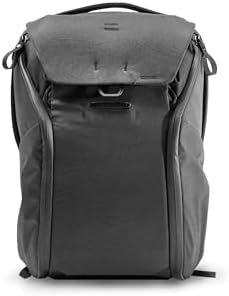
The 30L Solves Capacity First—Not Every Fit Problem.
The 30L handles real-world loads like a 15-inch MacBook, 11-inch iPad Pro, tech organizer, headphones, water bottle, and daily items, plus camera bodies with multiple lenses and accessories. Buyers report back on these combinations.
But the larger bag has its own edge cases:
- One 30L buyer reported a 16-inch laptop fitting while a 17-inch laptop did not.
- Another buyer returned a 30L because a very large Legion Gen10 laptop plus required accessories didn’t fit the bag well enough.
- Two camera-oriented 30L reports describe a lens or accessories moving inside the divider layout even after adjustment.
- Some buyers find the 30L too bulky or heavy for daily use.
Screen size alone does not tell the whole story. Chassis shape, case thickness, accessory bulk, and how much camera gear you pack all change the fit.

Organization Is the Strongest Repeating Advantage, but It Has Limits
Buyers keep praising the adjustable dividers and side access. These features let camera and tech users grab gear from the bottom without dumping the whole bag. That is the Everyday Backpack’s most consistent strength in buyer evidence.
Still, modular dividers do not lock down every piece of gear. One 30L user with an R8 and three lenses reported a lens bouncing inside the dividers. Another 30L user noticed camera gear shifting even after adjusting the layout.
If you carry long lenses or odd-shaped gear, do not just check for dividers. Check if the dividers can actually hold your equipment tight enough to keep it from moving.
Strap Comfort Is the Least Settled Part of the Buying Decision
Do not take the loudest complaints or the highest praise as the rule for everyone. Some buyers report severe discomfort on daily commutes or long walks, while others with heavy camera loads describe 14-hour carry or multi-country travel as comfortable enough.
This split matters because many reports do not say which size was used. One detailed 20L report mentions thin, narrow straps getting uncomfortable under moderate weight. Direct 30L evidence includes buyers who found the bag comfortable even when fully loaded.
If comfort is a priority, test the harness with your real load and your own torso. Do not assume the 20L or 30L alone will predict comfort.
What Buyers Carry With It
These real-world loadouts show where the bag’s organization stops being a feature on paper and starts shaping which size actually works.
| Buyer setup | What it shows | Capacity context |
| R5 + 24-105 F4L + RF 100-400 + jacket or lunch + Peak Design Tech Pouch | A compact camera-day load can work without immediately forcing the larger capacity. | 20L |
| 15-inch MacBook + 11-inch iPad Pro + Tumi tech bag + headphones + water bottle + battery, with room reported for a sweatshirt | Mixed device and accessory carry is where the 30L’s extra room becomes meaningful. | 30L cross-variant example |
| A7R IV + 70-200 F2.8 + 35mm F1.4 + tripod + batteries + two water bottles + two rain jackets for a 14-hour day | Heavy carry can still be comfortable for some buyers, but this cannot be assigned to 20L or 30L because capacity was not stated. | Capacity not stated |
What Buyers Compare It With
These comparisons show why buyers move on from the Everyday Backpack, even if they like the design—the reasons for switching matter more than any ranked list of alternatives.
| Compared product | Why it entered the comparison | What the comparison reveals |
| Nomatic bag | A buyer needed to carry a very large Legion Gen10 laptop plus accessories. | The 30L still has a practical ceiling for unusually bulky tech loads. |
| Bervite Jumper | A camera user wanted a smaller bag and tighter gear fit. | More capacity can become unnecessary bulk, and divider geometry may not suit every lens. |
| WANDRD PRVKE | A buyer prioritized better long-wear comfort. | Some users may prefer a more supportive harness even if they like Peak Design’s access and organization. |
What Buyers Should Check Before Buying
To avoid a mismatch, check the boundaries that actually changed buyer outcomes in the evidence.
- Pick your size based on your whole load, not just your laptop. A compact camera setup fits in 20L, but bigger camera and travel loads push buyers toward 30L.
- Measure your laptop’s chassis and case thickness. Buyer evidence shows 15- and 16-inch laptops fitting in the 30L, but a 17-inch did not fit, and a gaming laptop setup failed.
- Check if your camera gear needs to be locked down tight. The divider system is a repeated strength, but two 30L camera users still reported gear moving inside the bag.
- Test the harness with the weight and walking time you actually expect. Comfort reports are mixed, and many skip which size was used.
- Treat travel and weather stories as examples, not promises. Buyers mention under-seat use, budget airline trips, and good rain performance, but most skip the exact size, and the evidence does not prove airline compliance or waterproofing.
- If security matters, check how the closures actually work. One detailed 20L buyer disliked the easy-open top and zipper sliders. That is a specific complaint, not a proven security flaw for the whole line.
Bottom Line
The Peak Design Everyday Backpack makes the most sense when structured organization and quick side access actually shape how you pack. The 20L is the safer pick for a compact, camera-first load. The 30L is better backed by buyer evidence for mixed camera, laptop, or tablet, and accessory carry.
The decision gets messier at the edges. Bigger laptops can still outgrow the 30L. More capacity can mean more bulk or weight. Strap comfort varies too much to predict from buyer evidence alone. Match the bag to your full load, and check the harness and laptop compartment in person if you can.

Want to see how this compact setup compares with roomier camera-carry options? Compare the best camera backpacks for different setups.
