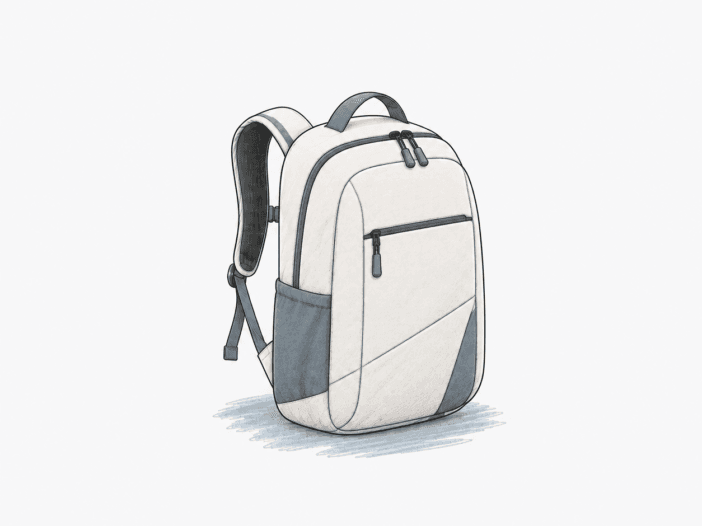
Most buyers with the 15.6-inch Targus Intellect Essentials carry a straightforward load: one laptop, charger, a few accessories, and light work materials. That setup fits without pushing you into a bulky pack. These fit results apply only to the 15.6-inch version. Other Intellect Essentials models may not fit the same way.
Buyer reports also show where the bag runs out of room. Add books, a lunch container, a bigger tech kit, or a pile of small accessories, and space or organization gets tight fast. Bulkier laptops can also lead to mixed results.
In practice, buyers fall into two main groups:
- Better aligned: one standard or thinner 14–15.6-inch-class laptop, compact charger, mouse, cables, and light documents.
- More conditional: a laptop plus a tablet, water bottle, lunch container, books, or a bigger accessory kit.
- Needs extra checking: large gaming laptops and 16–17-inch-class devices, since buyer fit reports do not agree.

Product Snapshot
Buyer feedback on the 15.6-inch version highlights four points that matter for real-world use:
- Laptop-first, low-profile role. Buyers describe the bag as slim, lightweight, and minimalist, especially when the load is limited to a laptop and compact essentials.
- Simple internal layout. Some buyers say the compartments work, but many still want more small pockets, pen loops, or dividers for better organization.
- Side-entry laptop access. Most buyers find the side opening convenient, though a few mention issues with orientation or keeping the laptop secure.
- Protection is mixed. Some buyers like the padding around the laptop area, but others say the overall padding feels thin or the bottom does not protect well.
These are patterns from buyer feedback, not lab-tested specs or manufacturer claims.
Buyer Evidence Metrics
| Buyer Question | Metric | Evidence |
| How consistently does the evidence separate standard/thinner laptop fit from larger or bulkier-device friction? | UBC 0.91 | Moderate · n=11 |
| How often does the compact/slim carry strength appear together with limited internal organization? | TCR 0.70 | Moderate · n=10 |
| How often does compactness appear together with accessory-space friction? | TCR 0.43 | Moderate · n=14 |
| Does organization friction become more concentrated when the load expands into multiple accessories or documents? | CFL 1.25× | Moderate · n=8 |
How these metrics work: Use Boundary Consistency (UBC) measures how consistently eligible buyer evidence separates a supported use case from the condition where that use becomes more limited or conditional. Trade-Off Coupling Rate (TCR) measures how often an observed product strength co-occurs with a specific friction in eligible buyer evidence. Context Friction Lift (CFL) measures whether a known friction is more concentrated in a defined eligible context than in the eligible baseline. For CFL, public n reflects the smaller eligible comparison group. For all metrics, n is the number of relevant, eligible, deduplicated buyer observations used for that metric—not the product’s total review count. These are buyer-evidence signals, not product-performance scores. See how these buyer-evidence metrics work.
The UBC 0.91 signal does not mean a laptop has a 91% chance of fitting. It means evidence on eligible buyers is pretty consistent about the boundary: standard or thinner laptops fit more reliably, while larger or bulkier devices become more conditional. That boundary is not absolute. One 16-inch MacBook Pro was reported to fit, but another 16-inch Mac did not, and one slim 15-inch device was described as very tight.
The TCR 0.70 signal does not show that compactness causes weak organization. It means limited internal organization often shows up in the same eligible evidence that values the bag’s compact or lightweight profile. The TCR 0.43 signal shows a split: some buyers hit accessory-space limits, but others still manage compact loads without trouble. Usable space depends more on your setup as you add gear.
The CFL 1.25× signal indicates that organization issues occur more often when buyers pack several items at once than at baseline. This metric does not measure how bad the problem gets. Some buyers still find organization workable with bigger loads.
Fit–Friction Matrix
| Buyer Setup / Context | Fit Signal | Main Friction |
| One 14–15.6-inch-class laptop + compact charger, mouse, cables, and light documents | Generally Works | Remaining space becomes more conditional as the accessory load expands. |
| Laptop + tablet or second thin device for same-day work | Conditional Fit | The shallow profile and limited internal separation can make accessories harder to organize. |
| Laptop + water bottle, lunch container, travel liquids, or similar everyday extras | Conditional Fit | Specific buyers made these loads work, but available space becomes less predictable as the bag fills. |
| Large, thick, gaming, or 16–17-inch-class laptop | Mixed / Variant-Dependent | Buyer reports conflict; actual device thickness, shape, and dimensions matter more than screen-size labels alone. |
| Laptop + books, larger accessory kit, or multi-day tech load | Limited Fit | Capacity and small-item organization recur as the main constraints. |
| Under-seat air-travel use with a 14-inch laptop and compact travel items | Specific Example Only | One buyer reported successful under-seat use when the bag was not overstuffed; broader airline compatibility is not established. |
Where the Bag Fits Best
The most reliable setup stays simple: one laptop plus compact work essentials.
Buyer examples include a laptop, charger, mouse, cables, documents, or other small accessories. One buyer carried a 15.6-inch Lenovo laptop, charger, flash drive, portable mouse, and portable keyboard, and still called the load light.
Another buyer fit a 14-inch laptop, accessories, a water bottle, liquids, and other small travel items into the bag and got it under an airline seat—as long as it wasn’t overstuffed. That is one specific case, not proof the bag always meets airline personal-item rules.
So the bag lines up best with:
- daily commuting;
- school or campus carry;
- same-day mobile work;
- light business travel;
- buyers who deliberately prefer a slim backpack over a high-capacity daypack.
The Main Trade-Off: Compact Carry vs. Organization
The main trade-off is not just small bag versus big bag. It is slim carry versus real internal separation.
Some buyers like the Intellect Essentials for its slim, lightweight feel. Others want more small pockets between bags, or better ways to separate chargers, keys, cables, and other accessories.
Packing style matters more than the number of compartments.
A simple load is better aligned when it looks like this:
- laptop;
- charger;
- mouse;
- a few cables;
- light documents or one binder;
- a small number of loose essentials.
The evidence gets more mixed when you add several types of gear at once, like:
- multiple chargers and adapters;
- power bank and extra cables;
- books or notebooks;
- lunch or food containers;
- tablet plus multiple small electronics;
- multi-day tech accessories.
Some buyers still manage bigger loads. The evidence does not show a hard capacity failure, but it does show a point at which the slim profile stops feeling flexible.
Laptop Fit: Screen Size Alone Is Not Enough
Plenty of buyers fit 14–15.6-inch laptops, but the 15.6-inch label is not a guarantee. Conflicting fit reports mean screen size alone isn’t reliable.
Buyer-reported examples include:
- a 15.6-inch Lenovo laptop reported to fit;
- a 13-inch HP Specter x360 reported to fit with substantial room remaining;
- a 2015 MacBook Pro reported to fit comfortably, although that contribution does not state the exact screen size;
- one 15.6-inch Acer Nitro reported to fit;
- another Acer Nitro reported not to fit comfortably;
- an HP Omen reported to fit only barely;
- a 17-inch Alienware m17 reported not to fit;
- one 16-inch MacBook Pro reported to fit;
- A separate Q&A reported that a 16-inch Mac did not fit and that even a slim 15-inch device was very tight.
These reports do not line up if you only look at screen size. The actual laptop width, thickness, corner shape, and the bag’s rounded corners all affect the fit.
If your laptop is near the top end of the size range, check its actual dimensions—not just the diagonal—against the bag’s interior dimensions.
Protection and Carry Comfort Are Mixed, Not Universal Strengths
Buyer evidence on protection splits in two directions.
Some buyers say the laptop area feels padded and protective. Others call the overall padding thin, and one points out limited protection under the laptop at the bottom. Based on both views of the evidence, the bag is neither heavily protective nor consistently under-padded.
Comfort feedback is better for light loads. Several buyers mention padded straps, comfortable carry, or stable shoulder fit. Two others say the straps feel thin or stiff. Light daily loads get the strongest comfort support. The evidence is weaker for heavier or longer hauls.
Weather protection is limited. Some buyers call the material water-resistant, but another points out exposed zippers and warns that heavy rain could get in. The evidence does not show waterproofing.
Side-Entry Access: Convenient for Some, Awkward for Others
Several buyers find the side-entry laptop opening easy, especially for sliding a laptop in or out without opening the main compartment.
Two isolated reports matter because they reveal specific edge cases:
- One left-handed buyer found the access side awkward because it favored the opposite shoulder-sling habit;
- One buyer reported that a laptop slipped from the side-opening compartment during first use.
These examples do not make the design broadly unsafe or inconvenient, but they do make side-entry orientation and zipper closure worth checking against your own routine.
How Buyers Use It
The recurring use contexts are practical rather than expansive:
- Daily commute: transporting a personal or employer-issued laptop between home and work.
- School or campus: carrying a laptop with a restrained amount of study material or tech gear.
- Same-day mobile work: laptop or tablet trips to work, a coffee shop, or another short destination.
- Light business travel: laptop, compact accessories, and documents without a large travel load.
A few buyers mention under-seat air travel, day trips, bike rides, or motorcycle use. These are one-off examples, not broad patterns in the evidence.
What Buyers Carry With It
Named devices help show why the fit boundary cannot be reduced to a single screen-size label.
- HP Specter x360 13-inch: reported to fit with room to spare.
- Acer Nitro 15.6-inch: one buyer reported a successful fit, while another buyer’s Acer Nitro did not fit comfortably.
- Alienware m17 17-inch: reported not to fit.
- 16-inch MacBook Pro: one buyer reported it fit, while another 16-inch Mac report says it did not.
- 15.6-inch Lenovo laptop: reported to fit successfully with several compact accessories.
These examples show why you need to check your device’s actual dimensions rather than just trusting a compatibility list.
What Buyers Compare It With
Direct comparison evidence is limited.
- One buyer compared the Targus with an Amazon Urban Backpack and preferred the competing bag because the Targus offered less storage and internal organization.
- Another buyer compared it with an Adidas backpack and reported better comfort with the Targus, but the evidence doesn’t explain which design difference caused that result.
These are one-off comparisons, not enough to rank the Targus against other bags.
What Buyers Should Check Before Buying
Before choosing the Targus Intellect Essentials, compare your own setup with these evidence-backed boundaries:
- Measure the laptop, especially near the upper end of the size range. Buyer reports conflict for large 15–16-inch devices, so screen size alone is not a reliable fit test.
- Count what remains after the laptop goes in. Buyer feedback is strongest for compact essentials; books, lunch containers, and broader tech kits make capacity more conditional.
- Decide how much small-item organization you need. Multiple buyers specifically wanted more internal pockets, dividers, or pen storage.
- Set the right protection expectation. Some buyers report useful laptop padding, while others describe limited bottom or overall protection; the evidence does not support heavy-impact protection.
- Check whether side-entry access matches your routine. Most relevant comments are positive, but isolated evidence raises handedness and retention concerns.
- Verify any must-have travel feature yourself. Specific buyer reports mention no rear luggage-handle pass-through and no external bottle pocket, while the under-seat airline example is too limited to establish universal travel compatibility.
Based on the 15.6-inch evidence, the Targus Intellect Essentials works best as a slim laptop carrier for simple daily loads. Buyer fit is strongest before the load gets complicated. Add a bulkier laptop, more accessories, or a need for better internal separation, and the evidence shifts to a more conditional fit.
