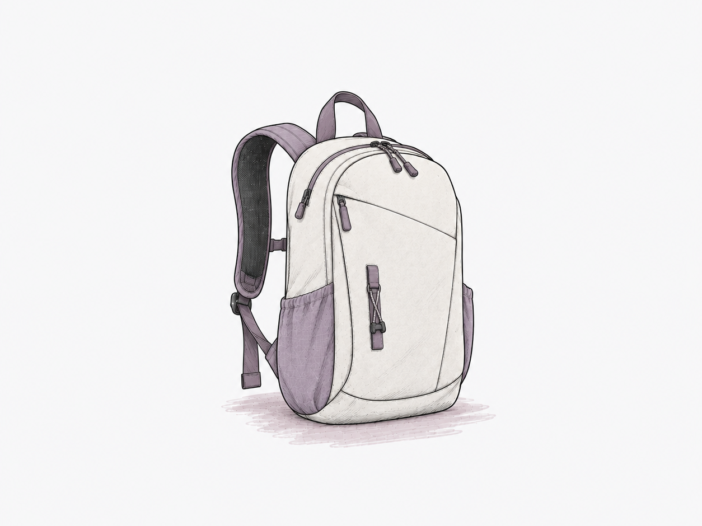
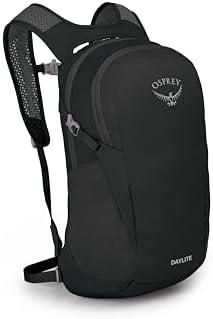
The Osprey Daylite 13L turns a small outdoor daypack into an everyday carry bag, but its flexible laptop sleeve and compact storage come with distinct limits.
13 L
Main bag capacity
1.2348 lb
Unloaded bag weight
16.93 inches
Manufacturer-stated height
Built for
- Light city commuting with daily essentials
- Short hikes with water and a packable layer
- Small carry kits needing two external bottle pockets
Not built for
- Bulky overnight gear and several large devices
- Unprotected laptops exposed to hard impacts
- Long rain exposure without an added cover
Where the Osprey Daylite 13L stops working
Consistent: the same pattern holds within the covered conditions · Varies the outcome can change with setup, load, fit, or use · Occasional an exception appears alongside stronger working evidence
| Decision area | Stops working when | Still works |
|---|---|---|
| Side bottle pocket fit Varies | Wide bottles strain the side mesh or demand extra retention. | Common slimmer bottles sit in the tall mesh pockets. |
| Usable main capacity Varies | Bulky shoes, jackets or several devices crowd 13 L. | The 13 L main compartment fits a jacket, plus snacks and lightweight daily essentials. |
| Carry comfort under load Varies | Overstuffing makes slim straps press into the shoulders. | The harness supports a modest day-hike or commute load. |
| Hydration access Varies | A full 3 L bladder can distort the shape and occupy cargo room. | A moderate reservoir leaves more space for day gear. |
| Laptop compartment fit Varies | A broad chassis or rigid laptop challenges sleeve space and back flex. | Supported 13–14-inch laptop setups fit the shared sleeve. |
| Rain resistance Varies | Sustained heavy rain exceeds DWR-only protection. | It can handle incidental splashes and light showers. |
| Device-area padding Varies | Bare devices remain vulnerable at the front, sides and bottom. | A back-facing panel separates the device from back pressure. |
Main deal-breaker: The shared unpadded laptop sleeve limits device protection even when a computer fits inside.
If your priority differs: Buyers needing a padded electronics compartment or substantial carrying capacity should start with a different pack.
How the Osprey Daylite 13L works
Bottle pockets work until bottle width becomes the constraint
The Daylite 13L places a stretch-mesh bottle pocket on each side, leaving the panel-loading compartment available for a jacket, snacks, and other day gear. The pocket walls rise around a bottle rather than holding it in a shallow open shelf. The two upper side compression straps can also help secure a bottle with a compatible cap loop. A 1-liter bottle fits in the covered use range, and a 26 oz Yeti can sit comfortably in the side pocket.
Bottle volume alone doesn’t determine fit. A 32 oz Nalgene can be tight even when other 32 oz bottles fit, and the stretch fabric must accommodate the vessel’s actual diameter and shape. A wider bottle pushes harder against the pocket and may require more stretching. The side-pocket result also changes if you pack the main body tightly. An older Osprey side pocket can lose elasticity over time; the same wear pattern doesn’t automatically apply to the current Daylite 13L mesh.
Side-pocket usefulness depends on bottle geometry. The Daylite keeps common water bottles accessible while you walk, but a wide 32 oz bottle cannot be assumed to fit securely.
The 13 L compartment makes every bulky item count
The Daylite 13L uses a large panel opening to make a compact 13-liter compartment practical for daily essentials. A thin layer, snacks, a few small items, and a light day-hike kit fit through the opening without requiring a full-size travel backpack. Its two external bottle pockets keep drinking water out of the center compartment, preserving room for a jacket or lunch. The manufacturer specifies 793 cubic inches, equivalent to 13 L.
The same compact depth makes bulky loads harder to arrange. Shoes or a thick jacket can take up a substantial share of the interior, and extra items can push the bag into an awkward rounded shape. A modest overnight change of clothes may be possible with minimal possessions; the 13 L figure does not turn the pack into a full overnight gear hauler. A 32 L Nebula offers a different volume class, while the smaller Daylite fits a less demanding walk or city itinerary.
Compact volume rewards a disciplined packing list. The Daylite works best for a day of essentials and loses its easy access once bulky clothing or multiple devices fill the main compartment.
The light harness changes character under heavy loads
The Daylite 13L carries a light kit with a spacer-mesh harness, an adjustable sternum strap and a removable 20 mm webbing hipbelt. The sternum strap helps keep the shoulder harness in place while walking. Mesh padding on the back and harness reduces the feel of hard contents against the body, while the narrow pack profile avoids the bulk of a large travel bag. The straps can stay comfortable with a jacket, food, and other lightweight necessities.
The comfort margin becomes narrower as the load grows or its shape changes. Slim shoulder straps concentrate more pressure when the bag is overfilled, and a bulky leather jacket or a heavy laptop changes how the packed weight presses onto the shoulders. A tight sternum strap stabilizes the bag without turning the removable webbing waist strap into a substantial load-transfer hipbelt. Loose strap ends can also dangle if left unmanaged.
The harness favors lighter day carry. The Daylite remains convenient for modest loads, but a heavy or overstuffed packing list can trade compactness for shoulder discomfort.
The reservoir sleeve trades water for packing room
The Daylite 13L has an internal reservoir sleeve, a hook, and a hose-routing opening for hydration on the trail. The sleeve functions separately from the main compartment, so you can place a reservoir against your back while keeping the center accessible for snacks or a layer. A 2-liter bladder fits comfortably with a light load elsewhere in the pack. The bag does not include a hydration bladder.
A 3-liter bladder can fit, but fit is not the same as practical carrying capacity. More water expands the flexible reservoir into the already small profile and can misshape the bag or consume space for other gear. Conflicting experience with 3-liter loads reflects the amount of additional cargo, bladder dimensions, and tolerance for a fuller bag, not a uniform rule for every 3-liter reservoir.
Hydration competes directly with packing space. The sleeve supports a useful hiking setup with a moderate bladder; larger water loads reduce the Daylite’s remaining capacity for clothing and food.
Laptop fit depends on chassis geometry
The Daylite 13L shares an internal sleeve between a hydration reservoir and a laptop or tablet. Osprey specifies fit for most 14-inch laptops, rather than a padded, rigid device bay with a fixed rectangular clearance. A 13.6-inch MacBook Air fits in an everyday commuting arrangement. A ThinkPad X1 Gen 13 and a Boox Max 13.3-inch e-ink reader also fit together in a named configuration, leaving a useful compact commuting arrangement.
A diagonal screen measurement cannot describe the entire chassis. The Daylite sleeve must clear the laptop’s actual width, height, and depth, and a rigid laptop won’t bend with the flexible back panel. A 14-inch notebook can fit, but it changes how the pack curves on the back. A 15-inch computer failed to fit in a narrower setup, while larger laptops placed outside the sleeve can fill most of the main compartment. That main-compartment accommodation doesn’t equal a secure sleeve fit.
The sleeve is flexible in purpose, not unlimited in size. The Daylite can carry appropriately sized 13–14-inch laptops, but wider machines and shared hydration space bring immediate fit and comfort trade-offs.
Water-repellent fabric has a rain limit
The Daylite 13L uses recycled polyester with a PFC-free durable water-repellent finish. The main fabric is 300D recycled polyester, while the lining and bottom use 600D recycled polyester. The finish can shed limited surface moisture, and the bag can keep belongings dry during light showers or mist. The finish supports travel in variable weather without making every seam, zipper, and opening waterproof.
Heavy rain changes the protection requirement. Water-resistant fabric is not a sealed dry bag, and a substantial soaking creates more paths for moisture to reach electronics or paper. Light rain protection cannot promise the same outcome in prolonged downpours. An Osprey Commuter Waterproof Cover or suitably fitted rain cover provides an additional barrier, although the cover is a separate accessory with its own fit and coverage limits.
Rain protection has a clear ceiling. The Daylite can handle incidental wet weather, but valuable electronics need independent protection when sustained rain is part of the route.
Laptop storage is not all-around cushioning
The Daylite 13L holds a laptop close to a firm back-facing panel, so the panel gives the device some separation from objects pressing against the wearer’s back. The multifunction sleeve makes it easy to fit a 13–14-inch laptop in a small daypack without a dedicated laptop-only exterior pocket. A Boox Max 13.3-inch reader and a ThinkPad X1 Gen 13 can share the packed space under this arrangement.
The internal divider itself lacks protective padding. A rigid back panel doesn’t wrap around the device’s front, side edges, or lower corners, so pressure from other packed contents can still reach delicate electronics. A little bottom cushioning may be present under a particular device, but the divider stays unpadded and bottom-impact protection varies with packing. A separate padded laptop case changes the protection arrangement but also uses part of the limited 13 L space.
Device fit does not mean impact protection. The Daylite provides an organizing sleeve and partial rear separation, while fragile laptops and e-readers remain exposed to impacts beyond the back-facing panel.
More details
Osprey attachment needs matching loops and carry position
The Daylite can attach to selected Osprey travel and backpacking packs, turning the compact 13 L bag into an auxiliary day-carry compartment. Osprey describes compatibility with several host packs, and a Daylite has been attached successfully to a Porter 30 Travel Backpack. A matching attachment lets the smaller bag carry daily essentials after you leave a larger travel pack behind.
Attachment depends on the exact host and carry position. A Farpoint 40 setup can use the rear webbing loops for back carry, while a front-carry attempt with its clips doesn’t connect the same way. A simple yes/no answer for a Rook 65 or a Farpoint model leaves the attachment method uncertain. The bag works as a secondary pack even when a particular set of buckles cannot mate with the host.
Matching hardware matters more than matching brand. The Daylite is useful as an Osprey add-on only when the host loops and carry arrangement match exactly.
The narrow harness favors a compatible shoulder fit
The Daylite 13L adjusts through its shoulder webbing and sternum strap, allowing the small back panel to sit securely on different torsos. The narrow body can suit smaller wearers without covering an unnecessarily large area of the back. The same adjustable layout also works for some taller wearers carrying only a camera, water, and a jacket.
Body height is not the only fit variable. A broad shoulder profile can pull the narrow harness toward uncomfortable pressure points, and the removable waist webbing lacks the broad padded wings of a load-bearing hiking hipbelt. The strap arrangement can stabilize a light day kit but can feel too narrow under a crowded or heavier load.
Side compression can slow access to the main zip
The Daylite 13L uses two side compression straps to tighten a partially filled body and control slack material around the contents. Compression helps maintain a slimmer pack profile when the center compartment is not filled.
The straps also cross the panel-opening route. Leaving the buckles closed can prevent you from opening the main zip fully, while releasing the straps leaves loose webbing and buckles to manage. The same simple hardware trades quick access for a tidier exterior under compression.
A light empty bag can still carry a heavy load
The Daylite 13L weighs a manufacturer-stated 1.2348 lb when empty. Its low starting weight and compact shape make it easier to use for quick errands or light hikes than a much larger load-carrying backpack.
The harness still has to carry whatever you put inside. Adding dense devices or heavy water bottles raises shoulder pressure even though the empty bag remains lightweight. The Daylite’s weight specification does not imply a safe heavy-load limit.
A vented foam back panel reduces but does not eliminate heat
The Daylite 13L uses a mesh-covered, die-cut foam back panel to allow ventilation at the wearer-facing surface. Air can reach more of the textured back contact area than on a completely flat, closed foam panel. The spacer-mesh shoulder harness supports a similarly breathable carry arrangement.
Airflow cannot remove every contact point. A warm hike can still leave sweat beneath the shoulder straps and in areas pressed firmly against the back panel. The ventilation benefit reduces heat buildup rather than creating a completely dry back.
Open organizers leave small items unsecured
The Daylite 13L combines a large panel-loading main compartment with a front organizer and a key clip. The main compartment swallows a lightweight jacket or snacks while the front pocket separates small daily objects from the larger gear.
The interior is intentionally sparse. Open pockets do not secure valuables behind an internal zippered closure, and small items can collect in the base of the bag. A fully packed front pocket can also press into the main compartment, making loading less convenient. A separate organizer pouch adds internal structure at the cost of some remaining room.
Cord pulls open easily but are not security locks
The Daylite 13L uses zipper pulls designed to open the main and front compartments easily. The flexible pull loops make the zippers easy to catch when moving between walking and transit.
Joining two cord loops does not create a cut-resistant lock. A gap can remain at the zip end, and the loops can be severed. The access hardware suits ordinary daypack use rather than protecting valuables as secured luggage.
The empty daypack flattens without becoming pocket-sized
The lightweight fabric body can lie relatively flat inside a suitcase when the Daylite 13L is empty. The soft compartment walls occupy less packing room without their normal day gear, allowing the bag to travel as a secondary daypack.
The structured back panel still limits how tightly the bag folds. The flattened shape isn’t the same as a fully frameless, pocket-sized packable bag, so some suitcase surface area remains necessary.
The grab handle doubles as a luggage pass-through
The harness grab handle on the Daylite 13L also functions as a luggage pass-through. The handle lets the small pack ride with a rolling suitcase when the handle and bag align with the opening.
The handle is not a dedicated rigid trolley sleeve spanning the full back panel. A mismatched suitcase handle or an unbalanced, overfilled bag can sit poorly, and an upright position isn’t guaranteed on every roller. The interface matters more than an informal description of the bag as luggage-compatible.
Under-seat fit needs the packed dimensions and carrier rule
The Daylite 13L measures 16.93 inches high, 10.24 inches wide, and 7.87 inches deep. The compact body fits beneath an aircraft seat on a tightly packed flight, with room for a minimal change of clothes or essential items. A packed Daylite can fit beneath a China Airlines seat, but acceptance still depends on the carrier and flight.
Personal-item limits depend on the carrier’s current policy and the bag’s packed shape. A full compartment or a restrictive airline sizer can change whether the Daylite is accepted at no extra cost. The side pockets may hold bottles outside the specified bag body, so final packed dimensions matter more than an empty-bag fit.
What remains to confirm before choosing
- Side bottle pocket fit: Confirm the intended bottle diameter before choosing.
- Laptop compartment fit: Confirm the intended laptop chassis and sleeve clearance before choosing.
- Host-bag attachment: Confirm the intended exact Osprey host attachments before choosing.
- Under-seat fit: Confirm the intended airline size allowance before choosing.
See the Osprey Daylite 13L on Amazon
More room is the evidence-backed reason to switch.
| If you need… | Look at… |
| More room for a 15-inch laptop/electronics load, broad shoulders, or bulky clothing | Osprey Daylite Plus — adds usable room, but gives up some of the 13 L Daylite’s smaller footprint. |
Looking for a compact solution? See our picks for the Best Small Laptop Backpacks.
