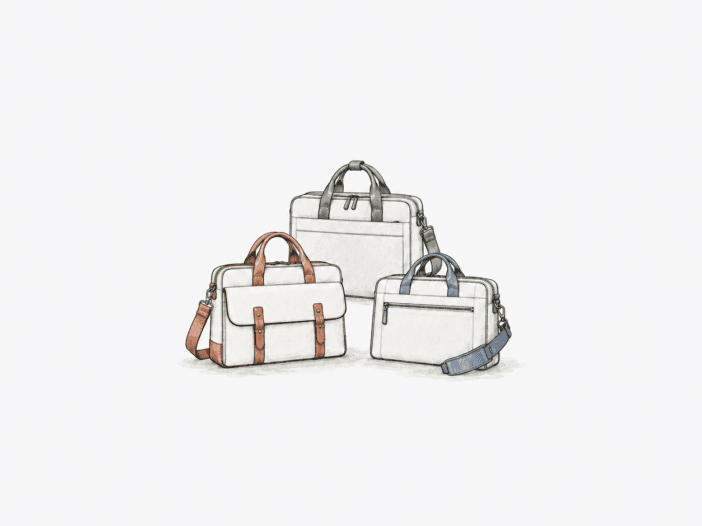
No single laptop briefcase works for everyone. The best choice depends on what you actually carry day to day. If you carry only a laptop and a few essentials, a slim case keeps things simple. Once you start adding documents, extra devices, chargers, or travel gear, a more compartmentalized briefcase starts making sense.
The main decision here is simple: how much organization and capacity do you need, and how much extra bulk or shoulder friction are you willing to put up with to get it?
Quick Comparison
| Product | Setup it matches | Main trade-off |
| Targus Classic Slim Briefcase — 16-inch | Slim commute or business carry with a laptop and essential accessories | Limited separation and less room for bulky accessories |
| Samsonite Classic Leather Slim Brief | Minimalist office carry and light trolley-linked travel | Limited storage headroom; some fit, material, and finish evidence is mixed |
| Lenovo T210 — 15.6-inch / 17-inch | Straightforward device-first work or school carry where size choice matters | Protection evidence is thinner; 17-inch feedback raises limited-padding concerns |
| Bellroy Tokyo Work Bag | Organized day-work carry with quick-access essentials and occasional travel | Fuller loads and shoulder carry expose capacity and strap-related friction |
| Kenneth Cole REACTION Out of the Bag Manhattan | Document-heavy, multi-device work and business travel | High capacity brings more bulk, weight, and load-sensitive shoulder carry |
| Wenger Mainframe Briefcase | Compartment-heavy tech/work loads and trolley-based business travel | Bulk plus recurring shoulder-attachment failures in some buyer reports |
Best Laptop Briefcases for Slim Laptop-First Carry
Slim briefcases work best when your load stays predictable—one laptop, basic accessories, maybe a few documents. You get less bulk, but the trade-off shows up fast if you start adding peripherals or paperwork.
Targus Classic Slim Briefcase — 16-inch: simple work carry with minimal excess bulk
The 16-inch variant fills the clearest minimalist role in this group. Size-confirmed buyer reports support office commuting, business use, and carrying a 16-inch laptop with a charger, mouse, documents, pens, and other small essentials.
- The fit: laptop- or tablet-first work carry where a slim professional footprint matters more than elaborate organization.
- The compromise: explicit 16-inch feedback points to limited internal separation and reduced room for bulky accessories.
- The boundary: one 17-inch-class example only barely fit, so larger-device compatibility should not be assumed.
If you often carry a large power brick, a thick notebook, or several peripherals, you have a stronger reason to step up to a more structured bag.
Read the Targus Classic Slim Briefcase Product Insight for a deeper look at device fit, organization, and the limitations worth checking before buying.
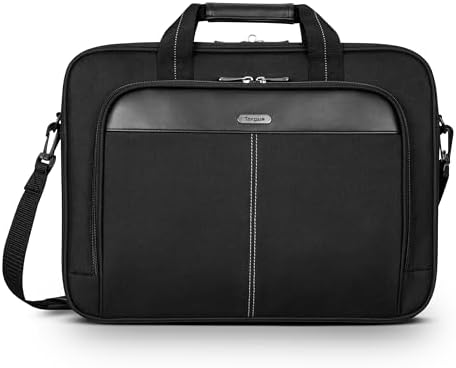
Samsonite Classic Leather Slim Brief: better aligned with polished office carry and light travel
Buyer feedback supports its role as a slim daily work carry, with a professional look and easy luggage-handle use. This bag works best for a controlled, laptop-centered load—not for hauling a high-volume work setup.
- What it handles well: a laptop, charger, cables, and some paperwork, all without turning into a bulky high-capacity bag.
- What to watch for: buyer reports are mixed on whether the material feels genuine, and some mention early surface or edge damage.
- Where capacity hits the wall: recurring feedback points to limited storage once you add bulky extras.
A 16-inch MacBook Pro fits in specific buyer examples, but those reports do not establish universal dedicated-compartment compatibility.
For the fit details, finish concerns, and storage limits behind that decision, explore the Samsonite Classic Leather Slim Brief Insight.

Let Device Fit Drive the Choice When Simplicity Matters Most
The Lenovo T210 is a size-driven choice, not a one-size-fits-all solution. The 15.6-inch and 17-inch versions give you different amounts of device margin and extra carrying space.
Lenovo T210 — 15.6-inch / 17-inch: decide how much room you want around the laptop
The 15.6-inch evidence supports work, college, and commuting loads built around a laptop, power items, paperwork, and smaller accessories. Size-confirmed feedback for the 17-inch version supports more room around 15.6- to 16-inch-class devices, plus extra space for documents or electronics.
- The 15.6-inch version fits best if you want portability and a snug laptop-plus-essentials setup.
- The 17-inch version gives you more margin if you need extra space for documents or electronics.
- Protection is the catch with the bigger version. Two separate 17-inch buyer reports mention limited padding, so the evidence does not support strong impact protection.
So picking the right size matters more here than just grabbing the bigger bag by default.
Before choosing between them, compare the size-specific evidence in the Lenovo T210 Product Insight.

More Organization Pays Off When You Reach Into the Bag All Day
Extra structure pays off when you need chargers, documents, small accessories, a bottle, or an umbrella to stay accessible all day. At that point, usable organization matters more, but so does how the bag handles when you pack it full.
Bellroy Tokyo Work Bag: organized day-work access with capacity limits to consider
Buyers consistently value its work-appropriate appearance, laptop padding, organization, and front-pocket access. Named 16-inch laptop examples are included, although actual fit depends on the device profile rather than screen size alone.
- Why consider it: organized access to a laptop and multiple day-to-day essentials without relying on one large, undivided space.
- The main friction: recurring feedback mentions shoulder-strap geometry and comfort, attachment wear or fraying, and deep-pocket retrieval.
- The capacity catch: some buyers report that usable space gets tight as the bag fills up.
So the evidence supports it as an organized work bag, not as proof that every listed liter turns into comfortable shoulder-carrying space.
For the complete trade-off between organization, usable space, laptop fit, and strap behavior, read the Bellroy Tokyo Work Bag Product Insight.

Higher Capacity Works Best When the Extra Load Is Routine
Larger briefcases make sense when you regularly carry multiple devices, stacks of documents, chargers, and travel accessories—not just once in a while. As your load grows, bulk, balance, strap behavior, and hardware durability start to matter more.
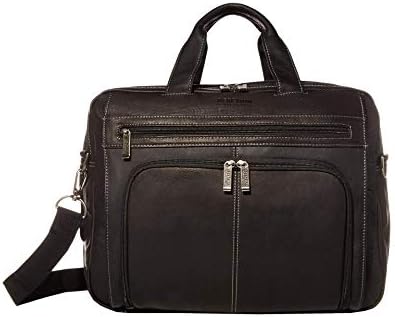
Kenneth Cole REACTION Out of the Bag Manhattan: expandable space for document-heavy work
Buyer evidence supports substantial organized loads involving multiple devices, files, books, chargers, cables, and business or air-travel use. Its expandable, compartmentalized layout is the main reason it belongs here.
- Where the capacity pays off: multi-device work, larger document loads, and business travel where item separation matters.
- What comes with that space: recurring buyer reports mention bulk and loaded weight.
- What needs checking over time: shoulder-strap stability and zipper durability receive mixed feedback, while larger laptop fit remains conditional.
If your load is just a laptop and charger, you’ll likely leave most of that extra capacity unused. The bigger case makes more sense when documents, electronics, and work gear are part of your daily carry.
To see whether the extra organization justifies that added bulk for your setup, visit the Kenneth Cole REACTION Out of the Bag Manhattan Product Insight.
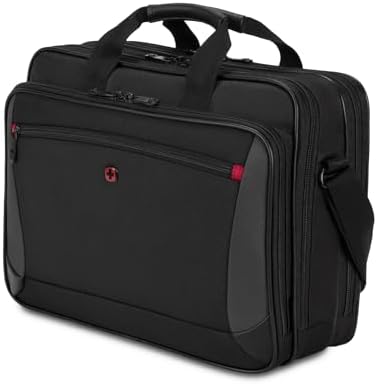
Wenger Mainframe Briefcase: extensive compartmentalization with a meaningful strap caveat
The strongest recurring evidence centers on separation for laptops, tablets, documents, cables, chargers, and other office electronics. Trolley-handle use and business-travel contexts are also directly represented.
- Its main role: work or tech loads where you need dedicated compartments more than a slim profile.
- Its biggest caution: some buyers report years of use, while others describe tearing, seam issues, or hardware failure around the shoulder-attachment area.
- The loaded-carry trade-off: bulk, weight, and balance get more noticeable as you fill up the extra compartments.
Also check exact 17-inch compatibility against actual device dimensions rather than inferring from isolated buyer examples.
For fuller evidence on organization, long-term use, and the conflicting shoulder-attachment reports, see the Wenger Mainframe Briefcase Product Insight.
How to Choose Among These Options
Start with what you actually carry on a normal workday, not the maximum a bag could hold in theory.
- Laptop + a few essentials: the slimmer Targus and Samsonite options avoid capacity you may never use.
- Device-fit margin is the main concern: the Lenovo T210 makes size selection itself the important decision.
- You repeatedly access smaller work items: Bellroy shifts more emphasis toward structured organization and quick access.
- Documents, multiple devices, and travel gear are routine: Kenneth Cole and Wenger provide stronger reasons to accept a larger footprint.
- The bag spends long periods on one shoulder: prioritize strap comfort, attachment construction, balance, and loaded weight over headline capacity.
What to Check Before Choosing
A few practical checks can prevent the most obvious mismatch.
- Measure the laptop itself, not only its screen size. Several 16- and 17-inch-class examples in the buyer evidence depend on the device’s actual dimensions and profile.
- Lay out the bulky items you carry most often. A mouse, power brick, thick notebook, second device, or stack of documents can quickly tip the balance on whether a slim briefcase has enough room.
- Think about how you actually carry the bag. Shoulder friction matters more when you carry a heavier load for longer.
- Verify storage features you consider mandatory. Kenneth Cole evidence does not establish a dedicated bottle pocket or key clip, while Wenger evidence does not establish an exterior bottle pocket.
- Set weather expectations carefully. Official Targus water-protection descriptions conflict; Kenneth Cole is described as not water-resistant, while Wenger is described as not waterproof.
- Do not assume finish or material consistency. Samsonite buyer reports contain mixed evidence around material authenticity and cosmetic durability.
