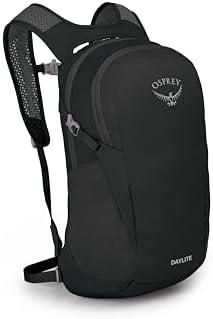
The Osprey Daylite 13L is a light, low-bulk daypack defined by a clear trade-off: it remains easy to carry as long as your load stays intentionally small, but the fixed 13 L volume sets a hard limit for bulky clothing, larger tech, or organization-heavy carry.
The pack spans commuting, short hikes, hydration, and travel-day use, but both device and weather protection are lighter-duty than the range of uses might imply.
The Daylite works best when compact carry is the priority.
Best for: Light everyday carry, short hikes, destination day use, and compact travel loads where a small footprint matters more than room to expand.
| Decision check | What matters |
| Usable capacity | 13 L works best for a deliberately light load; bulky clothing, shoes, or several electronics leave little reserve. |
| Device fit | Laptop fit depends more on chassis geometry than screen diagonal; fit becomes uncertain near the 14–15-inch boundary. |
| Protection boundary | Back-side structure adds support, but the laptop area does not provide full perimeter impact protection. |
| Secure organization | Open organizers suit a short essentials list; buyers needing a zippered internal valuables pocket should look elsewhere. |
| Weather exposure | Light rain is within the practical range; sustained or hard rain requires a separate protective barrier. |
Main deal-breaker: Bulky loads fill the 13 L volume quickly, and the laptop area lacks full perimeter padding; the interior favors open organization over secure, closed pockets.
If your priority differs: Move to a larger carry size when your normal load already includes a laptop, shoes, bulky layers, or several electronics; use a different protection strategy when fragile tech needs built-in impact isolation.
Thirteen liters leaves little room for load creep.
The 13 L capacity is a physical boundary, not an abstract number. The fixed cavity means bulky items directly displace each other, and a wide object can reach the pack’s cross-section before the full nominal volume is usable. Compact tech, a light layer, and essentials fit within the limit, but adding shoes, books, or thicker clothing quickly uses up the remaining space.
- A 14-inch HP ProBook, small shoes, and gym clothes fit inside, but the compartment reaches its limit at this load. If your daily carry matches this combination, expect minimal reserve capacity.
Light rain is inside the comfort zone; sustained rain is not.
The Daylite sets an exposure boundary instead of offering waterproof construction. The shell sheds light rain and mist, but sustained or heavy rain exceeds the bag’s protective range and allows moisture to reach the interior. If you carry moisture-sensitive gear, a separate barrier is required when hard rain is expected.
- Keep the pack as-is: Light or limited rain is the safer use case.
- Hard-rain setup: For rain beyond light showers, the Osprey Commuter Waterproof Cover adds the external barrier the Daylite lacks; if your gear cannot tolerate wet-through, plan on carrying the separate cover.
Open organization is efficient until you need closures for valuables.
The front organizer holds a short list of essentials—keys, phone, wallet, snack bar, and similar items—using open pockets and a key clip. Without closures, small items can shift or escape, and a packed front compartment compresses into the main compartment, reducing the flexibility of the overall packing geometry.
If a zippered internal pocket is a hard requirement for valuables, the Daylite doesn’t meet it. A backpack with closed internal organization is the right category change, rather than trying to make open pockets behave like secure storage.
Device fit and device protection are separate decisions.
The laptop area provides asymmetric protection. The rigid or padded structure on the wearer-facing side supports the rear face of your device, but the inner divider and front-facing directions lack equivalent padding. Exposed edges and faces remain more vulnerable to side, bottom, or front pressure, even when the device fits within the compartment.
A Boox Max 13.3-inch e-ink reader and a 14-inch laptop both fit within the compartment, but side, bottom, and front-pressure impacts remain the weak points. If your device is fragile in these directions, you’ll need a separate protective case to cover the gap. If you need full built-in perimeter impact protection, the Daylite doesn’t provide that structure.
Host-pack attachment depends on the exact interface.
Attachment depends on the Daylite’s clips or webbing aligning with the receiving points on your host pack in the intended orientation. Changing the host model, generation, or carry orientation alters that physical match, so family-level compatibility does not guarantee a working travel setup for piggyback or front carry.
- Front-carry limit: The Osprey Daylite does not fit this front-carry setup with the Osprey Farpoint 40 because its clips do not connect to the Farpoint straps; if you need this orientation, the pairing will not work.
One-size harness fit is broad, not universal.
The shoulder and sternum adjustment range covers a variety of body sizes, but torso length and shoulder width still affect the strap path. Raising or tightening the harness pulls the straps toward the neck, and broader shoulders increase pressure through the narrow shoulder straps. The adjustment range is broad, but a physical body-fit boundary remains.
If you have broad shoulders, a very short torso, or plan to remove the hipbelt completely, inspect the exact unit. Hipbelt removability varies across observed configurations, so don’t assume clean removal from the Daylite name alone.
Bottle capacity labels do not predict pocket fit.
Bottle diameter and profile determine fit in the elastic pocket. A 32 oz Nalgene reaches the pocket’s limit, while a 26 oz Yeti bottle fits within the available clearance. The fit depends on base width, profile, and the pocket’s stretch, not just the ounce label. A wider bottle at this size can exceed the pocket’s clearance even when a slimmer bottle fits.
That is why two bottles with the same nominal capacity can behave differently. Around 32 oz, the fit boundary is bottle-specific, not capacity-specific.
| Bottle | Side-pocket outcome |
| 28 oz Hydro Flask | Fits in the side pocket. |
| 32 oz Nalgene | Barely fits; clearance is tight. |
| 32 oz Hydro Flask | Fits in one supported pocket setup. |
The harness is comfortable only while the load stays proportionate.
The Daylite is designed to carry comfortably within the light-load envelope set by its 13 L size. Overfilling the bag concentrates more force through the narrow shoulder straps and alters how the compact pack sits against your back. Packing a bulky leather jacket for six hours of walking pushes the straps into the shoulder, while an essentials-only load remains comfortable for three hours.
Load discipline matters more than having chest or waist straps. The harness stabilizes a reasonable day load but doesn’t extend the volume or comfort envelope beyond the pack’s physical limits.
A 3 L reservoir fits by taking space from everything else.
The hydration sleeve occupies the same slim, back-adjacent volume as the rest of the pack’s cargo. As a bladder expands, it takes up the usable depth needed for clothing, food, or other gear. Reservoir size directly changes both the pack’s shape and the remaining cargo capacity.
A 3.0 L CamelBak fits in the sleeve, but leaves almost no room for other gear. Carrying a full 3 L means hydration dominates the 13 L load. A 2 L or smaller bladder keeps the pack within a range where you still have meaningful cargo capacity.
Hose routing also varies by configuration. If hydration is central to the purchase, that configuration difference can determine whether the intended drinking setup works at all.
Light running can work, but the suspension is not running-specific
Shoulder and sternum adjustment can hold a light load close for occasional running. Still, the general-purpose harness and loose strap system do not provide running-specific balance or bounce control. This structural difference becomes critical if running is the primary use for the pack.
If minimized bounce is a hard requirement, the Osprey Rev line shifts the design intent toward running-specific balance and reduced bounce. Still, this comparison does not identify a specific Rev model. The Daylite remains the better fit when hiking, travel, and general day use matter more than running-specific suspension.
Laptop size labels hide the geometry that actually determines fit.
The laptop sleeve matches the pack’s body-facing geometry, so chassis width, depth, thickness, and stiffness set the true clearance—not the screen diagonal. A rigid device can resist the flexible back panel’s curve, reducing how naturally the panel conforms after the laptop is loaded.
A Boox Max 13.3-inch e-ink reader and ThinkPad X1 Gen 13 both fit together, which sets a benchmark for a compact two-device load when chassis geometry aligns. Near the fit boundary, this pairing is a geometry reference, not a screen-size guarantee. Another device with the same diagonal can fit differently, and a larger laptop can occupy the main compartment even if it can be inserted.
At the 14- to 15-inch boundary, chassis geometry—not screen size—determines whether a device fits. Screen size is only a starting reference, not the fit specification.
Durability looks encouraging across varied real-world loads, without a lifespan promise.
The Daylite maintains structural integrity after several months of domestic and international travel with overstuffed loads, about 1 year of gym and hiking use with exposure to rain, swim gear, and water, and more than 1 year of regular hiking through sun, wind, and rain. Extended use under these conditions does not result in structural failure, even with frequent loading, unloading, or changes in carrier.
These durations set a benchmark for continued function under the stated loads and exposures. They do not define a fixed service life, a universal first-failure point, or convert these benchmarks into a guaranteed lifespan.
Under-seat success depends on packed shape and the current airline rule.
The Daylite’s soft body changes shape with its load, so airline acceptance applies to the packed bag rather than the model name alone. A more restrained load can preserve the compact profile; a fuller load can expand the same bag toward a carrier’s sizer or under-seat limit.
Packed for a four-day Flair trip with a bottle in the side pocket, the Daylite fit as a personal item with width to spare. This result sets a benchmark for physical compactness within airline limits, but does not guarantee acceptance on another airline, fare, or under future rules.
What to check before buying
- Laptop: Bring your device and seat it inside the sleeve before purchase.
- Bottle: Try your bottle in the pocket and shake the bag to confirm it stays put.
- Hydration: Inspect for the tube port and hook before choosing a bladder.
- Host pack: Recreate the planned piggyback or front-carry connection before travel.
- Airline use: Use the carrier’s current sizer with the bag fully loaded.
Buy it when you want a small load.
Choose it if:
- You intentionally keep everyday carry compact and value low bulk over spare capacity.
- Your laptop fits, and modest built-in padding is enough, or you already use a protective case.
- You want one small pack to cover commuting, short hikes, hydration, and travel-day use.
Skip it if:
- Your normal load combines a laptop with bulky clothing, shoes, or several electronics and already crowds 13 L.
- You require a zippered internal valuables pocket or full built-in perimeter device padding.
- Sustained rain, running-specific bounce control, or another specialized requirement drives the purchase.
See the Osprey Daylite 13L on Amazon.
More room is the evidence-backed reason to switch.
| If you need… | Look at… |
| More room for a 15-inch laptop/electronics load, broad shoulders, or bulky clothing | Osprey Daylite Plus — adds usable room, but gives up some of the 13 L Daylite’s smaller footprint. |
Looking for a compact solution? See our picks for the Best Small Laptop Backpacks.
