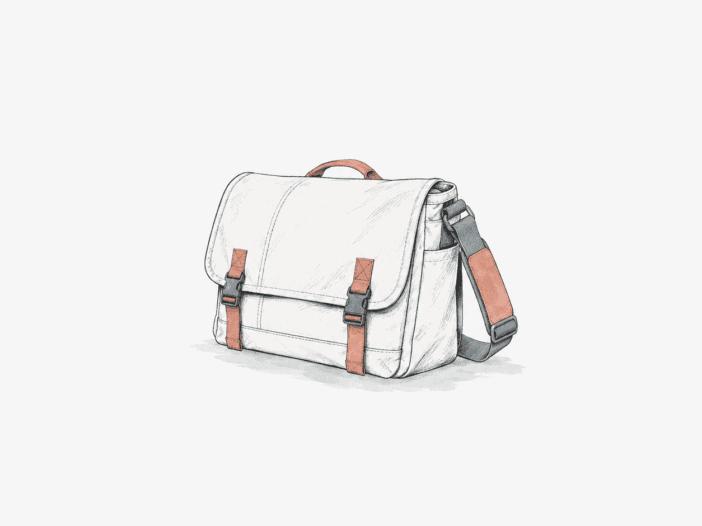
The Timbuk2 Classic Messenger works best when you pick the size for your whole carry, not just your laptop or tablet. X-Small and Small handle compact, device-centered loads. Medium shows the widest range in buyer evidence, covering work, books, campus, gym, camera, and personal-item setups. Large holds more, but packed bulk starts to matter for comfort and fit.
The soft messenger shape gives you flexible space. Still, organization and carry comfort depend on bottle shape, pocket layout, strap adjustment, top-handle balance, and how much padding protects your laptop. These details change as your load changes.

Product Snapshot
Size affects how the bag works more than any single feature.
| Product detail | Decision relevance |
| X-Small, Small, Medium, and Large | The evidence shows meaningful role changes from compact tablet/EDC carry to broader work and high-capacity loads. |
| Soft, flexible flap messenger format with shoulder carry | Flexible packing is a strength, but the bag does not behave like a rigid briefcase; handle balance and pocket structure can matter. |
| Device carry appears across multiple sizes | Direct examples include a 14-inch MacBook Pro in Small and 14- and 15-inch laptops in Medium, but the evidence does not support a universal laptop-fit chart. |
| Internal organization and bottle storage are repeatedly mentioned | Utility depends on item geometry. Some buyers found the pockets useful; others found them narrow, interdependent, or too small. |
| Laptop-impact protection is not established by testing | Multiple buyer reports raise padding concerns, so buyers who expect substantial drop cushioning should verify protection separately. |
| Air-travel use is supported but not universal | Medium has successful personal-item examples; Large under-seat use becomes more conditional when the bag is fully packed or filled with bulky semi-rigid items. |
Buyer Evidence Metrics
Buyer evidence points to three main decisions. Medium depends more on item shape than on volume alone. Roomy storage does not always mean useful organization. The Small size still lacks enough evidence for a clear capacity rule.
| Buyer Question | Metric | Evidence |
| Does Medium stay predictable when the load changes from conventional laptop/book items to tall, wide, or bulky shapes? | UBC 1.00 | Limited · n=6 |
| Across reports where the size was not identified, does roomy storage also come with organizer-pocket limits? | TCR 0.50 | Limited · n=6 |
| Where does Small stop behaving like a compact laptop-centered bag and become closure-constrained? | UBC — | Very Limited · n=2 |
How these metrics work:
- Use Boundary Consistency (UBC) measures how consistently eligible buyer evidence separates a supported use case from the condition where that use becomes more limited or conditional.
- Trade-Off Coupling Rate (TCR) measures how often an observed product strength appears together with a specific friction among eligible buyer evidence.
- n is the number of relevant, eligible, deduplicated buyer observations used for that metric—not the product’s total review count.
These numbers reflect buyer evidence, not lab-tested performance scores. For details on how these metrics work, see the methodology.
UBC 1.00 for Medium does not mean a 100% chance that a given setup will fit. It means the six eligible observations were consistent about the boundary: conventional laptop/book or compatible-bottle loads worked. At the same time, tall or wide bottles and bulky footwear introduced shape-specific friction.
A TCR of 0.50 shows a mixed pattern. In the unknown-size reports, roomy storage and pocket complaints showed up together only half the time. Some buyers found the bag spacious, while others ran into organization issues.
The Small size boundary is based on just two eligible buyer reports. That sample is too small to publish a UBC number.
Fit–Friction Matrix
Check your actual carry against the fit boundaries in the evidence. Do not assume the next size up or down will work the same way.
| Buyer Setup / Context | Fit Signal | Main Friction |
| X-Small with a tablet, phone, charger, cords, and compact EDC items | Generally Works | Organizer width, strap hardware/loose-webbing management, and Velcro noise can matter more than raw capacity. |
| Small with a compact 13–14-inch laptop-centered daily load | Specific Example Only | A fuller load with lunch, bottle, and miscellaneous items can interfere with flap closure, and buyer reports raise laptop-padding concerns. |
| Medium with a laptop, books, multi-device work items, or similarly conventional shapes | Recurring Strong Fit | The practical boundary is less about total space than about the shape of what is added. |
| Medium with tall/wide bottles or bulky footwear | Conditional Fit | Tall bottles can protrude, wider insulated bottles may not fit the internal sleeves, and bulky shoes can push the load toward Large. |
| Large for high-capacity carry or bike/train use | Generally Works | Higher capacity brings more overall bulk; the stabilizer strap can help active carry, but the larger footprint remains part of the trade-off. |
| Large used under an airline seat when heavily packed or filled with bulky semi-rigid items | Conditional Fit | Under-seat placement becomes less predictable as the packed load becomes harder and bulkier. |
Variant Fit Patterns
Pick your size based on what else you carry with your device.
- X-Small: Best-supported as compact tablet/EDC carry. Direct examples include an iPad plus phone, charger, cords, flashlight, pens, and other small items. The evidence does not establish a reliable laptop-size ceiling for this variant.
- Small: Fits some laptop-centered loads, like a 14-inch MacBook Pro. Headroom is the main warning. One buyer with a 13-inch laptop, lunch, bottle, and extras could not close the flap all the way. Reports also question the amount of laptop padding.
- Medium: Shows the widest range in buyer reports. Buyers used it for laptop and book commutes, campus loads with multiple devices, air travel as a personal item, gym gear, heavy books, and a camera insert with a full Sony kit. The main limit is item shape, not just volume.
- Large: Handles bigger loads. One buyer used it for a bike-to-train commute and found the cross-chest strap kept the bag stable. For air travel, under-seat fit becomes less predictable if you pack it full or carry bulky, semi-rigid items.
What Buyers Should Check Before Buying
Test your full daily load in the bag size you plan to buy. Pay attention to the carry details that matter for your routine.
- Pick your size for your whole load, not just your laptop. Small fits a laptop, but lunch, a bottle, and extras can still make the flap hard to close.
- Check bottle shape, especially if you use Medium. One buyer fit a 32 oz double-wall steel bottle. Another found a tall Hydro Flask stuck out. Wider insulated bottles did not fit. Do not rely on volume alone.
- Decide how much built-in laptop padding you need. Buyers question the amount of protection around the laptop area. No impact-test data appears in the evidence.
- Check shoulder comfort and strap adjustment separately. Some buyers liked the padding and comfort. Others reported extra webbing, twisting, loose keepers, or sliders slipping under heavier loads.
- If you use the top handle a lot, see how the soft bag body affects balance. Several buyers found the handle off-center or unbalanced for more than quick lifts.
- If you want to use Large as an airline personal item, check the packed shape. Some buyers fit it under the seat, but bulky or rigid loads make under-seat fit less reliable.

Not sure whether flexible capacity matters more than laptop protection or office organization? Compare the alternatives in our Best Laptop Messenger Bags roundup.
