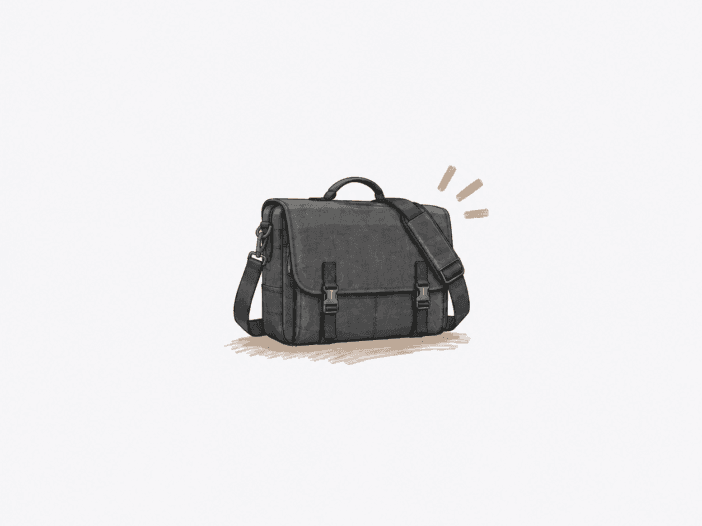
The Risky Business fits best for a straightforward work setup: one 13- or 14-inch laptop or tablet, a notebook or papers, and a few compact accessories carried by shoulder or crossbody. The main trade-off sits right at the core of its appeal. You get a soft, compact messenger that looks office-ready, but you give up rigid structure, built-in laptop padding, and reliable space for bigger devices or heavier loads.

Product Snapshot
The real question isn’t whether this messenger can hold a laptop, but how much risk you want to take on fit, protection, and carrying a full load.
| Product detail | Decision relevance |
| Soft leather messenger format with shoulder/crossbody carry | Best aligned with buyers who want a flexible professional messenger rather than a rigid briefcase. |
| Open main compartment with no dedicated padded laptop pocket | Laptop fit does not equal built-in impact protection; buyers who want more protection may need a separate sleeve. |
| Smaller laptop setups are more consistent; 15–16-inch reports conflict | Exact device width, height, thickness, sleeve use, and remaining load matter more than screen-size labels alone. |
| Magnetic flap hardware appears across the evidence, with signs of hardware changes over time | Quick access is part of the appeal, but closure feel and reliability are not consistent across all reports. |
Buyer Evidence Metrics
Laptop size sets the most consistent boundary in buyer reports. Closure and compact capacity matter too, but those trade-offs only show up in some eligible reports, not across the board.
| Buyer Question | Metric | Evidence |
| How consistently does the evidence separate smaller-laptop setups from larger-device fit uncertainty? | UBC 0.62 | Strong · n=34 |
| How often does positive magnetic-flap use appear together with closure-reliability friction? | TCR 0.38 | Moderate · n=8 |
| How often does compact-profile praise appear together with a practical load-capacity trade-off? | TCR 0.38 | Moderate · n=8 |
How these metrics work:
- Use Boundary Consistency (UBC) measures how consistently eligible buyer evidence separates a supported use case from the condition where that use becomes more limited or conditional.
- Trade-Off Coupling Rate (TCR) measures how often an observed product strength appears together with a specific friction among eligible buyer evidence.
- n is the number of relevant, eligible, deduplicated buyer observations used for that metric—not the product’s total review count.
These are buyer-evidence signals, not product-performance scores or probabilities. See how these buyer-evidence metrics work.
Fit–Friction Matrix
Treat the matrix as a setup check. The Risky Business gets less predictable when you push device size, load bulk, or start relying on the closure and top handle.
| Buyer Setup / Context | Fit Signal | Main Friction |
| 13–14-inch-class laptop + notebook/files + compact charger, mouse, phone, or cables | Recurring Strong Fit | Bulky extras or book-heavy loads begin to consume the compact capacity. |
| 15–16-inch-class laptop with minimal extras | Mixed / Variant-Dependent | Reports range from clean fit to tight fit or no fit; device dimensions, thickness, sleeve use, and remaining load matter. |
| Light-to-moderate daily work carry by shoulder or crossbody | Generally Works | Comfort and strap behavior become less predictable as the bag gets heavier or fuller. |
| Book-heavy school load or multiple-device/full carry | Limited Fit | Strap pressure, closure alignment, and practical capacity become recurring concerns. |
| Frequent-access commute using the magnetic flap | Conditional Fit | Quick, quiet access is valued, but weak or finicky magnets and snap/lining durability appear in other reports. |
| Loaded briefcase-style carry from the top handle | Limited Fit | The handle is repeatedly described as off-center, awkward, or stressed under meaningful weight. |
Smaller laptops are the cleanest match; 15–16-inch fit is not predictable
Buyers with 13- or 14-inch laptops report a consistent fit. These setups handle notebooks, files, chargers, and other compact work gear without surprises. Fit reports get much less predictable once you move into the 15- or 16-inch laptop range.
UBC 0.62 does not mean you have a 62% chance your laptop will fit. It means the eligible evidence only moderately separates smaller-laptop setups from the larger-device boundary. Some buyers get a 15-, 15.6-, or even 16-inch laptop to work, but others hit a tight fit or no fit with the same size label.
Screen size alone is a weak shortcut. For a larger laptop, check the actual exterior dimensions, thickness, whether you use a sleeve, and how much else you plan to carry in the main compartment.
Compact carry works best when you resist turning it into a heavy school bag
The compact profile works best when you keep the load tight: one laptop or tablet, papers, a charger, mouse, phone, cables, and a few personal items. Buyers who stick to this setup call it manageable for work and commuting.
Capacity friction shows up when you try to pack thick books, multiple devices, a big lunch, bulky headphones, or a full school-style load into the same compact bag. TCR 0.38 means some buyers praise the compact profile while others hit the load ceiling. Compactness doesn’t automatically cause a capacity problem, but the risk rises as you add bulk.
One buyer managed to fit two 15-inch laptops, an iPad, and other gear, but that is an outlier, not the bag’s normal working range.
The magnetic flap favors access over closure certainty
If you dislike buckles or noisy clasps, the magnetic flap gets points for quick, quiet access. Still, buyer reports often mention closure issues.
Buyers mention magnets that need careful alignment, weak closure when the bag is full, snaps pulling away from thin lining, and long-term attachment failures. TCR 0.38 means convenience and closure friction sometimes show up together, but not often enough to call failure a given.
If you need secure closure with a full load, especially on crowded public transit, treat this as a real condition to check, not something to assume.
Soft structure is part of the appeal—and why the top handle is the wrong primary carry method
Buyers call the flexible body comfortable against the hip and less bulky than a hard case. The same softness means the bag can sag or lose shape when lightly packed. What you put inside partly decides how it carries.
The shoulder or crossbody strap is the carry method buyers actually support. The top handle gets called off-center, awkward, or not up to real weight. If you want to carry it like a briefcase, treat that as a real limitation, not just a minor quirk.
Long-term durability is too mixed for a single lifespan claim
Some buyers get years of daily use with the bag still looking good, even past a normal replacement cycle. Others report early failure at the strap, handle, lining, snap attachment, or leather finish.
Buyer evidence runs from 2011 to 2026 and covers several closure and material changes. Since those changes do not line up with named variants, you cannot make a single claim about how long a current bag will last.
The safest read is narrower. Long service is possible, but buyers should focus on closure attachments, strap and handle stress points, lining wear, and finish consistency.
What Buyers Should Check Before Buying
The Risky Business works best when you check the few conditions that actually change the buying outcome.
- Measure your larger laptop instead of trusting the screen-size label. Fit reports vary for 15- and 16-inch devices, even when the size label looks the same.
- Decide if you need built-in laptop padding. The main compartment can carry laptops, but buyer evidence does not show a dedicated padded laptop section.
- Plan to carry the bag by shoulder or crossbody. The top handle doesn’t get consistent support as a loaded, briefcase-style carry point.
- Keep your load realistic. Books, multiple devices, bulky accessories, or a stuffed main compartment all raise the chance of strap, closure, and capacity friction.
- Match the flap closure to your security needs. Magnetic access is convenient, but if you want firm closure, factor in reports of weak magnets, alignment issues, and attachment wear.
- Inspect the finish and hardware when the bag arrives. Buyer reports vary on leather finish, color transfer, scratches, and hardware details. The long evidence window points to product changes that don’t match the variant names.
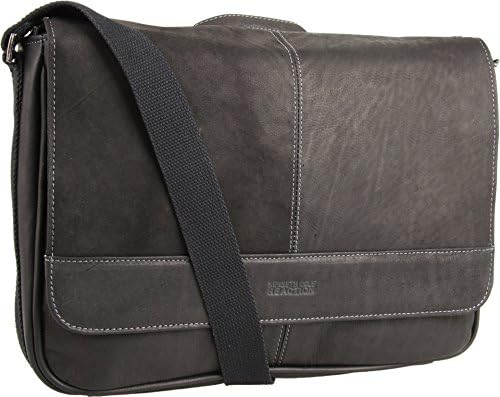
If you are still weighing soft professional carry against better-padded or more structured options, see our guide to the best laptop messenger bags.
