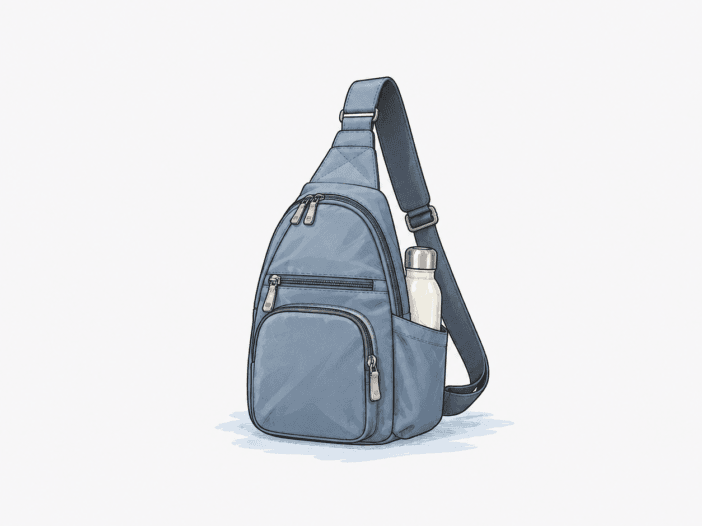
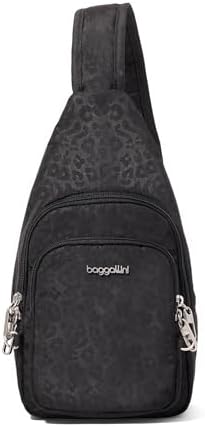
Buyer evidence points to the Baggallini Securtex Daytripper Sling as a compact, security-focused carry option for travel and everyday use when the load is mostly phone, wallet, passport or cards, keys, sunglasses, small power accessories, medications or toiletries, snacks, and similarly sized essentials. It is most convincing when you want those items close to the body without moving up to a backpack.
The Daytripper stays flexible until you add something larger. A tall bottle, book, or bigger phone can push the compact format past its comfort zone. Strap reach and locking hardware set their own fit and access boundaries.
There is no real size decision here. One Size is the only supported option, and buyer evidence shows no functional difference between color choices. What matters more is what you pack, where you want the sling to sit, and how much access friction you are willing to accept from the security hardware.
Decision Snapshot
| Decision Area | What the Buyer Evidence Suggests | Main Boundary |
| Cleanest fit | Compact travel or everyday valuables and digital essentials carried close to the body | Books, larger items, or a fuller “just in case” load reduce flexibility |
| Bottle carry | Small or slim bottles can work when space is reserved for them | Taller or bulkier bottles, or a fuller main compartment, make bottle carry conditional |
| Strap and body fit | The adjustable, switchable strap works in many front or crossbody setups | Several buyers wanted more reach or a lower position, while other buyers reported adequate length |
| Security vs access | Locking or clip-style closures are a recurring reason buyers choose the sling | Some buyers report slower or harder opening and retrieval when the security hardware is engaged |
| Construction watchpoint | Many buyers report durable use, but the anti-slash system has a recurring specific complaint | Five distinct reports describe internal wire or cable exposure after use; the evidence cannot establish an overall defect rate |
| Variant/configuration | No decision-relevant size split is supported | One Size means the practical decision depends on load, body position, and access priority rather than variant choice |
Does It Match Your Setup?
| Buyer Setup / Context | Fit Signal | Main Friction |
| Essentials-focused travel in crowds or transit, with the sling kept close to the body and security closures used | Generally Works | Locking or clip-style hardware adds extra opening steps for some buyers |
| Phone, wallet, passport/cards, keys, sunglasses, small power accessories, medications, and other compact daily items | Generally Works | Flexible space tightens when a book, larger item, or bulkier addition enters the load |
| Small or slim bottle with space deliberately reserved for it | Conditional Fit | Taller or bulkier bottles, or a fuller main compartment, can make the bottle impractical |
| Buyer who wants the sling to sit lower or needs more strap extension | Conditional Fit | Several buyers report short-strap friction, although other body-fit reports show adequate reach |
| Load that regularly includes a book, larger bottle, or more “just in case” capacity | Limited Fit | Buyers in these setups report paring down or moving to a larger sling |
The Daytripper works best as a secure essentials carry. It stops being predictable when a single larger item starts to shape your packing plan.
The Load Stays Easy Until One Larger Item Enters the Mix
Buyer reports show substantial small-item capacity for the footprint. One nearly 12-hour Disney World example included two phones, a charging bank, medications and toiletries, keys, two pairs of sunglasses, a wallet, snacks, and other small items; that buyer reported no shoulder pain during the day.
Other examples sharpen the boundary rather than simply repeating that the bag “holds a lot”:
- On a 16-day Portugal trip, one buyer fit a small collapsible umbrella across the bottom of the main compartment while using the front area for a phone and quick-access items.
- A slim travel setup with cash, passport, and sunglasses reportedly left no room for a separate travel book.
- One buyer carrying only a water bottle, wallet, and sunglasses still wanted more room and moved to the next-size Baggallini Securtex sling.
- Bottle reports split by shape and remaining load: slim or small bottles work in multiple examples. At the same time, a 16 oz Corkcicle was reported as too tall, and a larger Owala-style bottle became difficult alongside other contents.
The real capacity check isn’t pocket count. It is about the largest single item you need to carry. A tall bottle or book can force a role change faster than a handful of small essentials.
Strap Fit Depends on Where You Want the Sling to Sit
The strap is adjustable, and buyers report switching shoulders, but adjustability doesn’t create a universal fit. Several buyers describe the strap as too short when they wanted more extension, a lower crossbody position, or a taller or fuller-bust fit.
The contradictory evidence matters. One bustier, not-slender buyer reported enough strap length, while a Q&A response described a 31-inch wearing position as comfortable around the neck/front body with further adjustment available. Those reports support a body-position boundary, not a fixed height or body-size cutoff.
The practical check is to see how the Daytripper fits along the path you want the strap to take. If you want the bag to sit low on your hip instead of high and close to your torso, ‘adjustable’ may not be enough.
Security Hardware Adds Confidence for Some Buyers, but It Also Adds Handling Steps
Locking or clip-style zipper closures, close-to-body wear, rear storage, and tethering are recurring reasons buyers choose the Daytripper for international travel, crowded transit, and sightseeing. These reports describe buyer confidence and handling behavior; they do not prove theft prevention or RFID effectiveness.
Access is not uniformly difficult. Some buyers describe the locking zippers as easy to operate. In contrast, others report extra time opening clips, difficulty retrieving a secured passport, or enough inconvenience that they stopped using the locking mechanism. One Q&A response described the anti-theft mechanism as extremely hard to use while worn.
A separate concern appears around the detachable strap clasp. Three buyer contributions questioned it as a security weak point because it can be unclipped without a separate lock. That is a design concern reported by buyers, not evidence that the clasp was used to steal an item.
Five Wire or Cable Reports Make the Anti-Slash System the Main Construction Watchpoint
The most specific recurring durability concern is not general fabric wear. Five distinct buyer reports describe an anti-slash wire or cable poking through, becoming exposed, or pulling out after use; some place the problem within the first few months.
Some buyers report durable travel use, even on longer trips, so the evidence does not show how common the wire issue is for everyone. Still, the pattern repeats enough that early inspection makes sense, especially if anti-slash construction is your main reason for choosing this sling.
Evidence Signals
| Buyer Question | Practical Reading | Evidence Signal |
| When does water-bottle carry stop being a clean fit? | Small or slim bottles with reserved space form the clearest supported setup; taller or bulkier bottles and fuller loads are where friction consistently appears | UBC 1.00 · Moderate · n=14 |
| How much does strap reach affect fit? | Need for more extension or a lower carry position often separates workable fit from short-strap friction, but one bustier/not-slender buyer reported adequate reach | UBC 0.86 · Limited · n=7 |
| Does the compact profile regularly create larger-item friction? | Larger-item capacity friction appears alongside the compact profile in a substantial share of eligible evidence, while other buyers still carry essentials without the same problem | TCR 0.55 · Moderate · n=11 |
| Do the security closures usually slow access? | Access friction appears in a minority of eligible security-focused reports; easy or normal access is also explicitly reported | TCR 0.27 · Moderate · n=15 |
- UBC: how consistently eligible buyer evidence separates a supported use from the condition where it becomes more limited or conditional.
- TCR: how often an observed strength appears together with a specific friction among eligible buyer evidence; it does not establish causality.
- n: relevant, eligible, deduplicated buyer observations used for the metric—not the product’s total review count.
These are buyer-evidence signals, not product-performance scores or probabilities. See how these buyer-evidence metrics work.
What Made Buyers Move Toward—or Away From—the Daytripper
These are individual switching examples, not product rankings.
| Compared Product or Format | What Mattered | What Shifted the Choice |
| Osprey Daylite Shoulder Sling Bag | Overall size and ease of switching sides | One buyer found it too large and the side-switching method cumbersome, then preferred the Daytripper’s smaller format |
| Baggallini Mini | Compactness versus usable room | One buyer could fit essentials in the Mini but found the packed result cramped and heavy, making the Daytripper the more workable size for that person |
| Next-size Baggallini Securtex sling | Need for more usable space | One buyer decided the Daytripper was too small even for a water bottle, wallet, and sunglasses and moved to the larger size |
| Ordinary tote bag | Convenience when security was not a high priority | One vacation user found the Daytripper’s locking and pocketing less convenient and repeatedly preferred the idea of a simple tote |
What Buyers Should Check Before Buying
- Pack the largest item first. If you need a tall or bulky bottle, a book, or another comparatively large item every day, check whether it leaves enough room for the rest of your essentials.
- Check your preferred strap position, not just whether the strap is adjustable. Buyers who want more extension or a lower carry position are the clearest short-strap friction group, but the evidence does not support a universal height or body-size cutoff.
- Decide where a larger phone must live. Larger phones fit in the bag, but several reports say the expected phone pocket can be tight, making another compartment the practical alternative.
- Practice the security closures while wearing the bag. If fast, one-step access matters more than locking or clip-style security, the extra handling may be the bigger trade-off.
- Inspect the anti-slash wire/cable containment early. Five distinct buyer reports describe exposure or failure after use, so checking the strap and seam area early in ownership is a practical precaution.
- Look closely at the detachable strap clasp if anti-theft carry is your main reason for buying. Several buyers specifically questioned that connection point, even though the evidence does not document a theft through it.
Baggallini Securtex Daytripper Sling on Amazon
See how the Daytripper’s role differs from Baggallini’s other compact-carry options in our Baggallini Tech Carry lineup guide.
