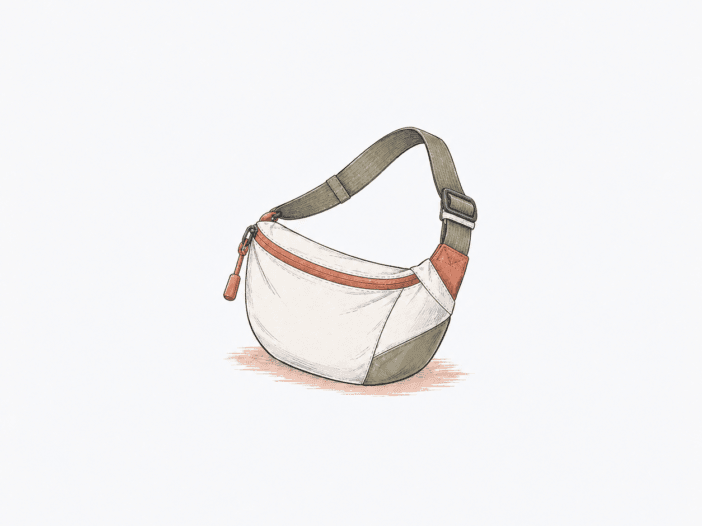
The Bellroy Lite Sling works best when you want to ditch overloaded pockets or a half-empty backpack for something lighter and easier to pack. Buyer evidence lines up around compact essentials plus one small or moderate bulky item. Try to load it with several bulky items, a reliably fitting 11-inch tablet, or a heavy all-day setup, and you start running into real friction. The 7L label sets an upper limit, not a green light for everything.
There is no size or model variant to pick from in the current evidence. The real decision is whether your load and body fit inside the sling’s practical limits.
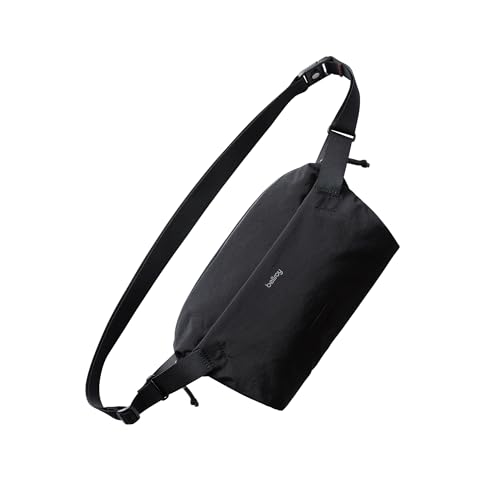
At a Glance: Best for Compact Essentials, Not Day-Pack Expectations
- Strongest fit: everyday and travel carry built around phone, wallet, keys, glasses, earbuds, power bank, notebook, and often one small bottle or similarly bulky item.
- Main strength: very low perceived bag weight, packability, and body-conforming carry.
- Main trade-off: the lightweight, open build skips structure, padding, organization, and support for heavier loads.
- Key boundaries to check: real-world volume, fit for a 10.9–11-inch tablet, minimum strap length, and comfort with a heavy pack.
Product Snapshot: The Specs Matter Most Where Buyers Hit Their Limits
| Product detail | Decision relevance |
| Nominal 7L capacity | Compact EDC loads are repeatedly successful, but many buyers say usable volume feels materially smaller when compared with other bags or when several bulky items are added. |
| 150 × 310 × 110 mm dimensions | Helps explain why smaller tablets and handheld devices are more natural fits than larger tablet-class devices. |
| 78–120 cm adjustable strap | Supports cross-body and over-shoulder wear, but recurring small-frame reports say the 78 cm minimum can still leave the bag too loose. |
| Lightweight diamond-ripstop construction | Bellroy describes the fabric as 3× lighter than its other fabrics; buyers repeatedly value the sling’s low weight and ability to pack flat or roll into luggage. |
| Two-way zip + magnetic buckle | Quick on/off use is widely liked, while zipper handling and the recessed/front-pocket area draw more mixed feedback. |
| Water-resistant fabric; no RFID, slash resistance, or internal camera padding | Buyer evidence supports everyday weather resistance, not waterproofing or security/camera-protection claims. |
Buyer Evidence Metrics: The Clearest Boundaries Are Load, Tablet Size, and Strap Fit
| Buyer Question | Metric | Evidence |
| Does the sling stay convincing when you move from compact essentials to more ambitious “7L-style” loads? | UBC 0.90 | Strong · n=20 |
| Does tablet fit change materially around the ~10.9–11-inch class? | UBC 0.78 | Moderate · n=9 |
| Is the too-long strap issue more concentrated among explicitly small/petite-frame users? | CFL 2.33× | Limited · n=4 |
| Does the lightweight, packable layout commonly come with organization friction? | TCR 0.50 | Moderate · n=8 |
How these metrics work:
- Use Boundary Consistency (UBC) measures how consistently eligible buyer evidence separates a supported use case from the condition where that use becomes more limited or conditional.
- Context Friction Lift (CFL) measures whether a known friction is more concentrated in a defined eligible context than in the eligible baseline. It is not a severity or probability measure. For CFL, public n reflects the smaller eligible comparison group.
- Trade-Off Coupling Rate (TCR) measures how often an observed product strength appears together with a specific friction among eligible buyer evidence. It does not establish causality.
- n is the number of relevant, eligible, deduplicated buyer observations used for that metric—not the product’s total review count.
These are buyer-evidence signals, not product-performance scores. See how these buyer-evidence metrics work.
Fit–Friction Matrix: Match Your Actual Load, Not the 7L Label
| Buyer Setup / Context | Fit Signal | Main Friction |
| Compact daily or travel essentials, often with one 400–500 mL bottle or similarly bulky item | Recurring Strong Fit | Adding several bulky items at once reduces usable space quickly. |
| iPad Mini, e-reader, Nintendo Switch, or similarly compact device with light essentials | Generally Works | Larger accessories or several secondary items can force rearrangement and consume the remaining flexible space. |
| ~10.9–11-inch tablet that needs reliable, case-on carry | Limited Fit | Manufacturer evidence says this class is not a reliable fit; a small number of buyers report bare devices only barely fitting. |
| Small/petite wearer who wants the sling held high and close to the torso | Conditional Fit | The 78 cm minimum strap length can still be too long, causing swing or requiring a workaround/modification. |
| Fully packed or heavier all-day carry | Limited Fit | Thin-strap shoulder/neck pressure and limited structural support become more relevant as load increases. |
| Buyer who prefers open storage and few dividers | Generally Works | Buyers who want dedicated pockets, an easy front pocket, or more separation often find the organization too sparse. |
Treat the 7L Label as a Ceiling, Not a Packing Plan
Compact loads are where the Lite Sling is most consistently convincing. Buyers repeatedly carry combinations such as phone, wallet, keys, earbuds, glasses, a small notebook, power bank, toiletries, and a 400–500 mL bottle without needing a backpack.
The limit shows up when you try to fit several bulky items in the same open space. A light jacket or bottle usually works, and some buyers squeeze in bigger mixed loads, but direct comparisons say the 7L number overstates what you can actually pack without hassle.
That pattern is why the load-volume UBC is 0.90 across 20 eligible observations. It does not mean a 90% chance that your load will fit. It means the buyer evidence is unusually consistent about the transition from compact essentials to a more friction-heavy, day-bag-style load.
A camera setup shows where the limit lands. One buyer tried a Fujifilm X-T5 with two big lenses and a 380 mL bottle and found the bag cramped and hard to close. A smaller Fujifilm kit worked better. The sling can handle different shapes, but it does not replace a structured camera bag.
The Lightweight Build Is the Main Strength—and Why Organization Is Polarizing
If you want a bag that barely adds weight before you load it, the Lite Sling stands out. Buyers keep praising how little the bag itself weighs, how well it hugs the body, and how easily it packs into bigger luggage.
The trade-off is just as clear. The inside is open, lightly structured, and not divided into many pockets. Some buyers like this because it makes packing odd-shaped items easier. Others want more dedicated pockets, a spot for glasses, pen slots, or an easier-to-use front compartment, and some return the bag.
The TCR of 0.50 across eight eligible observations captures that split. It does not mean half of all owners dislike the organization. It means organization friction appeared in half of the evidence from owners who praised the lightweight/packable design and could evaluate the internal layout.
Smaller Devices Fit the Sling’s Role Better Than 11-Inch Tablets
Smaller tablets and handheld electronics fit the Lite Sling’s role best. iPad Mini-sized devices, e-readers, and Nintendo Switch-sized gear show up in buyer evidence as a natural fit. If you add a power bank or another bulky item, you may need to rearrange your load.
At about 9.7 inches, fit already gets more conditional. For 10.9–11-inch devices, Bellroy says the fit is not reliable. Two buyers say a bare 11-inch or iPad Air-class device can barely squeeze in.
That contradiction is reflected in UBC 0.78 across nine eligible observations. The metric is a consistency signal, not a probability. For a buyer who needs dependable case-on carry, the evidence supports treating the ~11-inch class as outside the Lite Sling’s comfortable role.
Strap Fit Deserves a Check if You Wear Slings High and Close
The strap adjusts from 78 to 120 cm, but the shortest length does not guarantee a snug fit for everyone. Several petite buyers say the sling still hangs too low at the minimum, sometimes sliding around the torso when you bend forward.
The CFL of 2.33× is based on a limited public sample of four in the smaller eligible comparison group. It shows that the too-long-strap friction is more concentrated in the small/petite-frame context, not that every smaller wearer is 2.33 times more likely to have a problem. One larger-frame buyer also reports the strap being too long, so the issue is not exclusive to small bodies.
If you like to wear your sling high and snug, check the 78 cm minimum against your actual carry position. That tells you more than height or body-size labels.
Quick-Release Access Is a Strength; Zipper and Front-Pocket Access Are Less Consistent
The magnetic buckle is one of the most consistently liked usability details. Bellroy says the buckle combines magnets with physical latches, and most buyers who discuss actual use describe it as secure while still being quick to release.
The zipper system gets mixed reviews. Some buyers find it smooth and easy to use both ways. Others mention annoyances like tough one-hand opening, a zipper pull that catches near the strap, end gaps when fully closed, and a front pocket that is shallow or hard to reach when the main compartment is full.
For security-minded travel, the evidence also sets a clear limit: Bellroy states the Lite Sling does not provide RFID protection and is not designed to resist slashing. Its strongest security behavior is therefore close cross-body carry and a buckle that resists simple pulling—not dedicated anti-theft construction.
What Buyers Compare It With: The Alternatives Usually Add Structure or Organization
| Comparison | Why it enters consideration | Decision signal from the evidence |
| Bellroy Venture Sling | Buyers wanting thicker straps, more padding, or more internal organization | One buyer moved from the Lite to a Venture 6L for those reasons; Bellroy also points larger tablet/camera needs toward larger Venture models. |
| Bellroy Sling Mini | Buyers wanting a smaller, simpler Bellroy sling | Direct comparison evidence frames the Lite as the roomier compromise, with easier wide opening and an extra pocket. |
| TomToc, Chrome Sabin 6L, NIID Fino Neo, Evergoods MHP 3.5L | Buyers questioning practical capacity, organization, or load support | These appear in individual buyer comparisons rather than a consistent head-to-head test, so they establish alternative priorities rather than a winner. |
What Buyers Should Check Before Buying
The easiest way to judge the Lite Sling is to pack your actual load and try it on, instead of focusing on the 7L label.
- Start by packing your real setup. If you usually carry compact essentials plus one bottle, light jacket, handheld device, or another bulky item, the evidence is on your side. Try fitting several bulky items at once, and you’ll hit the bag’s real capacity wall.
- Treat 11-inch tablets as a warning sign. Smaller tablets fit better. No reliable evidence shows that a 10.9–11-inch device with a case will fit well.
- Check the 78 cm minimum strap length, especially if you have a smaller frame or want to wear the sling high and tight against your torso.
- Decide how much organization you want. The open interior works if you like flexible packing. If you expect lots of dedicated pockets or easy front-pocket access, you may find it limiting.
- Do not expect more weather or security protection than Bellroy claims. The fabric is water-resistant, not waterproof. There is no RFID or slash resistance. Light colors get repeated comments about staining and cleaning.
- Keep heavy or camera-focused loads in check. Thin straps start to dig in with heavier carry, and Bellroy says there is no internal camera padding.
The real question is simple: do you want a very light sling for compact, flexible everyday and travel carry, or a small bag that acts like a structured 7L day pack? Buyer evidence backs the first role much more often than the second.
If low weight is only one part of your decision, compare this sling with other leading tech sling options for different loads and priorities.
