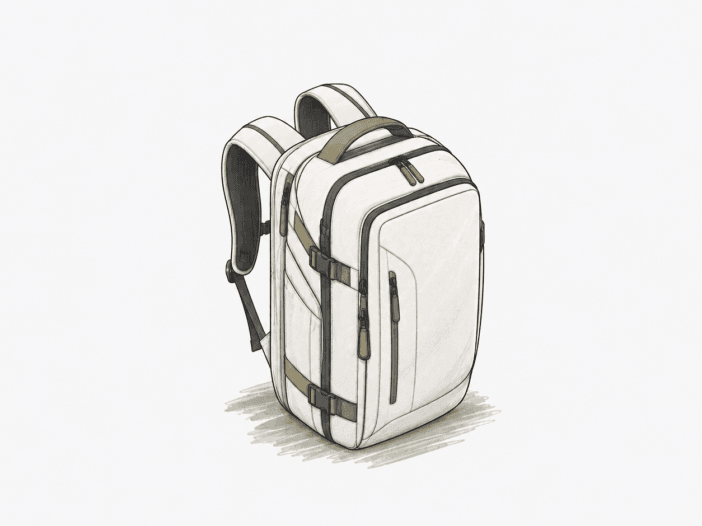
The Nomatic Travel Pack puts laptop access and short-trip packing in one structured bag. Its 14L model expands to 21L, while the 20L model expands to 30L; the extra organization comes with real weight, fit, and airline-clearance limits.
14L → 21L
Smaller Travel Pack expansion
20L → 30L
Larger Travel Pack expansion
4.1 lb
20L Travel Pack empty weight

Built for
- Airport-to-office trips carrying a laptop, documents, and a change of clothes
- Separate pockets for chargers, papers and travel valuables
- Short trips where an expandable compartment replaces a second small bag
Not built for
- Long walks with heavy loads or lightweight hiking use
- Tight under-seat personal-item restrictions, especially with the 20L fully expanded
- Oversized laptops or tablets with bulky keyboard cases
- Buyers expecting an unmarked exterior after frequent abrasion
Where the Nomatic Travel Pack stops working
Consistent the same pattern holds within the covered conditions · Varies the outcome can change with setup, load, fit, or use · Occasional an exception appears alongside stronger working evidence
| Decision area | Stops working when | Still works |
|---|---|---|
| Packing volume 14L–21L Travel Pack · Varies | The expanded 20L–30L bag reaches up to 9.5 inches deep and may not clear a restricted under-seat space. | The 14L–21L and 20L–30L versions provide extra room for short-trip clothing when clearance allows. |
| Carry comfort 20L–30L Travel Pack · Varies | An extended walk or heavy load makes the dense pack and strap edges tiring on the shoulders. | Short transfers with a light laptop-and-essentials load allow the padded straps to do their job. |
| Pack weight 14L–21L Travel Pack · Varies | A restrictive cabin weight limit or a long day on foot makes the empty pack weight costly. | Short professional trips can justify the structure when organized access matters more than low weight. |
| Laptop fit 14L–21L Travel Pack · Varies | A wide or thick chassis can exceed the specified sleeve or prevent the retaining strap from closing. | A computer within the correct version’s full sleeve dimensions can use the dedicated padded compartment. |
| Tablet storage 20L–30L Travel Pack · Varies | A 13-inch iPad Pro fitted with Magic Keyboard and Apple Pencil exceeds the usable tablet sleeve. | Slim tablets staying within the 20L version’s sleeve dimensions have a separate storage place. |
| Zipper access 20L–30L Travel Pack · Varies | The zipper becomes harder to move around tight turns or overfilled compartments. | The full perimeter opening allows flat access to the main compartment when the slider moves freely. |
| Roller compatibility 20L–30L Travel Pack · Varies | A wide trolley handle binds in the sleeve or strains adjacent stitching. | A compatible roller handle carries the Travel Pack sideways without shoulder loading. |
| Aircraft clearance 14L–21L Travel Pack · Varies | The expanded 20L version reaches 9.5 inches of depth, which may exceed limited under-seat space. | The shallower 14L version and some unexpanded 20L arrangements fit under more generous seats. |
Main deal-breaker: The structured 20L pack can reach 9.5 inches deep when expanded, making personal-item acceptance uncertain on restricted flights.
If your priority differs: The 14L model reduces empty weight and depth, while the 20L model trades added capacity for a heavier and deeper travel profile.
How the Nomatic Travel Pack works
Expansion gives two distinct packing depths
14L → 21L · 20L → 30L
The Travel Pack uses a full-expansion zipper to switch between a workday footprint and a deeper packing compartment. The 14L version opens to 21L, while the 20L version opens to 30L. The extra enclosed space holds clothing alongside electronics without requiring a second bag.
The added volume increases the pack’s depth rather than making its structured shell flexible. On the 20L version, depth grows from 6 inches to up to 9.5 inches at full expansion. A packed 30L state can clear a weekend clothing load but may not clear an aircraft seat opening with less depth.
Expansion solves packing space, not clearance. The useful size depends on how deeply the pack must fit once clothing is inside.
Shoulder comfort changes with load and carry time
Structured carry · Load-sensitive comfort
The Travel Pack’s padded shoulder straps carry a laptop and compact travel essentials while keeping both hands free. The structured body keeps compartments distinct, so a short airport transfer can feel more orderly than a soft sack with one large cavity.
The same thick shell and internal dividers add weight before you even pack anything. Padding can feel adequate on a brief transfer but deliver concentrated pressure as the load grows or the walk gets longer. Stiff edges around the straps can press into the shoulder, particularly when the pack hangs from only one strap.
A laptop-only load can still feel substantial on a smaller frame, while a better distributed light load can remain comfortable. The pack fits airport-to-office movement more naturally than sustained hiking or long all-day carrying.
Empty weight uses part of the carrying allowance
14L: 3.5 lb · 20L: 4.1 lb
The 14L Travel Pack starts at 3.5 pounds empty, while the 20L Travel Pack starts at 4.1 pounds. The tarpaulin shell and numerous organized compartments contribute to the substantial feel, while the structure helps the bag hold its shape on a desk or airport floor.
Every laptop, adapter, and clothing layer adds to an already heavy starting point. On a weight-limited journey, the empty pack consumes part of the permitted load before the useful belongings arrive. On the back, an otherwise light commuter setup can also feel disproportionate after a full day.
The 14L model reduces starting weight but offers less packing volume. The 20L model accepts more travel gear at the cost of a heavier base load, even before expansion.
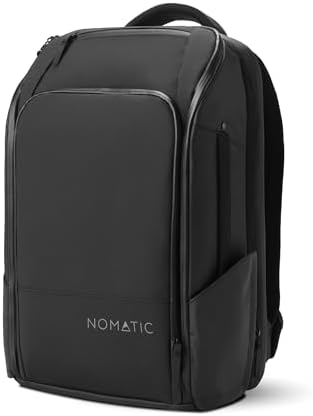
Laptop inch labels cannot replace chassis measurements
14L: 13 × 10 × 1 in · 20L: 14 × 10 × 1.5 in
The 14L Travel Pack has a laptop compartment measuring 13 × 10 × 1 inches and fits laptops up to 15 inches. The 20L version provides a larger 14 × 10 × 1.5-inch compartment for laptops up to 16 inches. A padded fold-down section offers a convenient route to the computer during security screening.
A screen-diagonal label does not describe the laptop’s complete width, depth or thickness. A wide or unusually deep chassis can reach the sleeve’s physical edges before its screen-size class suggests a problem. A large computer may also prevent the top retention strap from closing securely, even if the chassis slides into the main padded area.
The main luggage compartment can accept an awkward device in some arrangements, but moving a laptop away from the fitted sleeve changes its protection. Choose by actual chassis measurements rather than a 15-inch or 16-inch label alone.
The tablet sleeve is tight around bulky accessories
20L tablet: 12.5 × 10 in · Accessory-sensitive
The 20L Travel Pack provides a separate tablet compartment sized for tablets up to 14 inches (12.5 × 10 in). A slimmer tablet can remain separate from the laptop and be quick to reach without opening the clothing space.
The sleeve has a fixed opening and does not expand for a keyboard case or attached stylus. A 12.9-inch iPad Pro can sit close to the pocket boundary; a 13-inch iPad Pro with Magic Keyboard and Apple Pencil does not fit in the dedicated pocket with the accessories attached. Removing the accessories may change the result, but does not enlarge the sleeve.
Placing a tablet alongside a laptop in the larger computer compartment can free up the tight tablet pocket, but the devices then share space and can be harder to retrieve separately. The smaller pocket suits a bare or slim tablet better than a complete tablet workstation.
Full-opening zippers need care around bends
YKK zippers · Corner friction
The Travel Pack uses YKK zippers and a perimeter opening to reveal its main compartment rather than requiring access through a narrow top gap. Straight sections give broad access to clothing and tech organizers, and the zipped perimeter keeps the rigid bag closed during ordinary carrying.
The zipper path turns around structured corners. A slider may start stiff at the curved entry, then loosen with continued use. In other setups, the front pocket zipper may remain difficult or fail; operating conditions and the closure path determine whether repeated access stays smooth.
Forcing a resistant slider around a loaded corner can turn a convenience into friction at every access. The broad-opening design remains useful when the track stays aligned, and the bag is not overstuffed.
Under-seat fit changes sharply with expansion
14L: 17.5 × 11 × 5.5–6 in · 20L: 18.5 × 12 × 6–9.5 in
The 14L Travel Pack measures 17.5 × 11 × 5.5–6 inches and offers a lower-depth option for cabin travel. The 20L Travel Pack measures 18.5 × 12 × 6–9.5 inches; expanding it for clothing increases its depth. Both formats keep a structured outline rather than folding easily into a smaller slot.
A 14L bag fits under the seat with sufficient available clearance, and unexpanded 20L bags fit in some aircraft. Other 20L configurations fail to fit under the seat, while the fully expanded 30L state can exceed a restricted depth opening. Seat frame, available floor space, and carrier rules determine the outcome, not the bag’s liter rating.
The smaller model reduces clearance risk but doesn’t guarantee universal acceptance. Full expansion works best where a proper cabin allowance or larger under-seat space is available.
More details
Magnetic bottle pockets trade a clean shape for bottle tolerance
The Travel Pack places a magnetic bottle pocket on each side. Each sleeve lies close to the exterior when empty, keeping the bag’s business-bag profile compact. An ordinary bottle can sit upright without taking up space in the main packing compartment.
The elastic pocket opening and the relatively stiff shell set a practical limit on bottle shape. A 32-ounce bottle fits in one Travel Pack setup, but another 32-ounce bottle won’t fit in a different setup. The capacity marking shows volume, not the bottle’s physical diameter, and the pockets don’t secure an exposed bottle with a zipper.
A wider rigid bottle can require force to insert, and a heavy bottle may work loose during vigorous movement. A narrower bottle keeps the convenience of separate side storage without straining the pocket fabric.
Water-resistant tarpaulin can scuff in ordinary handling
The Travel Pack uses a water-resistant nylon-and-polyester tarpaulin exterior. The coating helps shed ordinary moisture and supports the clean, structured appearance valued in an office or airport setting. A smooth surface can also be wiped clean after incidental dirt.
Surface appearance and water resistance are separate properties. The exterior can pick up visible scuffs from contact while packing or moving through travel spaces, even when the bag remains fully functional. The finish can remain usable for prolonged travel even after local abrasion marks appear.
Cosmetic wear need not prevent the coating from shedding routine moisture. The smooth finish may look worn before a strap or zipper loses function.
Rigid construction protects shape but not every impact
The Travel Pack’s stiff side structure helps the bag stand upright and keeps its access openings defined. The rigid panels can retain their working geometry through repeated travel, even after the surface begins to show wear.
The same rigid side can take concentrated force when nearby luggage presses into a crowded overhead compartment. Strong pressure from another suitcase can bend or break a side member and drive the damaged support against the exterior. The side may then remain permanently bowed, even if ordinary use leaves the frame sound.
Durability depends on handling pressure and which part takes the force. The construction favors tidy urban handling, while forceful compression against a rigid side carries a separate risk of damage.
The luggage pass-through depends on handle width
The Travel Pack has a luggage-handle pass-through so the bag can ride sideways on a rolling suitcase. A compatible handle shifts the bag’s weight off your shoulders during longer airport walks.
The sleeve opening has finite width and a sideways orientation. A tight roller handle can drag against the opening, while stowed backpack straps can obstruct insertion in some setups. A Travelpro Elite handle fails to pass through in one identified pairing; another pairing stretched the opening enough to strain nearby stitching.
A compatible narrow trolley handle makes the pass-through useful. Forcing a wide handle risks damage and removes the promised convenience of a quick luggage transfer.
Standing upright depends on where weight sits
The Travel Pack’s stiff structure can keep the bag standing while its compartments are open, making it easier to organize on a hotel or office floor. The base carries a moderate, evenly placed load without requiring the bag to lean against a wall.
Concentrating heavier belongings near the top changes the balance. The bag can tip once the packed center of mass moves beyond the base contact area, even though the outer shell keeps its rectangular shape. Putting dense belongings lower maintains the useful standing behavior.
Stowable straps leave a few operational compromises
The Travel Pack’s shoulder straps can tuck into the back panel for a cleaner, briefcase-like profile. With the straps deployed, adjustable shoulder and chest hardware support ordinary backpack carry.
The tuck-away area uses snaps and close-fitting fabric, making the straps harder to flatten in some configurations. Loose webbing can remain visible, and a snap broke on first use in one bag. The stowed straps may also interfere with the luggage pass-through, forcing an awkward choice between neat stowage and quick trolley mounting.
The system works best when you switch modes occasionally. Repeated daily conversion adds small closure and webbing steps around each transition.
Long-term appearance and service life are not the same
The Travel Pack can remain functional through years of office and travel use. Repeated office and travel handling can keep its compartments usable as the outer surface gradually wears.
Early scuffing can appear without blocking access, while a hard impact can cause structural failure even during relatively short ownership. Durability depends on the affected part and the force applied. A working zipper can outlast a cosmetic finish, while a single compressed side member can end the bag’s tidy geometry.
A buyer prioritizing long-term functionality may accept surface wear. Maintaining a pristine professional appearance is a different durability requirement from keeping the compartments operational.
The shell resists rain, not immersion
The Travel Pack’s water-resistant tarpaulin sheds rain encountered between vehicles and buildings. The zippered shell also helps shield the separate laptop and clothing compartments during routine travel.
Water resistance does not turn the pack into a submersible dry bag. Zipper joins and other closure paths remain part of the barrier, while repeated wet exposure differs from a short shower. Ordinary rain is a reasonable use condition; immersion or prolonged saturation creates a different protection problem.
Sensitive electronics benefit from the coated exterior during a commute, but the bag is not a substitute for waterproof containment around high-consequence equipment.
Convertible carrying works better for short transitions
The Travel Pack combines shoulder straps with top and side handles. Tucking the straps changes the look from an obvious backpack to a cleaner, hand-carried office bag, and the side handle lets the structured pack slide sideways into a shelf or overhead bin.
The load remains the same even after the carry mode changes. A handle provides quick control for short transfers but concentrates the full weight in one hand on longer walks. The back straps spread the load more widely for airport distances, although the pack remains heavy compared with a minimalist day bag.
The conversion is useful for switching from transit to a meeting, not for removing the weight of travel essentials.
Many pockets help sorting but consume packing room
The Travel Pack divides storage into 22 purpose-built pockets, mesh sections, a hidden pocket, and a retractable key leash. Small electronics can stay separated from clothing, while the full-opening main compartment reduces rummaging for a buried item.
Every dedicated pocket creates size and placement constraints. A hard sunglasses case can take up a substantial part of an otherwise useful pocket, and packed clothing can press against the narrow front storage area. More pockets don’t automatically create more usable room for bulky items.
The layout pays off when small travel objects each need a predictable place. A load dominated by large irregular items gains less from many narrow organizers.
Flat-opening access needs closed zippers in transit
The perimeter zipper opens the Travel Pack almost flat, so you can reach clothing or a laptop near the bottom without unpacking everything above it. The structured panels give the opened bag a broad packing surface.
The same full-opening geometry can expose the complete compartment at once. If a zipper runs open while the bag hangs from its top handle, the unsupported panel can fall away, and contents may spill. The laptop retention strap becomes especially important because a computer has a heavier, concentrated load.
Full access is convenient on a desk or hotel bed. Keep the zipper fully closed while carrying the briefcase to prevent an accidental wide opening.
The top access pocket fits little more than essentials
The Travel Pack includes a compact top access pocket near the carry handle. The small opening lets you grab a slim phone or passport without exposing the main compartment.
The pocket is shallow and tightly bounded by the surrounding structure. A Samsung Galaxy S25 Ultra in its case does not fit in a front quick-access pocket in any identified configuration. Other packs accommodate a smaller phone, but stacking several accessories crowds the opening and makes retrieval less practical.
Treat the quick pocket as a compact-object slot rather than a replacement for a spacious external organizer.
A structured travel bag cannot always compress to airline rules
The Travel Pack can move between laptop-bag duty and short-trip luggage, but the stiff shell keeps much of its rectangular outline when packed. The smaller 14L version reduces footprint, while the 20L version trades a larger clothing compartment for more depth.
A strict personal-item sizing box tests the actual outer dimensions rather than the purpose printed on the product page. A 20L configuration may be too bulky for a budget carrier even when it holds only a laptop and clothes. The shell cannot always bend into the measuring box, so a size mismatch can create an extra cabin-bag charge.
A larger carry-on allowance can accommodate the pack, especially with the expansion closed. A different aircraft can have a smaller under-seat opening even for the same packed bag.
What remains to confirm before choosing
- Laptop fit: Compare your laptop’s full chassis dimensions and retention-strap reach with the exact 14L or 20L model.
- Roller compatibility: Confirm the opening clears your actual suitcase handle, including its grip and any stowed strap interference.
- Aircraft clearance: Match the packed dimensions of your chosen version to the exact airline and aircraft allowance.
See the Nomatic Travel Pack on Amazon
If rigidity or material toughness is the mismatch, switch packs.
| If the Nomatic misses on… | Look at… |
| Compressibility in strict airline sizing spaces | MARK RYDEN Business Backpack — easier to compress or stow. Trade-off: equally tall at full potential in the cited comparison. |
| Thicker materials, stronger zippers, and a preferred laptop pouch | North Face Refractor — tougher materials and stronger zippers. Trade-off: fewer compartments; a three-day business load can bulge. |
