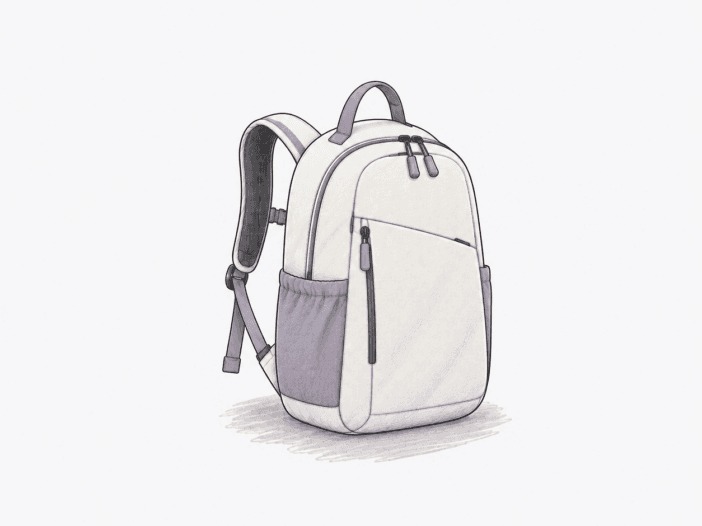
The Travelon Anti-Theft Classic Backpack slows casual zipper access with clipped pulls and a slash-resistant body, while its compact tapered opening limits bulky loads and quick retrieval.

Built for
- The clipped zippers add friction to casual access.
- The compact body carries sightseeing essentials without the bulk of a full-size backpack.
- The front organizer gives cards, pens, and keys assigned places.
- The padded straps support an average city-day load.
Not built for
- The tapered entrance resists larger laptops and bulky clothing bundles.
- The open bottle pocket cannot retain every bottle shape.
- The water-resistant surface does not seal cargo against a downpour.
- The backpack has no trolley sleeve or detachable tether strap.
Where the Travelon Anti-Theft Classic Backpack stops working
Consistent the same pattern holds within the covered conditions · Varies the outcome can change with setup, load, fit, or use · Occasional an exception appears alongside stronger working evidence
| Decision area | Stops working when | Still works |
|---|---|---|
| Daypack capacity Varies | Several bulky clothing layers or a family-sized load compete for the narrow top opening. | The compact cavity fits daily essentials, an iPad, a light layer, and small extras. |
| Bottle and umbrella carry Varies | Wide drinkware cannot enter, tall bottles lose retention, or the inner mesh catches the side zipper. | A suitable bottle or umbrella sits in the deep open side pocket; small items use the zipped side pocket. |
| Laptop and tablet fit Varies | A wider or thicker laptop chassis catches at the tapered opening or consumes the remaining packing space. | The padded rear sleeve accepts supported tablets and small laptops within the top opening. |
| Weather exposure Varies | Sustained heavy rain enters through vulnerable seams or openings and reaches packed contents. | The water-resistant coating can shed incidental rain and damp travel conditions. |
| Internal organization Varies | Loose items require closed interior pockets, or a lid or side slip pocket is expected but absent. | The front organizer separates cards, a pen, and small accessories from the main load. |
| Main opening Varies | Bulky objects or tightly packed items require a wider entrance or quick access to the bottom. | The top zipper opens a compact daypack cavity and keeps contents enclosed on the back. |
| Anti-theft hardware Varies | A determined thief defeats a clip, the small latch fails, or the bag must be secured to furniture. | The backpack adds barriers during crowded travel through slash-resistant shell panels, straps, and clipped zipper pulls. |
| Security versus convenience Varies | You must repeatedly retrieve cards or a phone with only one hand. | Clipped zipper pulls resist a quick unplanned opening while the backpack stays on the wearer. |
Main deal-breaker: The narrow upper opening can block larger laptop chassis and bulky gear even while space remains deeper inside.
If your priority differs: Travelers needing a true 15-inch laptop bag, waterproof enclosure, or suitcase-handle sleeve should start with a purpose-built design.
How the Travelon Anti-Theft Classic Backpack works
How much the compact body actually carries
11 L manufacturer listing · Day-trip load · Conflicting liter figures
The Travelon Anti-Theft Classic Backpack carries city essentials in a compact main cavity rather than splitting its space into many full-depth sections. The Midnight manufacturer listing gives 11 liters, while other product-related answers give 13 or 14 liters. You can’t combine the differing figures into a larger capacity. The bag can hold travel documents, a tablet, chargers, snacks, and a rolled-up light layer, with the flexible fabric accommodating smaller objects around them.
The top narrows relative to the lower body, so usable space does not behave like a rectangular suitcase. Extra clothing can occupy the remaining lower space, but a larger camera case, several jackets, or a bulky shoe load meets the entrance before filling every apparent corner. A lightly filled body remains easy to carry through a city; a dense overnight-style load turns retrieval into a search through the bottom and competes with the device divider.
The compact profile is the payoff and the limit. The backpack works as a small sightseeing companion, while larger multi-person loads need more space than the tapered daypack shape provides.
What fits in the two different side pockets
Open bottle sleeve · Zipped expanding pocket · Shape-sensitive retention
The backpack uses two different side pockets. One stays open for a water bottle, umbrella, or other quick-grab item. The opposite pocket closes with a zipper and has an expanding mesh section for smaller accessories. The deep open sleeve can hold a standard bottle while walking, and the zipped side can separate an umbrella or small power accessory from the main cavity.
The open sleeve does not seal the bottle in place. A wide tumbler may stop at the mouth even when a narrower travel mug fits; a 24-ounce Starbucks tumbler is an example of a container too large for one pocket configuration. Tall bottles can also lose retention when the bag rolls onto its side. In the zipped compartment, loose mesh can meet the zipper path and snag during closure. The working range therefore depends on bottle geometry and how you place the bag, not just bottle volume.
Two side pockets expand organization, not universal bottle compatibility. The open side provides fast access but cannot replace a closed bottle carrier when retention is critical.
The 13-inch sleeve meets a narrower top opening
Up to 13-inch declared · Padded rear sleeve · 15-inch fit disputed
The rear divider holds a tablet or small laptop upright inside the top-loading main compartment. Travelon specifies a padded sleeve for a tablet or laptop up to 13 inches. An 11-inch iPad Pro fits the compartment’s practical, tablet-oriented role, while a smaller laptop can sit against the back panel with travel essentials around it.
The sleeve rating is a device size label, not a width measurement for the opening. The bag narrows toward the top, so the device chassis has to pass through the zipper aperture before it can settle into the rear sleeve. The 15-inch laptop boundary varies with chassis geometry: a 15-inch MacBook can fit in one arrangement, while other 15-inch designs do not enter or barely fit. Actual fit depends on thickness, chassis width, and competing cargo, so a 15-inch screen alone isn’t a reliable fit threshold.
As the main compartment fills, the laptop also takes space needed for clothing and accessories. The padded divider gives a defined place for small electronics, but the bag doesn’t gain a larger opening or extra usable volume just because a laptop fits along the rear wall.
The 13-inch declaration is the sensible laptop ceiling. The backpack can carry a small computer, but don’t choose a 14- or 15-inch device based on screen size alone.
Rain-resistant fabric cannot seal out a downpour
Water-resistant coating · Not waterproof · Downpour exposure
The Travelon shell uses a water-resistant coating rather than a waterproof enclosure. The treated surface can slow moisture during ordinary travel exposure, and light-rain journeys can leave contents dry. A coating works at the fabric surface, but openings and stitched or zipped junctions still interrupt the barrier.
A long downpour changes the exposure. Rain can persist against the top opening and hardware, and water can reach the main cavity instead of staying on the outside. The resulting wet cargo can include clothing, papers, or electronics, a more serious outcome than temporary surface dampness. A bag that survives one rainy walk doesn’t become a sealed dry bag for sustained weather.
Weather resistance works as a buffer, not a waterproof system. The compact backpack stays useful in changeable weather, but expensive, moisture-sensitive cargo needs its own barrier.
Organizer slots help, but pocket layouts may differ
RFID card organizer · Tethered key clip · Layout varies
The front organizer brings small objects closer to the zipper opening, rather than burying them in the main body. It includes a pen loop and slip storage, while the RFID-blocking section is intended for cards and travel documents. The tethered key clip can keep keys tied to the organizer rather than roaming across the bottom of the pack. A rear device divider separates flat electronics from softer travel supplies.
Slip slots are not the same as sealed pouches. Flat contents can escape a shallow slot if the backpack turns upside down, and a wallet-sized item may still need a zipped compartment or separate organizer. The bag also comes from a product family with differing internal pocket arrangements. The pewter configuration can have a zipped lid pocket and an extra side slip pocket, while Midnight and charcoal/teal configurations can lack those compartments. Pocket arrangements vary by color, so confirm the pocket set for the specific bag.
The organizer is useful for daily essentials, not a fixed pocket inventory. Buyers depending on a particular lid zipper or side slip pocket face a configuration-sensitive choice.
The tapered mouth trades access for a compact outline
Top-loading · Tapered opening · Deep main cavity
The Travelon Classic opens from the top rather than exposing its entire front like a suitcase. Its tapered upper edge gives the backpack a neat shape against the body, and the main compartment keeps mixed essentials in a single substantial space. The top opens for everyday travel items without spreading the whole load across a table.
The entrance is narrower than the bag at its fullest point. A bulky object must pass through the constricted top even if the lower portion can physically contain it. Small items also settle below larger gear, so an unpartitioned deep cavity can feel like a bottomless pocket when the pack is full. Packing pouches can group loose accessories, but the opening geometry still limits how quickly you can pull out a larger item.
Easy-to-carry proportions cost some reach-in access. The backpack favors compact essentials over repeated removal of bulky equipment.
Slash-resistant construction and clips deter casual entry
Reinforced shell · RFID organizer · Zipper clips
The Anti-Theft Classic places slash-resistant mesh along all four body sides and the bottom, with slash-resistant shoulder straps. The front organizer also offers RFID-blocking storage for cards and a passport. The external zipper pulls attach to small rings or hooks instead of hanging free, adding a release step before you can unzip a compartment. The combination works against a quick, unnoticed reach into an ordinary open zipper.
The hooks are restraint clips, not keyed locks. The shoulder straps resist slashing but are not designed as detachable locking tethers for wrapping around a table or chair. A clasp can also lose spring tension or break, removing its deterrent function even if the zip still closes. The barrier relies on intact small hardware and correct clipping rather than making the pack theft-proof or safe unattended.
The system slows opportunistic access; it does not immobilize the backpack. It is most useful while carried and monitored in busy places, with the clips engaged.
Anti-theft clipping makes quick personal access slower
Two-handed clip release · Single-direction zipper · Slower retrieval
The zipper clip adds a separate movement before the main front or side compartment opens. The wearer first releases the pull from its ring and then moves the zipper. A passerby attempting a casual one-motion unzip faces the same additional step, making the mechanism valuable on crowded transit.
The extra movement also delays routine access to a card or a phone. A curved, single-direction top zipper can need support from the other hand, especially as the bag fills. Some opening positions make the clip hard to manipulate without setting the pack on a surface. The security barrier therefore becomes a convenience cost whenever you need to retrieve purchases or travel documents.
More friction protects and inconveniences in equal measure. The backpack suits travelers willing to slow access in exchange for one more obstacle to casual entry.
More details
Padded straps support sightseeing loads, not expedition loads
The backpack hangs from two padded shoulder straps and keeps a relatively small pack close to the wearer. With the main cavity used for travel essentials rather than heavy equipment, the pads spread pressure enough for extended city walking. Adjustable straps can shorten or lengthen the fit for different torsos and layers.
Adding heavy water and dense electronics increases the downward force on the shoulder pads. The design lacks a sternum strap or load-transferring waistbelt, so the shoulders still support the cargo. A particularly broad chest or larger load may also change how securely the straps sit, even when the strap length itself can be adjusted.
Comfort follows the compact load. The shoulder arrangement makes sense for sightseeing and commuting essentials, while heavy or long-distance gear calls for a different harness arrangement.
Small hardware can become the first weak point
The protective structure depends on smaller moving and stitched components as well as the outer fabric. A zipper pull has to travel around the opening and still engage its clip; the grab handle transfers lifting force through a short sewn attachment at the top. A failed clasp doesn’t necessarily make the bag unusable as a backpack, but it removes the extra zipper barrier.
A separated top handle leaves the shoulder straps as the remaining way to lift the pack. The side or front zipper can catch and slow access; a worn latch can stop resisting the zipper pull. Individual failures can occur early, and an intact bag can also remain usable through extended travel. Different service histories don’t provide a general failure interval for the product family.
Security depends on working hardware. The backpack keeps its principal carry function after some minor faults, but a damaged clip changes its anti-theft role immediately.
The shoulder straps are not a convertible tether
The Classic uses a two-strap backpack harness. Both padded straps attach to the back, and you can shift the bag forward during crowded travel without changing the hardware. Its compact height makes temporary front positioning possible for some body sizes.
The straps do not rearrange into a proper crossbody suspension or detach into an anchor cable. A heavily packed bag also shifts pressure against the chest when turned forward, making full-load front comfort dependent on fit. Carrying the bag over one shoulder is a short-term handling choice, not a structural conversion into a sling.
The security system belongs to the zippers and shell, not a removable shoulder anchor. Buyers who need tethered furniture security or all-day crossbody carry need a different design.
No trolley sleeve means the backpack rides on your shoulders
The Travelon Anti-Theft Classic Backpack is built to be carried on your shoulders. Its rear face lacks a dedicated fabric pass-through for sliding over the telescoping handle of a wheeled suitcase. A light day load remains manageable as a separate pack, keeping the zipper barriers within reach while moving through a terminal.
Looping a shoulder strap around luggage hardware is not the same as a fitted trolley sleeve. The bag can shift or turn when the suitcase changes direction, and the loose strap arrangement adds handling steps. A traveler intending to stack two bags on one rolling handle loses the stable connection expected from purpose-built luggage integration.
The compact backpack travels independently. The missing trolley sleeve matters most when shoulder-free rolling transfer is a core requirement.
See the Travelon Anti-Theft Classic Backpack on Amazon
More capacity or fixed-object security calls for a different design
| If you need… | Look at… |
| More capacity than this compact 11 L format | Pacsafe Metrosafe LS350 — more room and turn-and-lock; its plastic locking clip raised a durability concern. |
| Fixed-object turn-and-lock security in a compact anti-theft daypack | Pacsafe Stylesafe — adds strap-to-object locking; a tablet in its case did not fit the sleeve in the same comparison. |
