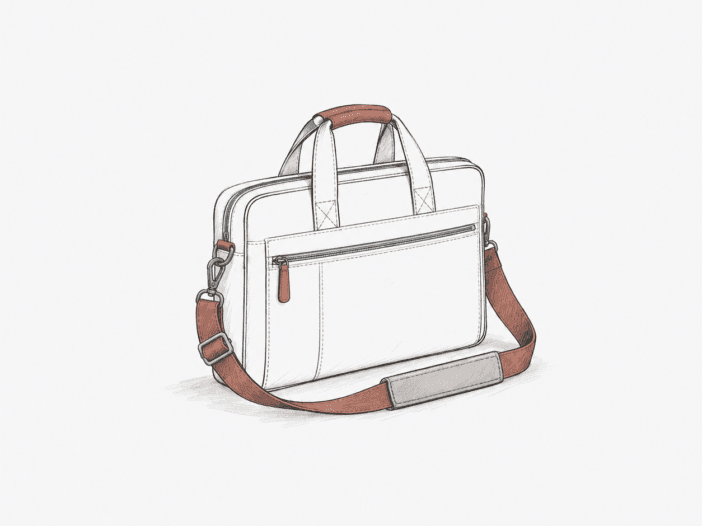
The Wenger Mainframe fits buyers who need to carry a laptop, tablet, chargers, documents, and small accessories, and want each item in its own compartment. The real trade-off is not raw capacity. Instead, a full load changes how the bag carries, and frequent shoulder use puts real stress on the strap attachment.
Buyer reports back up the Mainframe’s organization and its usefulness with rolling luggage. At the same time, enough buyers report shoulder-attachment failures that shoulder-carry longevity is conditional, not guaranteed. Some owners get years of use, but that pattern isn’t consistent enough to assume for every buyer.

Product Snapshot
Think of the Mainframe as an organized work briefcase with travel-friendly trolley integration. The carry system deserves more scrutiny than the storage layout.
| Product detail | Decision relevance |
| Scope | One Mainframe family is supported; no decision-relevant variant split is established. |
| Typical buyer load | Laptop + tablet/iPad + charger or cables + documents/notebooks + small work accessories is the clearest recurring setup. |
| Laptop fit | Multiple 15–16-inch-class examples work. Large 17-inch-class fit appears only in specific buyer examples, not as a universal compatibility claim. |
| Travel interface | A rear pass-through trolley strap is repeatedly confirmed and reported as useful with rolling luggage. |
| Carry profile | The bag is carried by hand or shoulder and has no wheels. Shoulder-attachment longevity is materially mixed across buyer reports. |
| Missing / uncertain details | No exterior bottle pocket is reported. Strap removability is contradictory, and exact current weight is not settled by the evidence. |
Buyer Evidence Metrics
The metrics highlight two buyer decisions. Shoulder-carry durability shows up as a real evidence cluster. Load-related bulk marks a boundary, not a guaranteed problem.
| Buyer Question | Metric | Evidence |
| Is shoulder-attachment friction more concentrated in shorter-duration outcomes than in multi-year durability examples? | CFL 3.25× | Limited · n=7 |
| How often do positive daily/travel utility and shoulder-carry durability friction appear together? | TCR 0.50 | Moderate · n=12 |
| How consistently does the evidence separate routine work loads from fuller multi-device loads? | UBC 0.62 | Moderate · n=13 |
How these metrics work:
- Context Friction Lift (CFL) measures whether a known friction is more concentrated in a defined eligible context than in the eligible baseline. For CFL, public n reflects the smaller eligible comparison group. CFL is not severity or failure probability.
- Trade-Off Coupling Rate (TCR) measures how often an evidence-supported strength and a specific friction appear together among eligible buyer evidence. TCR does not establish causality.
- Use Boundary Consistency (UBC) measures how consistently eligible buyer evidence separates a supported use case from the condition where that use becomes more limited or conditional. UBC is not product quality or a probability of fit.
- n is the number of relevant, eligible, deduplicated buyer observations used for that metric—not the product’s total review count.
These are buyer-evidence signals, not product-performance scores. See how these buyer-evidence metrics work.
CFL 3.25× does not mean the shoulder attachment is 3.25 times more likely to fail. It means shorter-duration evidence contains a heavier concentration of this friction than the selected multi-year durability evidence. TCR 0.50 likewise is not a 50% buyer failure rate, and UBC 0.62 is not a 62% chance that a fuller load will become uncomfortable.
Fit–Friction Matrix
The Mainframe fits best as an organized work carry. The fit becomes more conditional with heavier loads or when shoulder-carry durability is a must-have.
| Buyer Setup / Context | Fit Signal | Main Friction |
| Laptop + tablet/iPad + charger/cables + documents for work or business travel | Recurring Strong Fit | Fuller loads can increase bulk, weight, or balance demands. |
| Briefcase paired with rolling luggage through the rear trolley pass-through | Recurring Strong Fit | No recurring trolley-interface friction is established; shoulder carry remains a separate consideration off the suitcase. |
| Laptop + second screen, second computer, cooling pad, binders, or similarly full work-tech load | Conditional Fit | Capacity can remain workable, but the bag may become large, heavy, or less balanced. |
| Frequent daily shoulder carry where attachment longevity is critical | Mixed / Variant-Dependent | Repeated attachment, seam, and hardware failures conflict with several multi-year durability examples. |
| Large 17-inch-class laptop where exact fit must be guaranteed | Specific Example Only | Some large or thin 17-inch systems reportedly fit, but authoritative compartment dimensions do not establish universal compatibility. |
What Buyers Carry With It
The Mainframe’s capacity works best for buyers carrying a full work setup, not just a laptop. Compare your actual gear load, not just device size.
| Observed setup | What buyer evidence shows | Boundary |
| 15.5-inch laptop + iPad + diagnostic cables | A technical manager reported the load working well, with smooth zippers even when the bag was full and useful trolley-handle integration. | One observed technical-work setup; it does not establish fit for every device of similar screen size. |
| LG Gram 16 + cooling pad + second monitor | The full setup was reported to fit with accessory storage still available. | A specific high-load example, not proof for every 16-inch laptop and monitor combination. |
| 15.6-inch laptop + 13-inch Mac + chargers + at least five folders | The setup fit, but the bag became large when fully packed and slimmed down with a lighter load. | A clear example of capacity and loaded bulk rising together. |
Shoulder Carry Is the Main Durability Question
Durability evidence splits into two patterns. Some repeat owners get years of daily or travel use. Others report strap-area failures within weeks or months.
- Several repeat buyers describe roughly three to ten years of use, sometimes followed by purchasing another Mainframe.
- Other buyers describe fabric tearing, seam separation, strap-connection damage, or strap-holder failure, often within the first year.
- A 2026 report describes a plastic strap holder breaking after about five months, while another 2026 review criticizes a fixed strap and pad arrangement.
- These reports span 2014 to 2026 and may include production changes that are hard to pin down. The evidence does not show that every current unit will fail, or that every current unit matches the older long-life examples.
Strap configuration is still unsettled. Some buyers say the shoulder strap is detachable; others say it is fixed. If you need a removable strap, check the current setup before buying. Do not rely on older reports.
What Buyers Should Check Before Buying
You can self-select the Mainframe by checking your actual carry routine, not just the stated capacity.
- Daily shoulder use: If you’ll carry the bag every day, inspect the attachment points and hardware carefully. Buyer evidence supports both multi-year service and repeated early failures, so longevity is not settled.
- Current strap configuration: Do not assume the shoulder strap is removable. Reports conflict, including a recent description of a fixed arrangement.
- Large-laptop dimensions: Repeated 15–16-inch examples are reassuring, but 17-inch-class compatibility remains device-specific. Compare your laptop’s exact width, thickness, and other dimensions before relying on isolated fit reports.
- Your complete load: Test the decision against the charger, tablet, second screen, folders, and other items you actually carry. Organization remains a strength, but fuller loads can increase bulk, weight, or balance demands.
- Weather expectations: One buyer’s rain report describes the fabric as water-resistant rather than waterproof. The evidence does not establish waterproof protection.
- Required convenience features: The evidence reports no exterior bottle pocket and no wheels. If either is essential to your routine, the Mainframe’s otherwise useful organization won’t fix that mismatch.
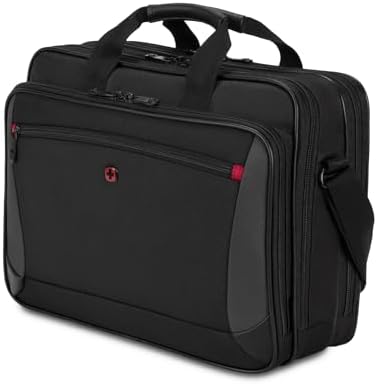
The Mainframe is built around a more complex load, but that does not make its extra capacity necessary for everyone. See the full Best Laptop Briefcases roundup to compare it with options designed for lighter, simpler, and more compact carry.
