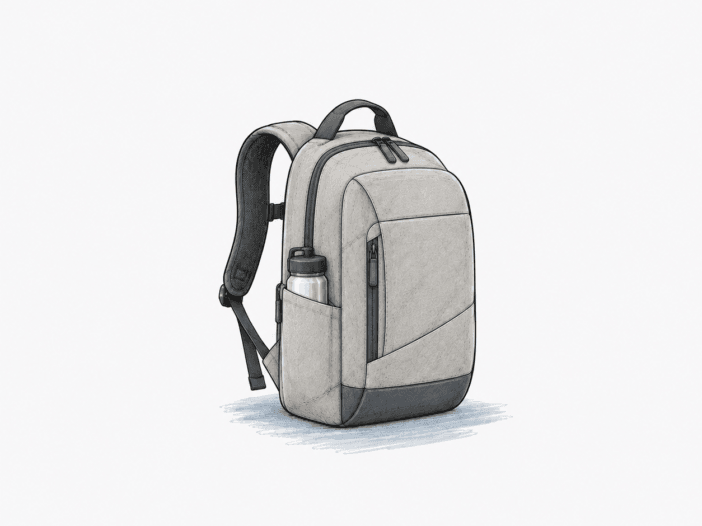
Most buyers use the Incase City Compact for a laptop-first daily load. A typical setup includes a 13–15-inch laptop, documents or notebooks, a tablet, a charger, a mouse, cables, headphones, and a few small essentials. Buyer evidence lines up with this pattern.
The City Compact keeps a compact profile for commutes, school, and work. Add gym gear, clothing, a DSLR, a large bottle, or a bigger laptop, and fit becomes less predictable.
Decide whether your daily load is mostly tech and work or study gear, or if you expect your compact laptop backpack to double as a general-purpose pack.
Most buyer reports skip the exact City Compact configuration. Diamond Ripstop, Ballistic Nylon, Cordura, and Standard appear in a few cross-configuration comparisons, but those examples are too scattered to cover the full lineup.

Product Snapshot
- Best-supported role: Compact, laptop-focused backpack for daily work, school, and commuting. Buyer evidence points to this as the most common use pattern.
- Laptop-fit boundary: Buyer evidence is strongest for 13–15-inch laptops. Some 15.6-inch machines fit, but feedback is mixed. Reports on 17-inch models conflict, so chassis thickness and shape matter just as much as screen size.
- Organization pattern: Buyers use the front, top, and internal pockets for tablets, chargers, cables, headphones, documents, and quick-grab items. Some mention narrow openings, stiff zippers, or harder access when small items settle deep.
- Capacity boundary: Device-first loads work for most buyers. Add clothing, gym gear, cameras, or large bottles, and fit becomes more conditional.
- Weather boundary: Buyer evidence supports water resistance or repellency, not full waterproofing. In one multi-year commute, heavy rain led to some interior dampness, but the laptop stayed dry in its rear pocket.
- Specification caution: Historical Q&A shows conflicting dimensions and capacity numbers. One older spec does not match every City Compact version, so check the actual measurements for the version you are considering.
Buyer Evidence Metrics
| Buyer Question | Metric | Evidence |
| How consistently does laptop fit become more conditional beyond the core 13–15-inch-class evidence range? | UBC 0.85 | Strong · n=26 |
| How consistently does fit change when the load moves from laptop + normal work/study essentials to bulkier mixed carry? | UBC 0.88 | Strong · n=33 |
| How often does positive organization evidence also include narrow, stiff, or fiddly pocket-entry friction? | TCR 0.36 | Moderate · n=14 |
How these metrics work: Use Boundary Consistency (UBC) measures how consistently eligible buyer evidence separates a supported use case from the point where that use gets more limited or conditional. Trade-Off Coupling Rate (TCR) measures how often a product strength shows up alongside a specific friction in eligible buyer evidence. n is the number of relevant, eligible, deduplicated buyer observations used for that metric, not the product’s total review count. Treat these as buyer-evidence signals, not product-performance scores.
What those numbers mean for real-world use:
- UBC 0.85 is not an 85% probability that a laptop will fit. It means the eligible evidence is fairly consistent in separating the better-supported 13–15-inch-class use case from larger, thicker, or otherwise more difficult laptop-fit cases. Conflicting 15.6-inch and 17-inch examples remain part of that evidence.
- UBC 0.88 is not an 88% chance that your daily load will work. It means buyer evidence usually separates laptop-plus-work or study loads from the point where bulkier mixed carry gets more conditional. Some buyers still report success with gym gear, clothing, lunch, or other heavy loads.
- TCR 0.36 does not mean organization causes access problems. It means some buyers who like the organization also mention narrow openings, stiff zippers, or similar access friction. Other buyers describe access as easy or useful, so results vary by load and packing style.
Fit–Friction Matrix
| Buyer Setup / Context | Fit Signal | Main Friction |
| 13–15-inch-class laptop + notebooks/documents + charger, mouse, cables, and small daily essentials | Recurring Strong Fit | Fit becomes less predictable as laptop chassis size or thickness moves beyond the core evidence range. |
| Laptop + tablet + headphones or other small electronics for work or school | Generally Works | Additional bulky non-tech items reduce the flexibility that makes the compact layout work. |
| Crowded train, subway, walking, or similar commute with a laptop-first load | Generally Works | Strap comfort is body-dependent; some buyers report wide or outward-angled straps, and one hot-weather user raised back-ventilation concerns. |
| Laptop plus gym gear, clothing, DSLR, large internal bottle, or other bulky mixed items | Conditional Fit | Capacity friction becomes more common even though some buyers report successful mixed loads. |
| 15.6-inch, 17-inch, unusually thick, or heavily covered laptop | Mixed / Variant-Dependent | Some 15.6-inch examples fit, another larger laptop missed the dedicated sleeve, and 17-inch evidence conflicts. |
Variant Fit Patterns
Configuration-specific evidence mainly warns that City Compact versions are not interchangeable in every detail. The sample is too small to rank which configuration works better for most buyers.
- Diamond Ripstop: In one 2026 cross-configuration example, the buyer preferred the Diamond Ripstop version. The same buyer reported that it lacked the bottle holder found on the Ballistic Nylon version and also wanted a rear luggage strap. No repeated Diamond Ripstop evidence establishes capacity, comfort, laptop fit, weather performance, or durability.
- Ballistic Nylon: In that same direct comparison, the buyer reported a water-bottle holder on the Ballistic Nylon configuration. The buyer also perceived its material as lower quality than Diamond Ripstop, but that is a single material-perception comment, not a measured durability result.
- Cordura: One repeat buyer who had previously owned a Standard version described the Cordura configuration as more rigid and better at retaining its shape. The evidence does not establish whether that extra rigidity changes access, comfort, or usable capacity.
- Standard: The only configuration-specific contrast describes Standard as less rigid and less shape-retentive than Cordura. The available evidence does not establish whether that difference is beneficial or detrimental in normal use.
If you need an external bottle holder, structural rigidity, material feel, or a luggage-pass-through, check the exact configuration. Do not assume an older City Compact review matches the version you are considering.
What Buyers Actually Carry With It
Actual loadouts tell you more than abstract capacity numbers.
- Heavy study setup: One long-term user reported carrying a 15-inch MacBook Pro, a sixth-generation iPad, a mouse, a hard drive, three letter-size books, a charger, a passport, and documents. This is a specific example, but it shows that a dense device-and-study load can work when the items are relatively flat and structured.
- Crowded-train tech setup: One commuter carried a MacBook with Bose QC35 headphones and reported that the load stayed within the bag’s profile. That example supports the City Compact’s low-profile commuting role, not a universal headphone-fit rule.
- Multi-device work setup: One buyer carried a work laptop, Wacom tablet, and over-ear headphones in the main area, while using other pockets for an iPad Pro 11, battery pack, and Nintendo Switch/case. This is one example of how the bag can separate several devices without becoming a general-purpose high-volume pack.
- Mixed everyday setup: One 14-inch laptop user added a light jacket, beanie, pencil case, accessory pouch, notebook, laptop battery and cord, plus smaller items in the front pocket, and still called the bag compact. This counterexample matters. Bulk alone does not make the bag fail, but buyer evidence shows results get less consistent as you add more bulky non-tech items to your load.
Where the Compact Design Starts to Push Back
Three recurring boundaries matter more than just calling the City Compact a small backpack.
- Laptop chassis size: A nominal screen size does not guarantee a good fit. Several 15.6-inch reports are positive, but other larger or bulkier laptops become conditional, and 17-inch evidence conflicts.
- Shape of the load: Books, documents, tablets, chargers, and other relatively flat tech items use the narrow profile more efficiently than shoes, clothing, cameras, or large bottles.
- Access under load: Many buyers like the organization, but some say the front or main openings do not open as wide as a traditional backpack. This access friction worsens when the bag is packed tight or small items settle deep.
Long-Term Use Patterns Are Mixed
Durability evidence does not support a simple built-to-last or poor-quality label. Results depend on use and configuration.
- Positive long-term examples exist. Multiple buyers describe several years of use, including daily commuting and repeated replacement with the same model after long service.
- Failure examples also recur. Buyers report zipper, zipper-pull, strap, seam, or internal-mesh failures at different points in ownership.
- The configuration is often unknown. Because most durability reports don’t identify the exact material or model generation, don’t assign it to Diamond Ripstop, Ballistic Nylon, Cordura, or Standard unless the buyer explicitly does so.
Durability is mixed enough that you should inspect the bag yourself. The evidence is not strong enough to call it universally good or bad.
What Buyers Compare It With
Buyer comparisons show what problem the City Compact actually solves.
- Belkin Slim Backpack and Cocoon Slim: One train commuter considered these alongside the City Compact. The City Compact was chosen because the buyer wanted a slim bag but worried the thinner alternatives would be too restrictive for a MacBook plus Bose QC35 headphones. That comparison supports a “compact without going ultra-thin” role for that specific load.
- Incase Icon / Icon Slim: One buyer directly preferred the older Icon’s ergonomics when both bags were loaded similarly. That comparison reinforces the body-fit caution: padded straps do not guarantee the same comfort for every shoulder shape.
- Larger City model: Buyers look at the larger version when they need more volume or easier bottle carry. This switch shows up most clearly when carrying flexibility matters more than keeping a compact profile.
What Buyers Should Check Before Buying
- Check the laptop chassis, not just the screen diagonal. The evidence is strongest for 13–15-inch-class laptops. Several 15.6-inch machines work, but larger or thicker devices produce mixed outcomes, and 17-inch evidence is contradictory.
- Pack your actual daily load before judging capacity. Laptop, tablet, documents, charger, mouse, cables, headphones, and small essentials match the strongest buyer evidence. Shoes, clothing, DSLR gear, large bottles, and other bulky items make fit more conditional.
- Check the exact City Compact configuration. Sparse cross-configuration evidence shows bottle-holder availability and structural rigidity can change between versions. The sample is too small to rank them, but it is enough to make checking configuration worth your time.
- Shoulder comfort depends on your body. Many buyers like the padding or weight distribution, but others mention wide straps, outward strap angles, or slippage. The evidence supports variability, not a single comfort answer for everyone.
- Rain resistance is a limit, not a guarantee of waterproofing. Some buyers report good performance in rain or snow, but the evidence does not show waterproof construction. One heavy-rain commute led to interior dampness.
- Durability evidence stays mixed. Multi-year success stories and recurring hardware or seam failures both show up, often without clear configuration details. Neither pattern is strong enough to cancel out the other.
Judge the Incase City Compact by role, not by a single capacity number. Buyer evidence most consistently supports a compact, laptop-first setup for work, school, or commuting. As your load gets bulkier, your laptop gets larger, or your attachment needs get more specific, exact configuration and personal fit matter more.
